
Luni Capital Releases New Market Analysis Highlighting Emerging Opportunities Across Global Stock Markets

Luni Capital’s latest market analysis arrives at a time when investors have grown wary of easy narratives. For a while, the market could be explained with a few familiar words—rate pressure, tech momentum, consumer resilience, policy uncertainty—and people nodded as though that covered it. It never really did. Global stock markets have become too interconnected, too fast-moving, and too uneven for neat summaries to hold for very long.
What Luni Capital is offering, at least by its own description, is not a grand theory so much as a structured attempt to make the picture more readable. Its new analysis highlights emerging opportunities across international stock markets while placing that research inside a broader digital trading environment that also serves investors watching digital assets and other sectors. That pairing feels telling. It suggests a platform trying to respond to the way investors actually behave now, moving between asset classes, comparing signals, and trying to make sense of a financial landscape that rarely stays still for more than an afternoon.
There has been a quiet but profound change in how people meet the market. Not long ago, many investors still dealt mainly through local brokers, periodic calls, and delayed information. Now they sit in front of screens that stream live prices from multiple exchanges, overlay sector data, flash earnings updates, and compress whole continents of trading activity into a few panels and tabs. The convenience is undeniable. So is the danger of mistaking access for understanding.
That is why research like this matters when it is done with discipline.
Luni Capital’s analysis points to several broad developments shaping global stock market activity: stronger retail participation, continued technological innovation among listed companies, and the expansion of digital financial infrastructure that keeps markets more tightly connected than they used to be. None of those trends are especially surprising on their own. What deserves attention is the way they collide. Retail investors bring energy and unpredictability. Technology companies reshape valuations and expectations. Digital infrastructure speeds everything up, including confusion.
I remember watching a global selloff one morning a few years ago and being struck by how quickly people began speaking in absolutes. Everything was broken, they said. Or everything was suddenly cheap. Neither claim held up by the end of the week. Markets tend to punish certainty first, and often without much ceremony.
Luni Capital seems to understand that the more useful task is not to promise clarity where none exists, but to organize the signals investors are already trying to read. Macroeconomic indicators, sector performance, corporate innovation, and market connectivity all feed into stock performance, though never in a perfectly clean line. A platform that can present those relationships through structured dashboards and research tools has a chance to be genuinely useful, especially for investors trying to distinguish a durable trend from a passing burst of enthusiasm.
The report also nods to something many traditional market commentaries still treat awkwardly: the presence of digital assets inside the modern trading ecosystem. Equities remain the center of gravity, certainly, but cryptocurrencies and related digital instruments now influence investor behavior, risk appetite, and the architecture of trading platforms themselves. Ignoring that no longer feels prudent. It feels dated.
Behind all this sits infrastructure, which is usually the least glamorous part of any announcement and often the most revealing. Luni Capital says the publication of its analysis has been supported by upgrades to the technological systems that process and distribute market data. That detail carries more weight than it might seem. Research is only as trustworthy as the machinery delivering it. If the data lags, if the system strains under volatility, if the platform loses coherence at the precise moment users need it most, even the smartest analysis starts to look ornamental.
I found myself lingering on that point longer than I expected.
Financial markets produce relentless streams of information: price changes, trading volumes, sector rotations, economic releases, abrupt shifts in sentiment. Processing that flow requires more than speed. It requires resilience. Scalable infrastructure, operational monitoring, and secure communication between servers, data networks, and user interfaces do not make for thrilling copy, but they are the difference between a platform that informs and one that merely displays.
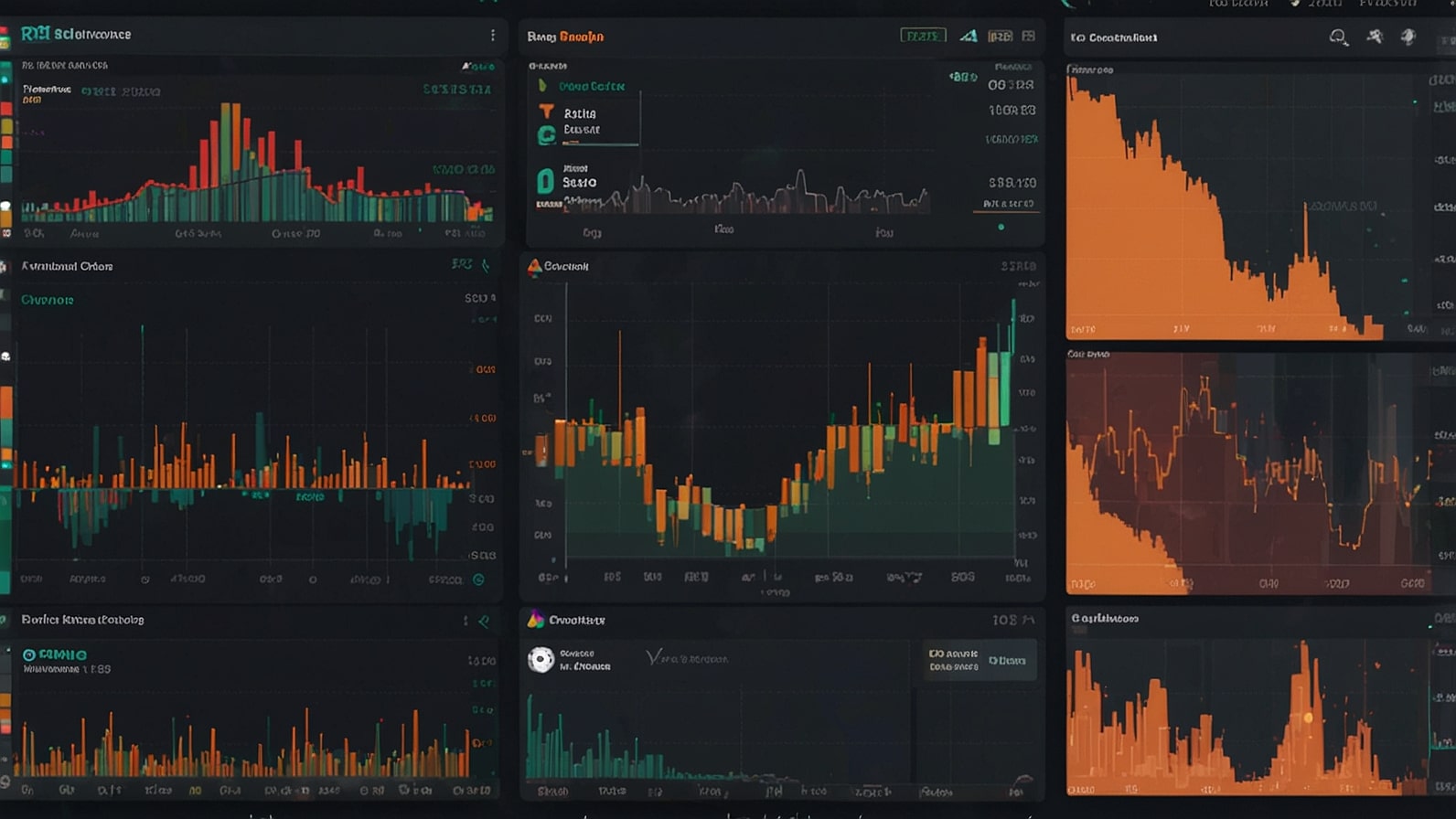
That technical backbone shapes the user experience in quieter ways too. Luni Capital says its new research has been integrated with improvements to interface clarity and data visualization. Good design matters here. A clean chart can lower the temperature of a decision. A dashboard that separates important movement from background noise can save investors from chasing the wrong story.
Account management and security systems play their part as well. Investors need accurate records, synchronized histories, and a reasonable sense that the environment handling their data is not being held together by optimism and patchwork. Trust, in digital finance, is built through repetition. The platform works. The records match. The data arrives on time. Nothing dramatic happens. That is often the best outcome.
What Luni Capital’s analysis ultimately reflects is a maturing expectation about what a trading platform should be. Not just a gateway. Not just a screen full of motion. Something closer to an interpretive space, where research, infrastructure, and execution meet without too much friction. As global markets continue to blur national boundaries and sector lines, investors are not simply looking for opportunity. They are looking for a better way to see it before it passes.


 Bitcoin
  Ethereum
  Tether
  BNB
BNB  USDC
USDC  XRP
XRP  Solana
  TRON
TRON  Lido Staked Ether
  Cardano
  Gram (prev. Toncoin)
  Avalanche