
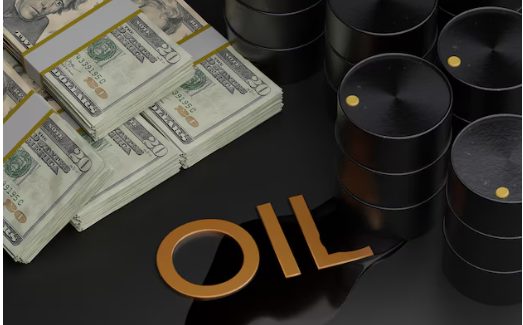
What Would Happen to the Global Economy If Saudi Arabia Stopped Accepting Dollars for Oil Tomorrow

A 50-year contract quietly ended in June 2024. There was no formal announcement that broke the news cycle, no ceremony, and neither the bond markets nor the currency desks of large banks had a moment of reckoning. The 1974 petrodollar agreement between the US and Saudi Arabia, which stipulated that Saudi oil would be priced and sold in US dollars and that the proceeds would be reinvested in US Treasury securities, simply ran out of time to be renewed.
The majority of people were unaware. The dollar did not plummet. A shift to the yuan was not announced by Saudi Arabia. Because the architecture of fifty years of financial habit does not reverse on a single calendar date, the oil continued to flow and the dollar transactions persisted. However, something had changed, and the question of what might happen if Saudi Arabia truly adhered to the reasoning behind that non-renewal is now less speculative than it was ten years ago.
Key Reference & Economic Information
| Category | Details |
|---|---|
| Topic | Petrodollar System — Impact of Saudi Arabia Ending Dollar Oil Pricing |
| Country | Kingdom of Saudi Arabia |
| Capital | Riyadh |
| Key Economic Institution | Saudi Aramco (state oil company) — world’s largest oil producer |
| Original Petrodollar Agreement | 1974 — U.S.-Saudi pact linking oil sales to U.S. dollar |
| Agreement Status | Expired June 2024 — not renewed |
| Saudi Daily Oil Production | ~9–10 million barrels per day |
| Immediate Dollar Impact | Significant devaluation — reduced global demand for dollar reserves |
| Inflation Risk (U.S.) | Substantial — imported goods more expensive, Fed forced to raise rates |
| “Exorbitant Privilege” Loss | Higher U.S. borrowing costs — foreign nations stop recycling petrodollars into Treasuries |
| Alternative Currencies | Chinese yuan, euro — accelerated adoption in global trade |
| BRICS Context | Multi-polar currency system acceleration |
| Saudi Riyal Status | Currently pegged to the U.S. dollar |
| Expert Assessment | Long-term de-dollarization trend rather than overnight collapse |
| Reference Website |
Saudi Arabia’s refusal to accept dollar payments for oil would have the quickest immediate effects in the currency markets, where the reasoning is clear even though the magnitude is hard to fully comprehend. The most traded commodity worldwide is oil. Central banks in Tokyo, Frankfurt, Mumbai, and São Paulo keep dollar reserves in part because they use them to purchase energy, which generates steady demand for the currency worldwide.
When that condition is eliminated, there is far less reason to keep those reserves. At a faster rate, central banks would start diversifying away from dollars by selling Treasury securities and purchasing anything they wanted in their place. As the market adjusted to a world where petroleum no longer anchored dollar demand, the dollar’s value in relation to other major currencies would fall, most likely dramatically in the early going.
The aspect of this scenario that most directly relates to the lives of regular Americans is the inflation that would ensue within the United States. Not just oil itself, but everything from electronics made in Asia to food commodities purchased in international markets is more expensive when the currency declines.
When faced with a currency weakening due to structural rather than cyclical pressures, the Federal Reserve would be faced with an unfeasible choice: either aggressively raise interest rates to protect the value of the dollar at the expense of slowing an already strained economy, or let the devaluation continue while inflation reduced the purchasing power of every dollar-denominated wage and savings account in the nation. In this situation, there is no easy way out. Significant financial hardship is associated with both options, with households with the least capacity to absorb it bearing the brunt of the burden.
The worldwide need for dollar reserves is the sole reason for the “exorbitant privilege” that France’s Valéry Giscard d’Estaing eloquently articulated in the 1960s: the United States’ ability to borrow money from the rest of the world at a low cost since everyone needed dollars. Because they are also meeting their reserve requirements, foreign governments that purchase U.S.
Treasury securities are effectively lending money to the U.S. government at rates lower than pure credit analysis might support. The U.S. government must either find new buyers for its debt at current rates or tolerate higher borrowing costs to attract a more skeptical market if the petrodollar mechanism is removed and the recycling of oil profits into Treasuries ceases. Financing the government deficit, which is currently at a level that worries many fiscal analysts, becomes significantly more costly.
The dimension that would develop more slowly but possibly more permanently is the longer-term geopolitical restructuring. Deeper alignment with China, the world’s largest oil importer and a nation that has been actively developing the financial infrastructure to conduct international trade outside of the dollar system through mechanisms like the Petro-yuan and CIPS, its alternative to the SWIFT banking network, would almost certainly accompany Saudi Arabia’s move away from dollar settlement. There would be a major acceleration for the BRICS nations, who have been moving in different ways toward local currency trade settlement. This would be the biggest catalyst for the multipolar currency system that economists have been talking about for years as a long-term trend.
Because the plausibility of the scenario is actually questionable, it is worthwhile to hold the probability issue alongside the implications. Because the Saudi riyal is still tied to the US dollar, the kingdom’s financial stability is inextricably linked to the strength of the US dollar, making a sudden rejection of the currency short-term counterproductive. When Saudi Aramco sells oil in yuan or euros while its liabilities and sovereign wealth calculations are still partially denominated in dollars, it would encounter the kind of currency mismatch that exacerbates rather than lessens financial difficulties.
The majority of specialists, including the Atlantic Council, view the current de-dollarization movement as a slow process measured in decades rather than a moment of decisive rupture. As this develops, there’s a sense that the true story isn’t what occurs the morning after Saudi Arabia stops taking money, but rather the gradual, mostly undetectable deterioration that has been going on for longer than the explicit non-renewal of the expired agreement.


 Bitcoin
  Ethereum
  Tether
  BNB
BNB  USDC
USDC  XRP
XRP  Solana
  TRON
TRON  Lido Staked Ether
  Cardano
  Gram (prev. Toncoin)
  Avalanche