
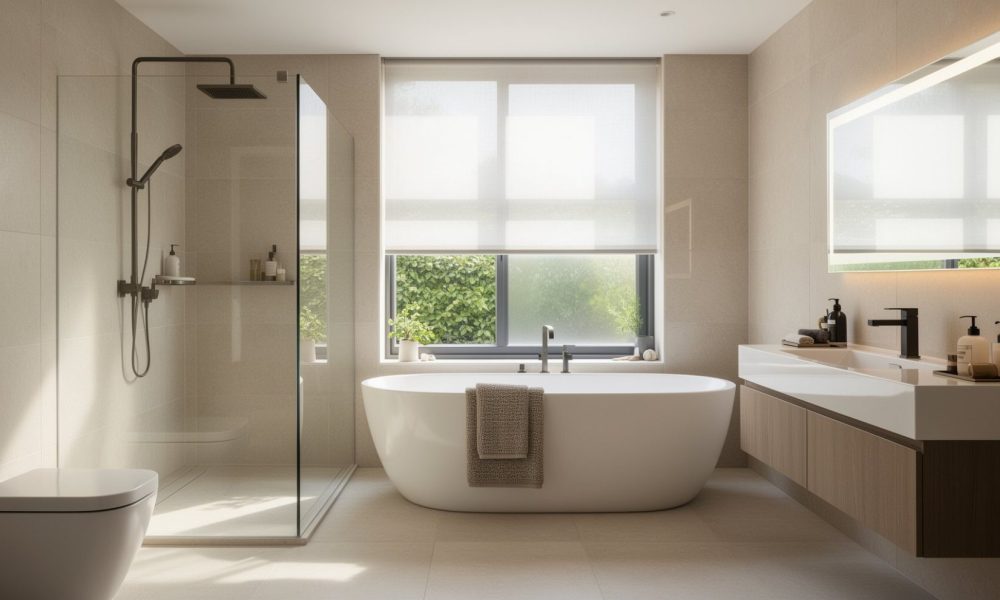
Of all the rooms in a house, the bathroom exerts a strangely powerful influence over buyers. It is intensely personal yet strictly functional; a place where small flaws feel magnified and dated finishes scream “future expense.” Real estate professionals consistently rank bathroom renovations among the top three projects for return on investment, often recovering 60–70% of costs at resale. More importantly, an updated bathroom can make the difference between a quick sale at asking price and a property that lingers on the market. Here is how to update yours for maximum value.
Focus on the Essentials, Not the Spa Fantasy
It is tempting to imagine a bathroom renovation as a personal retreat: heated floors, a rainfall showerhead, a freestanding soaking tub. While luxurious, such features rarely deliver a dollar-for-dollar return unless you are selling in the very top tier of your local market. For the vast majority of homeowners, value comes from addressing the fundamentals first.
Buyers notice three things about bathroom suites immediately: cleanliness, lighting, and storage. A bathroom that feels bright, spotless, and uncluttered reads as well-maintained. One with stained grout, dim bulbs, and no place to set down a toothbrush reads as a problem. Therefore, prioritise projects that fix these core issues before splurging on decorative flourishes.
The High-Impact, Low-Cost Updates
You do not need a full gut renovation to add significant value. Several modest updates yield disproportionate returns:
- Replace the vanity. An old, laminate-topped vanity with a leaking faucet is a red flag. A simple, shaker-style cabinet in white or grey with a quartz or solid-surface countertop and a modern brushed-nickel faucet transforms the room instantly. Cost is moderate, but the perceived upgrade is substantial.
- Upgrade lighting and mirrors. Swap a single, dated overhead fixture for a horizontal bar light mounted above or beside the mirror. Add a second sconce for balanced illumination. Replace a builder-grade mirror with a framed one—a surprisingly inexpensive change that adds character and polish.
- Regrout and recaulk. This is the cheapest value-builder of all. Clean, white grout and fresh, mould-free caulk around the tub or shower make even a decade-old bathroom feel recently serviced. Conversely, peeling caulk is one of the first things buyers spot, and it raises questions about hidden moisture damage.
- Swap hardware and fixtures. New towel bars, toilet paper holders, drawer pulls, and a showerhead cost very little but create a cohesive, updated look. Choose one finish (chrome, nickel, or matte black) and apply it consistently throughout the room.
The Mid-Range Renovation That Pays Off
If your bathroom is fundamentally sound but visually tired—think 1990s almond-coloured fixtures, a leaking shower door, or worn linoleum—a mid-range renovation is the sweet spot for value.
Replace the flooring. Luxury vinyl plank (LVP) or large-format porcelain tile in a neutral stone or wood-look finish instantly modernises the room. Both are waterproof, durable, and affordable. Avoid tiny mosaic tiles or stark white sheet vinyl, which look dated before installation is complete.
Update the shower or tub surround. If you have a tub-shower combo, replace the old three-piece surround with a single, solid-surface panel or large-format tiles in a light, neutral colour. Running the tile all the way to the ceiling adds a sense of height and luxury. A frameless glass shower door (rather than a curtain or tracked door) is a surprisingly powerful upgrade that suggests quality.
Improve ventilation. An existing, noisy, undersized exhaust fan should be replaced with a quiet, high-capacity model. If your bathroom has no fan at all, adding one—vented properly to the outdoors, not the attic—is not optional. Buyers will pay less for a bathroom that promises mould and peeling paint.
What to Avoid: Over-renovating and Personalisation
The fastest way to lose money on a bathroom update is to design it for yourself rather than for the market. A deep-soaking tub that leaves no room for a shower eliminates the majority of buyers who need a daily, accessible wash. A vessel sink that sits above the counter looks striking but creates splash problems and reduces usable counter space. Dark charcoal walls, exotic green marble, or a black toilet might suit your taste, but they will narrow your pool of buyers dramatically.
Stick to a neutral palette: white, off-white, light grey, or warm beige for walls and tiles. Introduce colour only through towels, a rug, or art—items that leave with you. Keep the layout conventional (toilet, sink, shower/tub in expected positions) unless you are solving a genuine functional flaw.
The Final Return: Clean, Bright, and Finished
When your bathroom update is complete, stand at the doorway and assess it as a buyer would. Is the caulking flawless? Does the mirror reflect a well-lit, uncluttered space? Does the vanity offer enough storage to hide toiletries? Most importantly, does the room feel clean—not scrubbed, but inherently, lastingly clean?
Bathrooms that answers yes to these questions adds genuine, saleable value to your home. It reassures buyers that nothing hidden is rotting, leaking, or neglected. In a competitive market, that reassurance is worth far more than the sum of its tiles and fixtures.



 Bitcoin
  Ethereum
  Tether
  BNB
BNB  USDC
USDC  XRP
XRP  Solana
  TRON
TRON  Lido Staked Ether
  Cardano
  Gram (prev. Toncoin)
  Avalanche