Bitcoin
  Ethereum
  Tether
  BNB
BNB  USDC
USDC  XRP
XRP  Solana
  TRON
TRON  Lido Staked Ether
  Cardano
  Gram (prev. Toncoin)
  Avalanche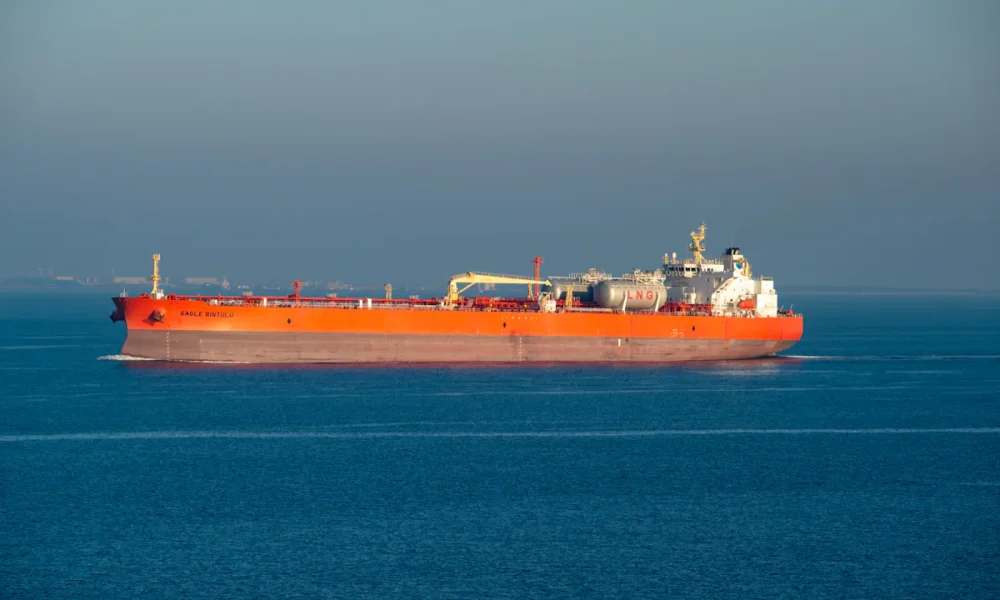
The global helium supply squeeze that markets had long treated as a background risk became acute on 18 March 2026, when Iranian missile strikes hit the Ras Laffan industrial complex in Qatar, 80 kilometres north of Doha, forcing QatarEnergy to halt liquefied natural gas production and all associated output, including helium. Spot prices doubled within days.
Qatar supplies roughly 30% of global helium, and that share flows from a single industrial site. The south site at Ras Laffan took direct hits; analysts do not expect a restart before late summer 2026. A panel assembled by the industrial gas media group Gasworld assessed that the strikes, combined with Iran’s blockade of the Strait of Hormuz, removed approximately one-third of the world’s helium supply from the market, a figure reported by the American Chemical Society’s Chemical & Engineering News.
Aleksandr Romanenko, founder and chief executive of market research firm IndexBox, put a number on the gap: ‘The market is currently missing about 5.2 million cubic metres of helium per month for as long as Qatar-linked production remains offline.’ Air Products disclosed at a JPMorgan Industrials conference that the disruption represented a potential $150 million cost impact, though contract renewals may partially offset this. Helium prices have risen 20–40%.
The Helium Supply Squeeze Is Structural, Not Cyclical
The Ras Laffan strike exposed a pre-existing deficit rather than creating one. The helium supply squeeze has produced four recognised major shortages over the past two decades, each lasting two to three years before any equilibrium was restored. The US and Qatar together account for more than 75% of global supply. Russia produces a meaningful share but remains unavailable to Western buyers. Algeria contributes a modest fraction.
Helium is not manufactured. It is extracted as a by-product of natural-gas processing in locations where underground concentrations happen to be commercially viable. Its physical properties make stockpiling impossible: helium is the second-lightest gas on Earth and escapes containment at a rate that precludes any meaningful strategic reserve. When supply breaks, there is no buffer.
Demand is growing across several inelastic sectors simultaneously. A single Falcon 9 rocket launch consumes roughly 14–18% of the world’s daily helium production in a single ignition sequence. Goldman Sachs anticipates 70,000 low Earth orbit satellite launches globally between 2025 and 2031, with the satellite industry preparing for 3,700 to 5,000 launches annually by 2030. Every one of those missions requires helium; there is no substitute.
Semiconductor fabrication, specifically the extreme ultraviolet lithography process that produces the most advanced AI chips, is helium-dependent at nearly every stage of wafer production. The AI-driven chip market is projected to grow at a compound annual growth rate above 11% through 2030. MRI machines account for 20% of global helium demand, each requiring an initial fill of 2,000 litres of liquid helium. Quantum computing relies on liquid helium cooling to reach the cryogenic temperatures at which processors function. Rocketry, AI chips, medical imaging and quantum computing all draw on the same constrained supply pool.
What the SpaceX S-1 Reveals About Helium Risk
SpaceX filed its S-1 registration statement with the Securities and Exchange Commission on 20 May 2026, ahead of a listing of Class A common stock on Nasdaq under the ticker SPCX at $135 per share, representing a base offering valued at $75 billion. The company reported 2025 revenue of $18.7 billion, up 33% year on year, with Connectivity Segment Adjusted EBITDA (a non-GAAP measure per SpaceX’s own disclosure) of $7.2 billion. On 5 June 2026, SpaceX also announced a Cloud Service Agreement with Google LLC covering approximately 110,000 NVIDIA GPUs, under which Google will pay SpaceX $920 million per month from October 2026 through June 2029.
The S-1 does not disclose helium supply as a material risk, despite Elon Musk having stated publicly that there is not enough helium produced on Earth to sustain a high-flight-rate Starship programme, a constraint material enough to force a redesign of the vehicle. That omission sits in the filing for any reader who looks for it.
Where the Investment Case Sits Now
For investors seeking direct exposure to the helium supply squeeze, the industrial gas majors are the more legible route. Linde (Nasdaq: LIN), Air Products & Chemicals (NYSE: APD) and Air Liquide (Paris: AI) hold long-term supply contracts that allow them to reprice into tighter market conditions. With helium prices already 20–40% higher and the Ras Laffan south site offline through at least late summer, the pricing environment for contract renewals entering 2027 looks materially different from anything negotiated before March.
The UK angle deserves attention on its own terms. Britain has no domestic helium production, no strategic reserve, and no formal critical-minerals designation for helium. The NHS scanner estate, the National Quantum Computing Centre at Harwell and the defence-electronics supply chain carry exposure to a commodity that has yet to receive policy attention in Whitehall. The gap between that exposure and its recognition is the setup investors are pricing ahead of policymakers.
The next test is whether damage assessments at Ras Laffan, as they emerge through the second half of 2026, push the recovery timeline beyond what the current consensus of late summer allows. Permanent capacity reductions, if confirmed, would extend this from a squeeze into something considerably longer.