
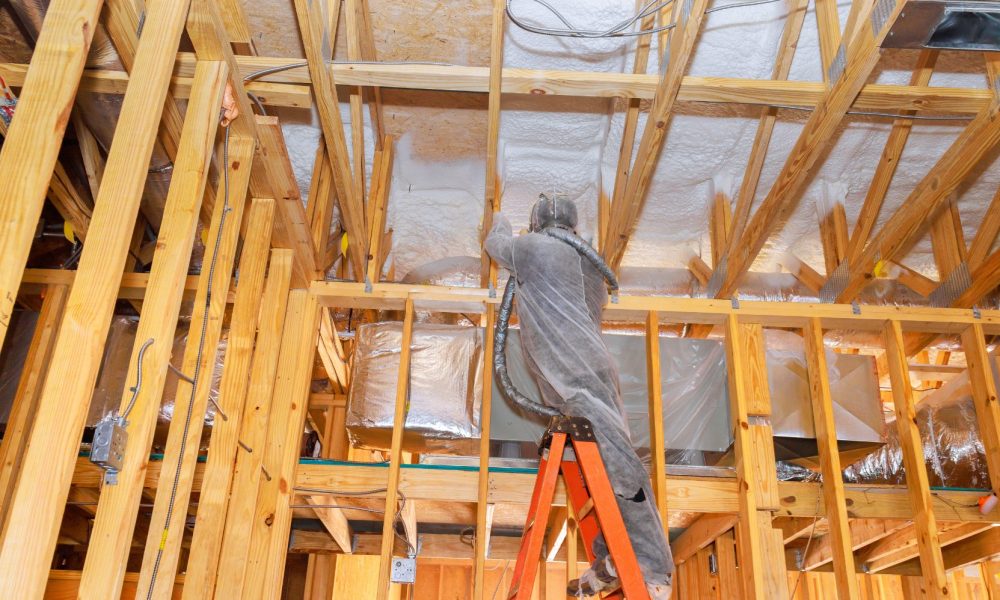
Most homeowners don’t think about insulation until something goes wrong. By then, it’s expensive.
For Gulf Coast homeowners, Lane Pace — building science specialist and owner of LUAS Insulation — says insulation upgrades averages $1,500 to $4,000 depending on home size, the areas being treated, and the foam type selected. Some homeowners pay more for premium materials. Fair enough — but before signing anything, the obvious question is: how long does this stuff actually last?
Short answer? A long time. Potentially a very long time.
Pace says the average spray foam installation holds up for around 50 years, with some lasting even longer. Closed-cell foam tends to outlast open-cell when conditions are otherwise equal — it’s denser, more rigid, and far more resistant to moisture intrusion and physical stress.
But here’s the thing: longevity isn’t guaranteed. Several factors determine whether your insulation hits that 50-year mark or degrades well before it.
Installation Quality Drives Everything
The quality of installation is probably the single biggest variable. Rushed jobs, inconsistent coverage, and improper mixing ratios can all shorten a foam system’s lifespan considerably.
Spray foam is a two-component system. Get the ratios wrong, and it won’t fully cure. Apply it to surfaces with excess moisture or debris, and adhesion suffers long-term. Even thickness matters — gaps from uneven application create conditions for degradation that compound over years.
Certified, experienced installers know how to account for these variables. One-size-fits-all contractors often don’t.
The Gulf Coast Makes Things Harder
Climate puts real stress on insulation systems — and the Gulf Coast is particularly unforgiving. Sustained humidity, extreme heat, and periodic storm events all work against foam performance over time.
Repeated thermal cycling affects adhesion at seams and edges. Wind-driven rain introduces moisture into building assemblies. And open-cell foam, while better suited to certain applications, is more vulnerable to moisture-related wear in high-humidity environments than its closed-cell counterpart.
UV exposure is another factor people overlook. Foam left exposed to direct sunlight — in uncovered attic applications or crawl spaces with exterior light access — breaks down faster. The surface becomes brittle, structural integrity weakens. Pace notes that qualified contractors will specify appropriate coatings or thermal barriers for any foam facing regular sun exposure.
Pests, HVAC, and the Other Stuff
Spray foam does eliminate many of the gaps rodents and insects typically exploit to get inside a home. But it’s not pest-proof. Rodents can still damage foam in wall cavities and attics if they find a way in. Periodic inspections — especially in crawl spaces — catch that damage early.
The HVAC connection is worth understanding too. A poorly maintained or undersized HVAC system creates pressure imbalances and moisture conditions that stress insulation over time. Good foam and a struggling HVAC system don’t make a great team.
Getting the Most From Your Investment
Beyond choosing the right foam type and installer, Pace points to a few maintenance habits that extend performance:
- Visual inspections of attics and crawl spaces catch moisture intrusion, pest activity, or physical damage before they escalate.
- HVAC maintenance reduces the pressure and humidity conditions that wear insulation down.
- Checking for new air leaks around windows, doors, and penetrations — new gaps develop over time and offset the existing insulation’s effectiveness.
- Monitoring exposed foam for UV degradation before it becomes a structural issue.
On that last point — home’s air sealing is only as good as its weakest gap. Spray foam handles a big chunk of that job, but it can’t compensate for leaks elsewhere in the building envelope.
When choosing a contractor, Pace recommends looking for verified credentials, regional experience, and transparency around materials and warranties. Contractors who push a single foam type regardless of the home’s specific needs? Probably not the right call.
Fifty years is a long time to get value from a single upgrade. Whether you actually get there depends a lot on decisions made before the foam ever hits the wall.



 Bitcoin
  Ethereum
  Tether
  BNB
BNB  USDC
USDC  XRP
XRP  Solana
  TRON
TRON  Lido Staked Ether
  Cardano
  Gram (prev. Toncoin)
  Avalanche