
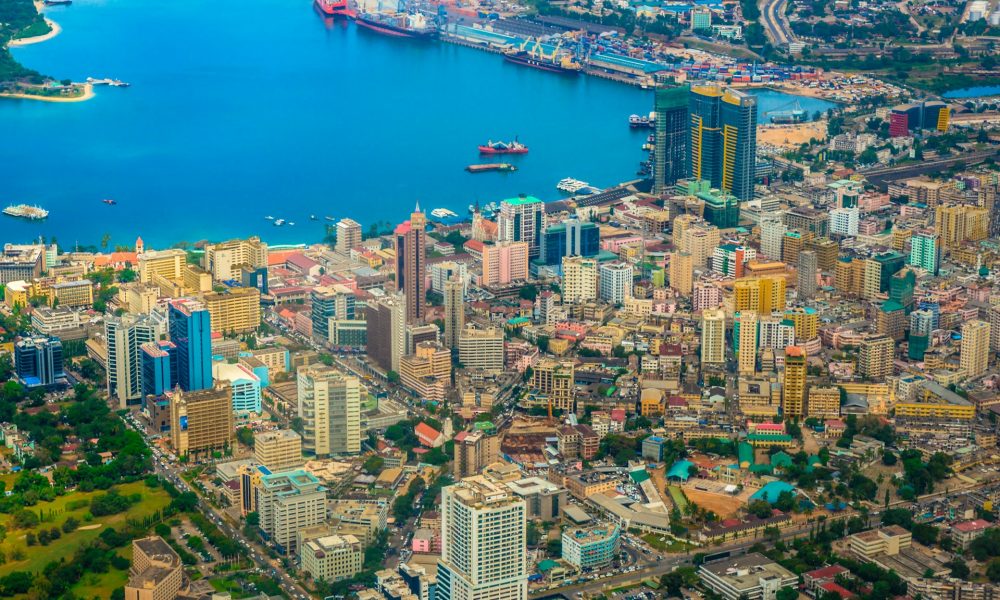
6.0%. That’s Tanzania’s GDP growth rate in 2025 — up from 5.5% the year before, with inflation sitting quietly at 3.3%. Inside Tanzania’s growth strategy, the picture that emerges isn’t one dramatic bet on a single industry. It’s five of them, each reinforcing the others, all pushed forward by President Samia Suluhu Hassan since she took office.
Here’s where the money, the policy, and the momentum are actually going.
Regulatory Reform: Fixing the Foundations
Start with the unglamorous stuff. Tanzania’s Blueprint for Regulatory Reform — MKUMBI II, launched April 2025 — isn’t flashy, but it’s doing the heavy lifting. The programme cuts through bureaucratic drag, streamlines fees, and makes Tanzania a more attractive place to put capital.
Prime Minister Kassim Majaliwa put it plainly: the plan is about “attracting more investments, improving infrastructure, expanding access to international markets for local products, and enhancing competition and product quality.” The government, he said, is committed to “fully cooperate with all stakeholders to achieve the goal of a favourable business and investment climate.”
Bold words. But the early numbers back them up. A 2026 validation workshop proposed 246 additional reform actions — Minister of State Kitila Mkumbo described these as essential to hitting Vision 2050’s audacious $1 trillion economy target. Private sector credit expanded roughly 20%. A 5.4% growth rate is projected for 2026.
The Financial Sector Development Master Plan is running alongside all of this, pushing financial access toward women, young people, and smallholder farmers. Groups that have historically been locked out.
Infrastructure: Building at Scale
Tanzania is now the seventh-largest infrastructure investor on the continent. That’s not a minor distinction.
The Julius Nyerere Hydropower Project came fully online in 2025, adding 2,115MW to the national grid. Construction started back in 2019 — six years of work that’s now paying off. It’s one of sub-Saharan Africa’s largest hydropower facilities, and it gives Tanzania the stable energy base that industrial ambition actually requires.
Then there’s the Standard Gauge Railway connecting Dar es Salaam to Dodoma and Mwanza. Inland trade routes. Smoother freight movement. Less friction between producers and markets.
And the roads. A $2.4 billion bridge and roads project covering nearly 6,000 kilometres — generating close to 17,000 jobs in 2025 alone. Infrastructure spending that pays twice: once in physical connectivity, again in employment.
Tourism: More Than Safaris
Better roads and airports don’t just move cargo. They move people.
Tanzania welcomed 2.29 million international tourists in 2025 — a 7% jump year-on-year. Revenues hit $4.3 billion. The government has been deliberately expanding the country’s image beyond the classic safari pitch, investing in marketing campaigns that show a broader, more varied destination.
It’s working. Tourism has become one of the country’s most effective job creators, and further infrastructure upgrades are being built specifically to handle more of it.
Mining: Adding Value, Not Just Volume
Mining now accounts for close to 12% of Tanzania’s GDP. Exports rose 31% in 2025. The catch? Raw extraction alone doesn’t build lasting wealth — and Tanzania knows it.
The shift underway is toward value addition: refining gold, diamonds, nickel, graphite, and rare earth elements inside the country rather than shipping them out raw. Between July 2025 and March 2026, the Mining Commission issued 454 licences for critical and strategic minerals. The Panda Hill niobium project could place Tanzania among the serious players in global rare earth supply.
The government has also drawn a firm line around domestic interests — maintaining a protected list of goods and services reserved exclusively for Tanzanian companies. Foreign investment is welcome; being hollowed out is not.
Digital Economy: Beyond Commodities
President Samia launched the Digital Economy Strategic Framework 2024–2034 in July 2024. Since then, internet penetration climbed to 85.3% by end of 2025, per TCRA data. Digital ID systems and mobile payments are scaling up.
The goal is clear enough: reduce Tanzania’s dependence on commodity cycles. A digital economy doesn’t rust, doesn’t require shipping, and compounds differently than extractive industries. It’s early days — but the groundwork is being laid deliberately.
None of these five sectors alone would move the needle enough to matter. But together? They’re reinforcing each other in ways that are hard to reverse. Better infrastructure feeds tourism and mining. Reform attracts capital. Digital tools reach the people traditional finance never did.
Tanzania isn’t just growing. It’s building the kind of structure that makes growth stick.



 Bitcoin
  Ethereum
  Tether
  BNB
BNB  USDC
USDC  XRP
XRP  Solana
  TRON
TRON  Lido Staked Ether
  Cardano
  Gram (prev. Toncoin)
  Avalanche