
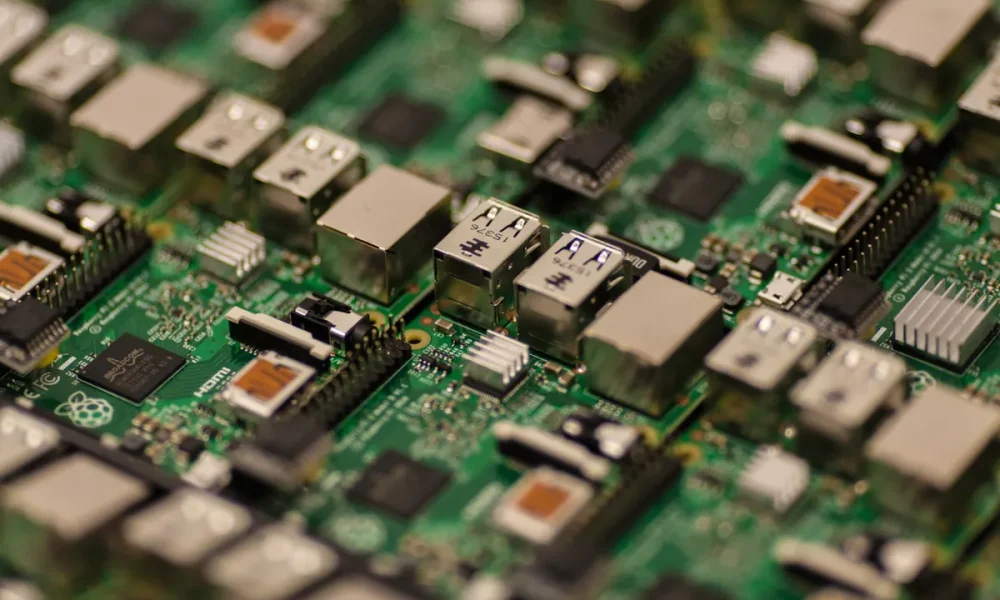
At 661p, the Raspberry Pi share price sits roughly 64% below the 1,085p target that Peel Hunt analysts placed on the FTSE 250 technology stock earlier this month, a gap wide enough to turn a £5,000 position into approximately £8,200 if the target is met. Whether that gap closes, or widens, depends on how several competing forces resolve over the next twelve to eighteen months.
What the Raspberry Pi Share Price Reflects at 661p
Peel Hunt has skin in this story beyond its research desk. The broker acted as joint corporate broker on Raspberry Pi’s admission to the Main Market and managed a £56m sell-down on 1 July 2025. It also handled the company’s IPO, which raised gross proceeds of c.£179m when shares first admitted in June 2024. That relationship is worth flagging: a house price target from a retained corporate broker carries a different weight than one from an independent analyst.
With that context in place, the bull case is still substantive. Revenues for the current year are forecast to rise 88% year on year to £608m, driven by demand for the company’s miniature single-board computers (SBCs), which developers are deploying to build AI applications. Chip shipments rose 47% year on year in 2024, and the company has guided that it expects to ship over 4m units in the first half of 2026, up from 3.6m in the equivalent period of 2025.
The installed base is not new. London Stock Exchange data shows Raspberry Pi has sold more than 60 million SBCs and compute modules since launch, with 7.4 million sold in 2023 alone. Industrial and embedded applications accounted for more than 70% of its 2023 sales, a mix that tends to generate stickier demand than the hobbyist segment that first built the brand. The community around the brand is real: the Raspberry Pi subreddit carries more than 3.3 million followers.
The FY 2025 annual report indicated that full-year profitability was anticipated to be in line with market estimates, with revenue materially higher. The company is profitable and carries a strong balance sheet, which reduces the downside scenario that haunts many growth-stage technology stocks.
Insider Sales, Margin Risk and the Forward P/E
The bear case starts with unit economics. In a recent trading update, the company said margins are expected to ‘moderate’ in the second half of 2026 as cheaper memory inventory is worked through and replaced at higher prevailing costs. Memory prices spiked earlier this year and that pressure will flow through the income statement with a lag.
The insider-activity picture is mixed. In February 2026, CEO Dr Eben Upton CBE FREng purchased 4,684 ordinary shares at an average price of £2.82327 per share in an open-market transaction. Four months later the picture changed: AJ Bell reported that in mid-June both Upton and Chief Commercial Officer Mike Buffham sold shares. Buffham disposed of 60,000 shares at 1,011.8p, generating proceeds of £607,093. Insiders sell for many reasons, and the February purchase argues against a straightforward negative read, but the timing, close to peak prices and ahead of the margin guidance, is the kind of detail that warrants attention.
Separately, the Raspberry Pi Foundation has indicated plans to sell around 5% of its stake in the company through a secondary placing, with Peel Hunt acting as agent. Secondary supply from a major holder can weigh on price momentum in the near term.
Valuation is the final consideration. On current earnings forecasts for 2026, the forward price-to-earnings ratio sits at approximately 50x. That is not unusual for a technology stock growing revenues at this rate, but it does mean the shares carry meaningful downside if the margin moderation proves deeper than guidance implies, or if competition from lower-cost alternatives erodes the pricing power that underpins those forecasts. Chinese copycat products remain an open question that the company has not fully addressed.
The setup is clear enough: the Raspberry Pi share price is a genuine growth story, backed by a loyal installed base, an industrial demand mix that most retail observers underweight, and a credible revenue trajectory. The margin uncertainty in H2 2026 and the forward P/E at 50x are the two variables most likely to define whether this re-rates toward 1,085p or gives back further ground first. The H2 trading update will be the decisive read.



 Bitcoin
  Ethereum
  Tether
  BNB
BNB  USDC
USDC  XRP
XRP  Solana
  TRON
TRON  Lido Staked Ether
  Cardano
  Gram (prev. Toncoin)
  Avalanche