Bitcoin
  Ethereum
  Tether
  BNB
BNB  USDC
USDC  XRP
XRP  Solana
  TRON
TRON  Lido Staked Ether
  Cardano
  Gram (prev. Toncoin)
  Avalanche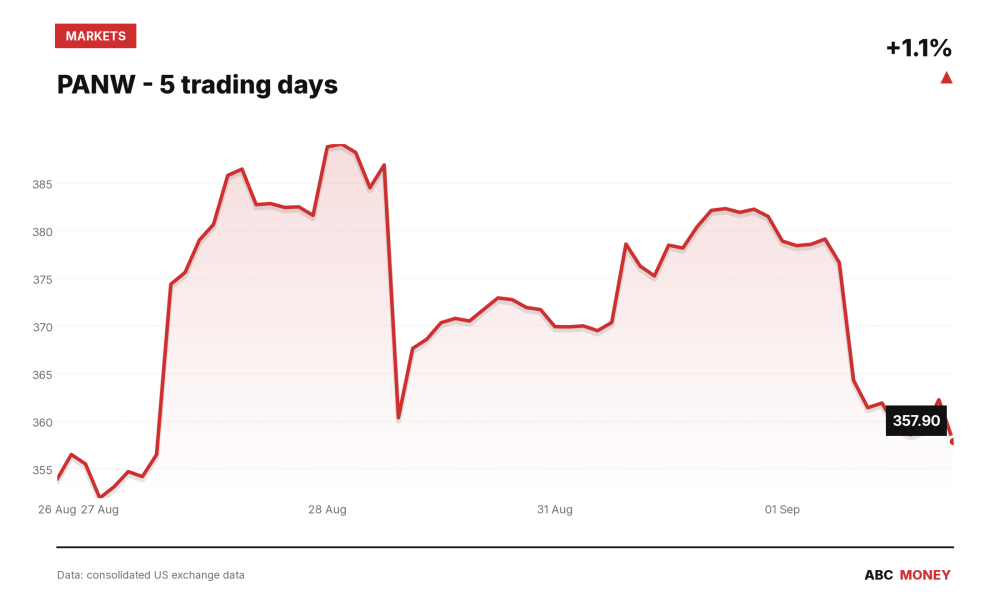
Palo Alto Networks (NASDAQ: PANW) has acquired Console, an AI-native platform designed to give security software the ability to act on its own rather than just flag problems for humans to fix, the company said in a statement. Financial terms were not disclosed, according to Benzinga. The Palo Alto Networks Console acquisition arrives the same day the company reported fiscal fourth-quarter and full-year 2026 results, and shares fell all the same.
The deal was framed by Palo Alto Networks’ own release as a way to extend its Cortex platform, the software suite that underpins its security operations business, into what it calls “agentic” workflows – AI systems that can take action rather than simply alert. The pitch: security teams drowning in alerts get software that can investigate and remediate threats with less human hand-holding.
A busy year of buying AI-agent capability
Console is not an isolated purchase. Palo Alto Networks announced its intent to acquire Chronosphere, an observability specialist, on 19 November 2025 and completed that deal on 29 January 2026, pitching it alongside Cortex AgentiX as a route to “real-time, agentic remediation.” It closed the purchase of Portkey, an AI gateway product feeding into its Prisma AIRS line, on 29 May 2026, and has separately said it intends to acquire Koi for agentic endpoint security. Console, in other words, is the fourth leg of a run of AI-agent tuck-ins rather than a one-off pivot.
What’s missing from the public record is any sense of scale. No 8-K – the disclosure US-listed companies must file for material corporate events – detailing Console’s purchase price or deal structure has appeared in Palo Alto Networks’ SEC filings. That leaves investors taking the company’s characterisation of the deal’s importance largely on trust, at least until more detail surfaces in a future filing.
Why the stock actually fell
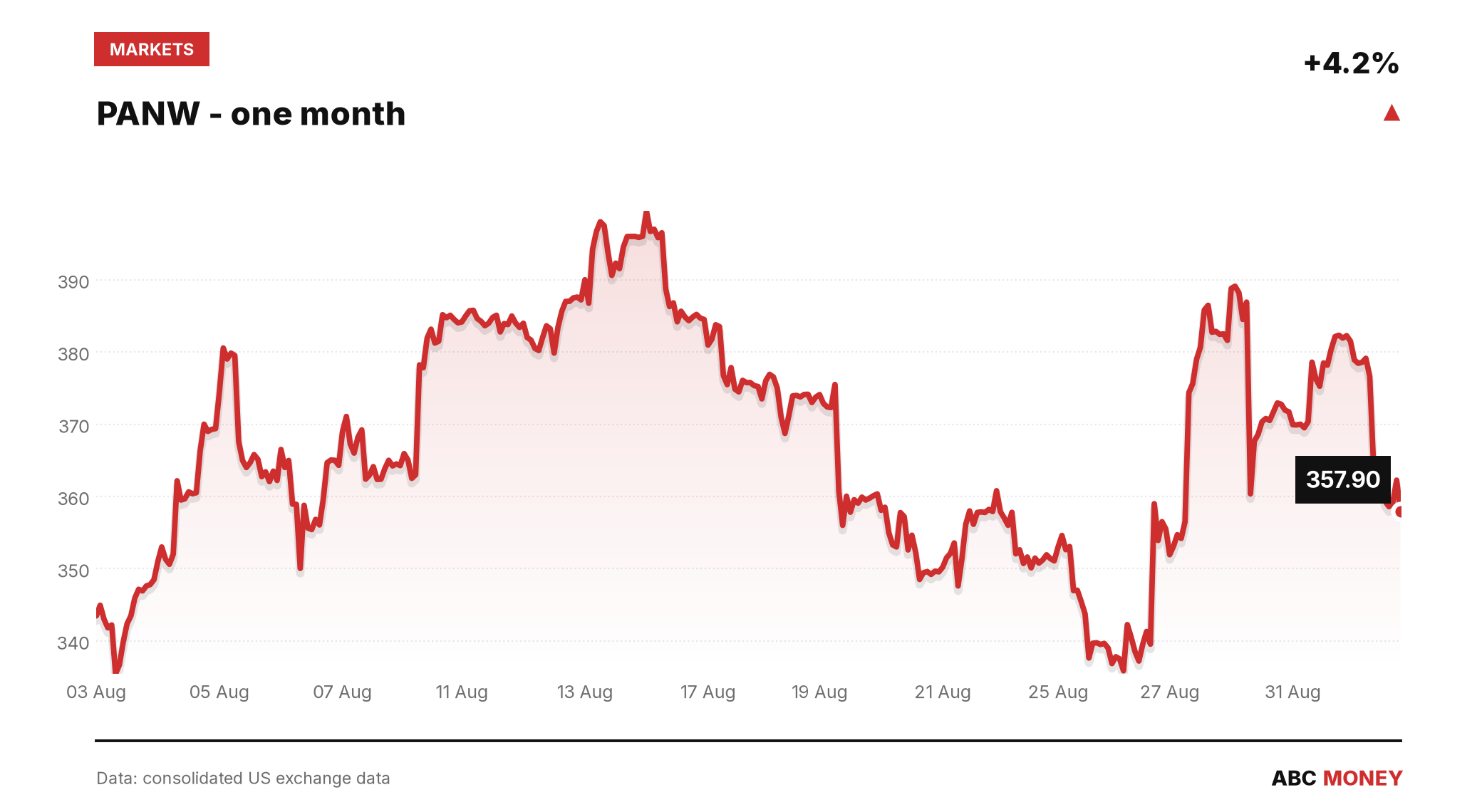
Shares closed at $359.10 on 1 September, down 1.43% on the day, according to Yahoo Finance. Volume ran at roughly 3.02 times the 20-day average – hardly a quiet session. But the single-day move followed a 6.72% decline over the prior 20 trading sessions, with the stock ranging between $335.85 and $399.50 in that stretch. The slide, in short, was already underway well before Console was named.
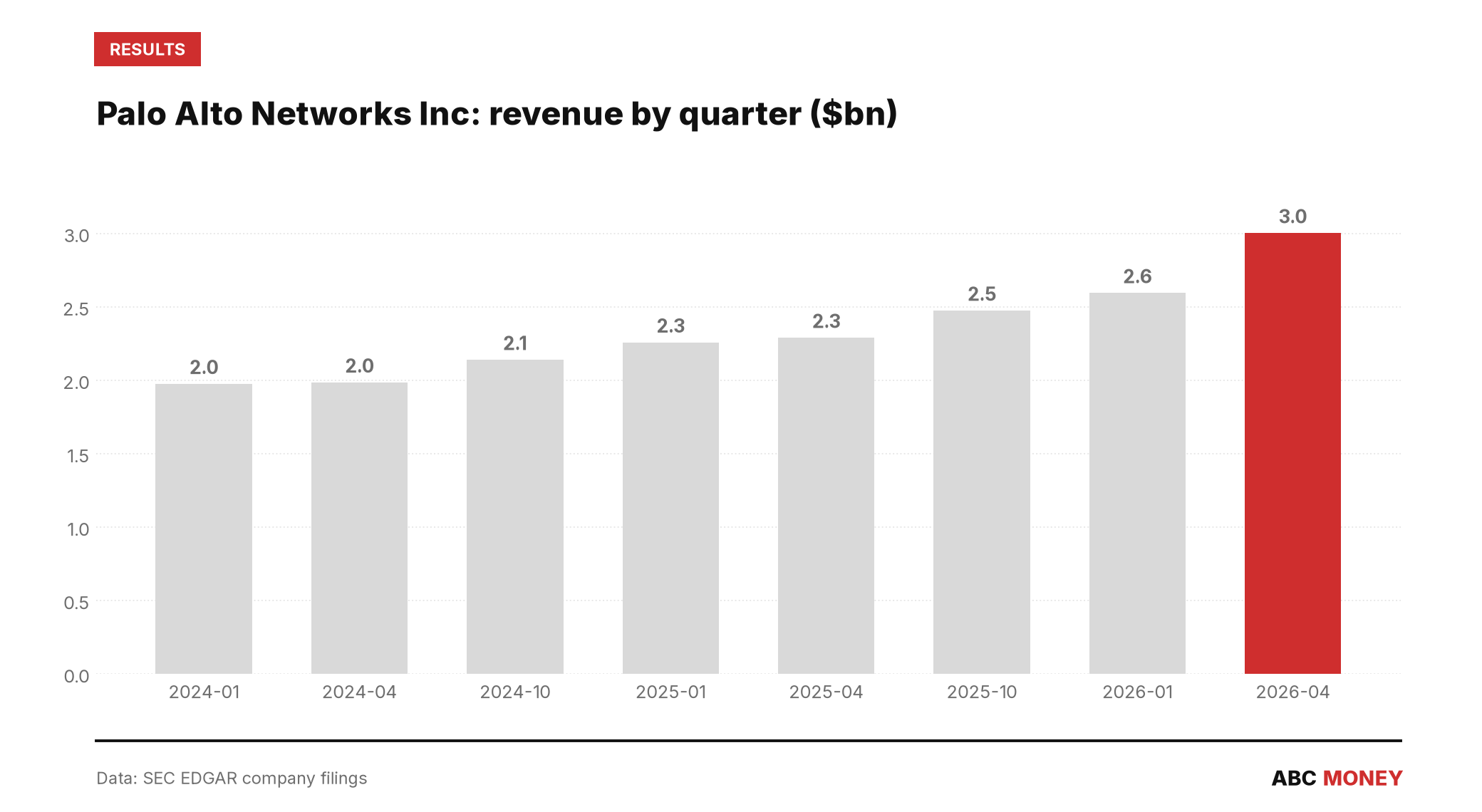
The more plausible explanation sits in the numbers Palo Alto Networks published alongside the acquisition news: its fiscal third-quarter 2026 results, covering February to April, showed a GAAP net loss of $177.0 million and diluted earnings per share of -$0.22 – a sharp reversal from net income of $432.0 million and EPS of $0.61 the previous quarter, according to the company’s 10-Q filing. Revenue kept climbing regardless, reaching $3.002bn that quarter versus $1.975bn two years earlier, so the swing to a loss looks like a one-off charge or accounting item rather than a demand problem – but a headline loss print, dropped into the same release as an unpriced acquisition, is the kind of thing that unsettles a market already nervous about growth-stock valuations.
That nervousness has a macro backdrop. The 10-year US Treasury yield rose to 4.73% on 28 August from 4.67% previously, and the 2-year climbed to 4.34% from 4.20%, according to Federal Reserve data. Rising yields tend to weigh hardest on high-multiple software names, since more of their profits sit further out in time and are worth less when discounted at a higher rate. Palo Alto Networks, trading well above the broader market’s earnings multiple, is squarely in that category.
What the short interest doesn’t show
One thing the Console announcement did not coincide with was a surge in bearish positioning. The proportion of Palo Alto Networks shares traded short – a gauge of how many investors are betting the stock falls – ran between roughly 0.357 and 0.558 of daily volume across the fortnight before the announcement, per FINRA data, with no notable spike into the news. That argues against a squeeze narrative and points instead towards a reaction rooted in the earnings print itself.
None of this makes Console unimportant to the company’s strategy. Bundling an AI-native acquisition of undisclosed size into an earnings release that also carried a surprise quarterly loss makes it close to impossible for outside investors to isolate what the market is actually pricing – the deal, the loss, or the wider rate backdrop pressuring the sector. Whether Palo Alto Networks eventually discloses Console’s terms in a future filing, and whether the loss proves to be a one-off, are the two threads worth following from here.
This article is for information only and is not investment advice or a recommendation to buy or sell any asset. Markets move quickly; figures are correct as sourced at the time of writing. Always do your own research before making financial decisions.