Bitcoin
  Ethereum
  Tether
  BNB
BNB  USDC
USDC  XRP
XRP  Solana
  TRON
TRON  Lido Staked Ether
  Cardano
  Gram (prev. Toncoin)
  Avalanche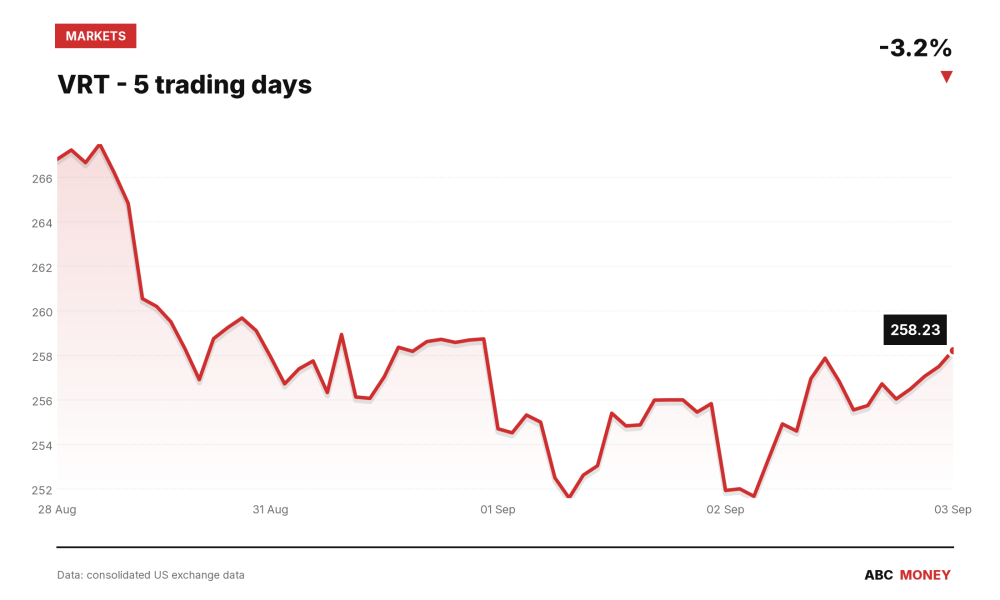
Vertiv Holdings Co (NYSE: VRT) has agreed to buy Utility Innovation Holdings for up to $2.6bn, a Vertiv microgrid acquisition designed to attack one of the biggest constraints on the artificial intelligence boom: getting enough electricity to a data centre fast enough to matter. The deal, announced on 2 September 2026, pushes the Ohio-based power and cooling equipment maker upstream from the server room to the grid connection itself.
The structure is worth pausing on, because the $2.6bn figure in the headline number is a ceiling, not a cheque. Vertiv is paying roughly $1.45bn in cash at closing, with a further $1.15bn contingent on Utility Innovation Holdings (UIG) hitting EBITDA (earnings before interest, tax, depreciation and amortisation – a common yardstick for a business’s underlying cash-generating power) targets over 12- and 24-month periods after completion, according to Reuters, via Investing.com. The upfront $1.45bn works out to around 13 times UIG’s expected 2027 EBITDA – a rich multiple on its own, but one that falls sharply if the earnout is paid in full, since the extra consideration is tied directly to earnings growth rather than a fixed price.
Why Vertiv wants a grid business
UIG, founded in 2020 and based in Raleigh, North Carolina, builds microgrid controls, onsite generation and behind-the-meter power architecture – the plumbing that lets a data centre generate or store its own electricity rather than wait years for a utility interconnection. It operates in the US and Europe and has partnered with Volvo Penta on battery storage projects. Bolted onto Vertiv’s existing business of power distribution units, cooling and switchgear inside the data centre, the acquisition extends the company’s reach right out to the grid boundary.
Vertiv chief executive Gio Albertazzi framed the logic around speed rather than capacity alone, telling reporters that “For AI data center operators, competitive advantage increasingly depends on how quickly they can move from site selection to first token.” That is the crux of the pitch: hyperscalers are less constrained by chip supply than by how long it takes a utility to energise a new site, and a company that can shortcut that queue with its own generation and storage has something genuinely scarce to sell.
The balance sheet doing the heavy lifting
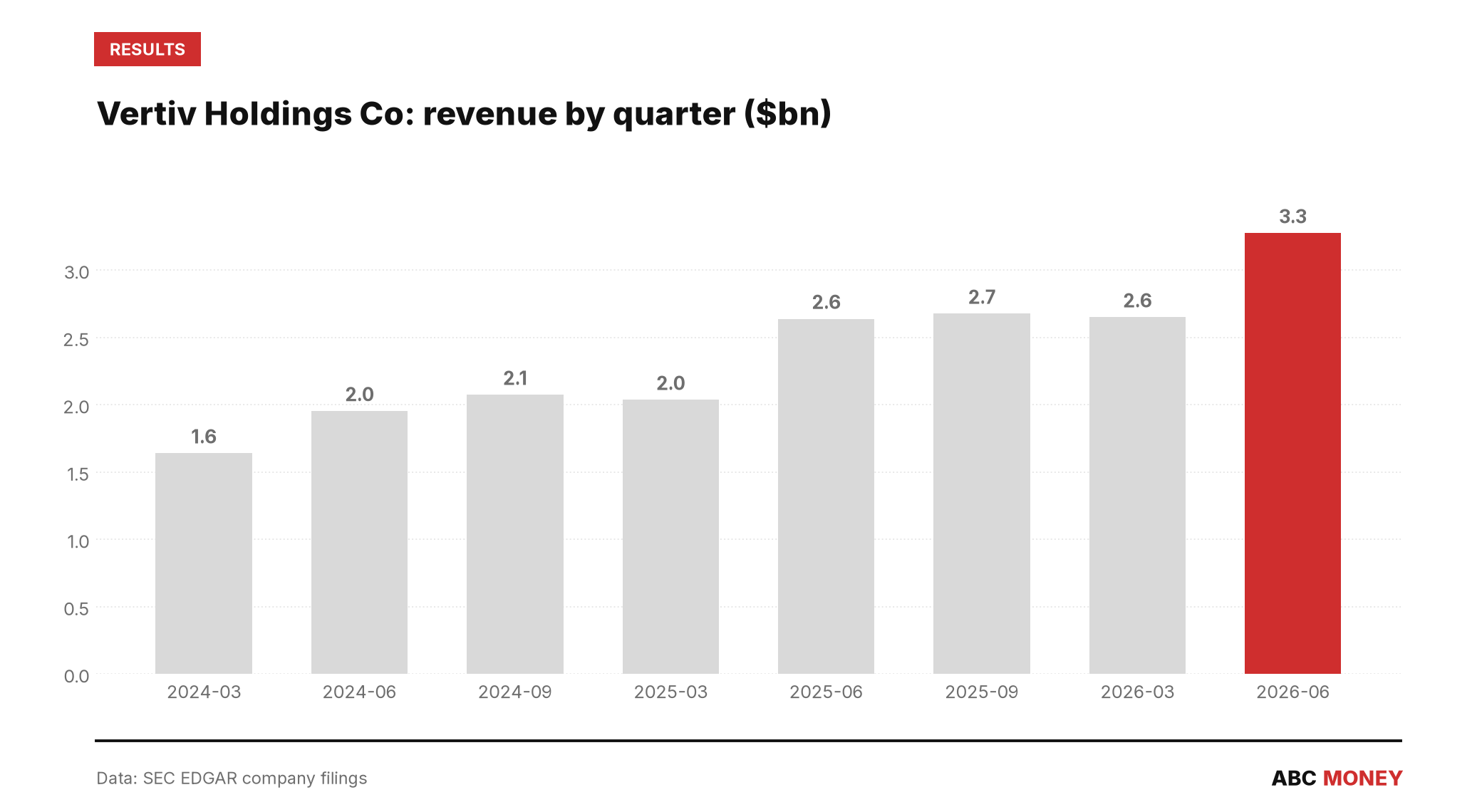
Vertiv can absorb the upfront cost comfortably. The company ended its second quarter of 2026 with $5.6bn of liquidity and a net cash position, according to its own earnings release, with net leverage at negative 0.1 times – meaning it holds more cash than debt. Quarterly revenue reached $3.27bn, up from $2.65bn in the first quarter, and diluted earnings per share of $1.27 for the quarter matched the figure filed with the Securities and Exchange Commission, up from $0.99 three months earlier. Management expects the UIG deal to be accretive to adjusted earnings per share in its first year after completion, and to close in the fourth quarter of 2026, subject to regulatory approval; J.P. Morgan Securities is advising Vertiv, with Morgan Stanley advising UIG on the transaction, per Vertiv’s press release announcing the tie-up.
A stock that had already cooled off
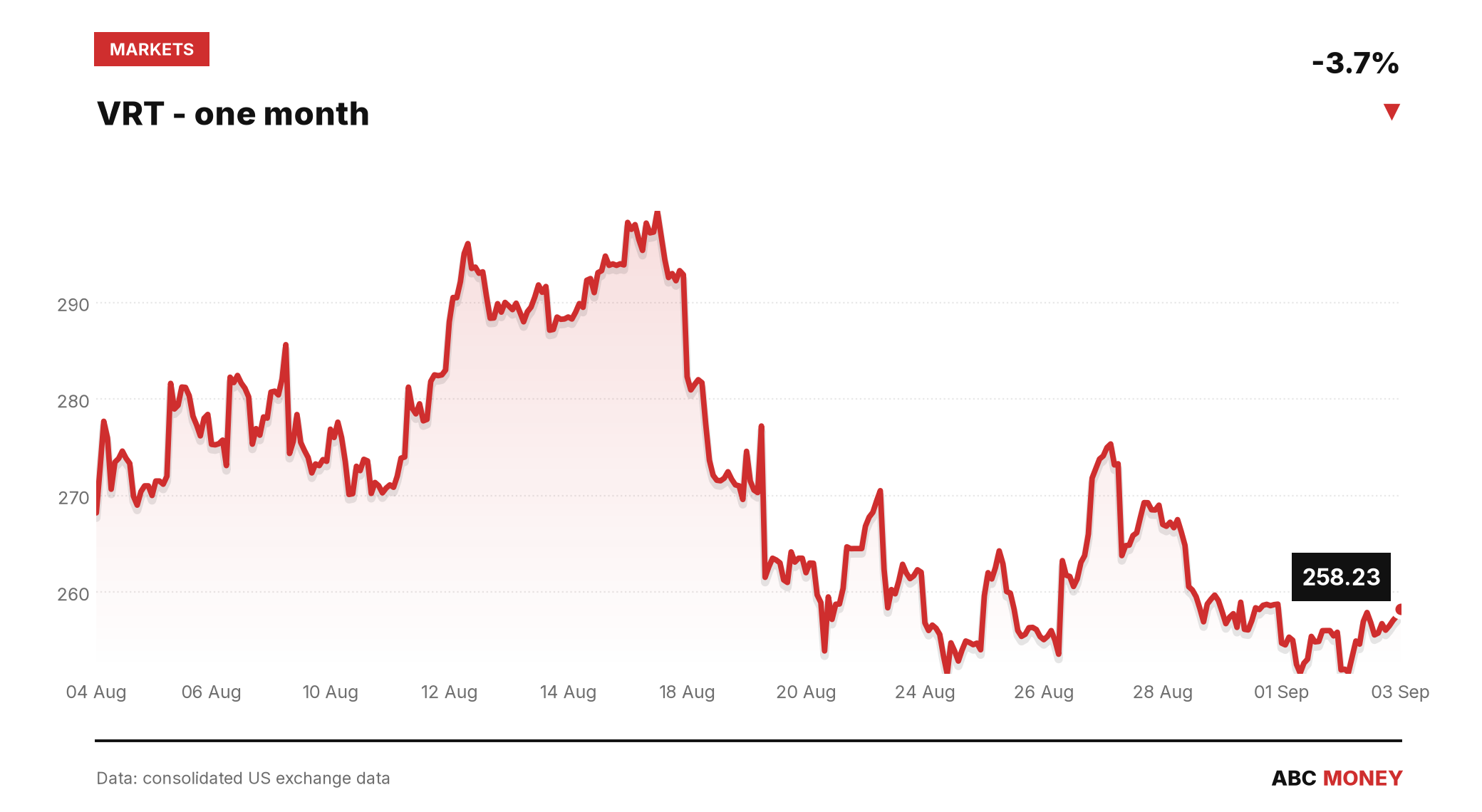
The deal lands after a rough patch for Vertiv shares, which had fallen 10.73% over the prior 20 trading days before the announcement, trading between a high of $299.47 and a low of $251.51 in that window, against a backdrop of rising bond yields – the 10-year Treasury yield stood at 4.79% and the two-year at 4.39% on 1 September 2026, per Federal Reserve data. Higher long-term rates tend to weigh on capital-intensive growth stories by raising the discount applied to future earnings, and Vertiv’s valuation has not been immune. Shares last traded at $258.23, up 1.05% on the day, on volume running about 30% below the 20-day average – not a market rushing to reprice the stock either way. MarketBeat’s consensus 12-month price target of $357.83 implies analysts see considerably more room to the upside than the current price reflects, though that consensus predates full digestion of the UIG terms.
What happens next is straightforward to track: the deal is expected to close in the fourth quarter of 2026, and the EBITDA targets governing the earnout will be measured over the following 12 and 24 months, giving investors two clear windows – roughly late 2027 and late 2028 – to judge whether Vertiv’s bet on the grid edge of AI infrastructure pays off in the currency that matters, cash rather than headline billions.
This article is for information only and is not investment advice or a recommendation to buy or sell any asset. Markets move quickly; figures are correct as sourced at the time of writing. Always do your own research before making financial decisions.