Meta’s Personal AI Agent Muse Debuts, Stock Jumps 4.76%
Meta's personal AI agent Muse launched to a share-price pop, but the "world's first" tag doesn't survive contact with the competition.
In this article 3 sections
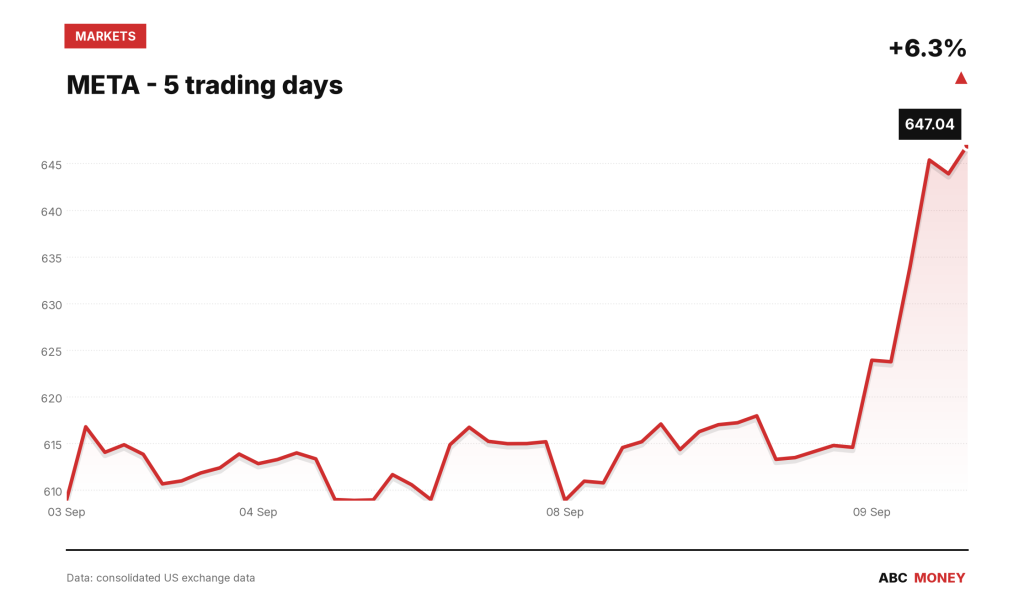
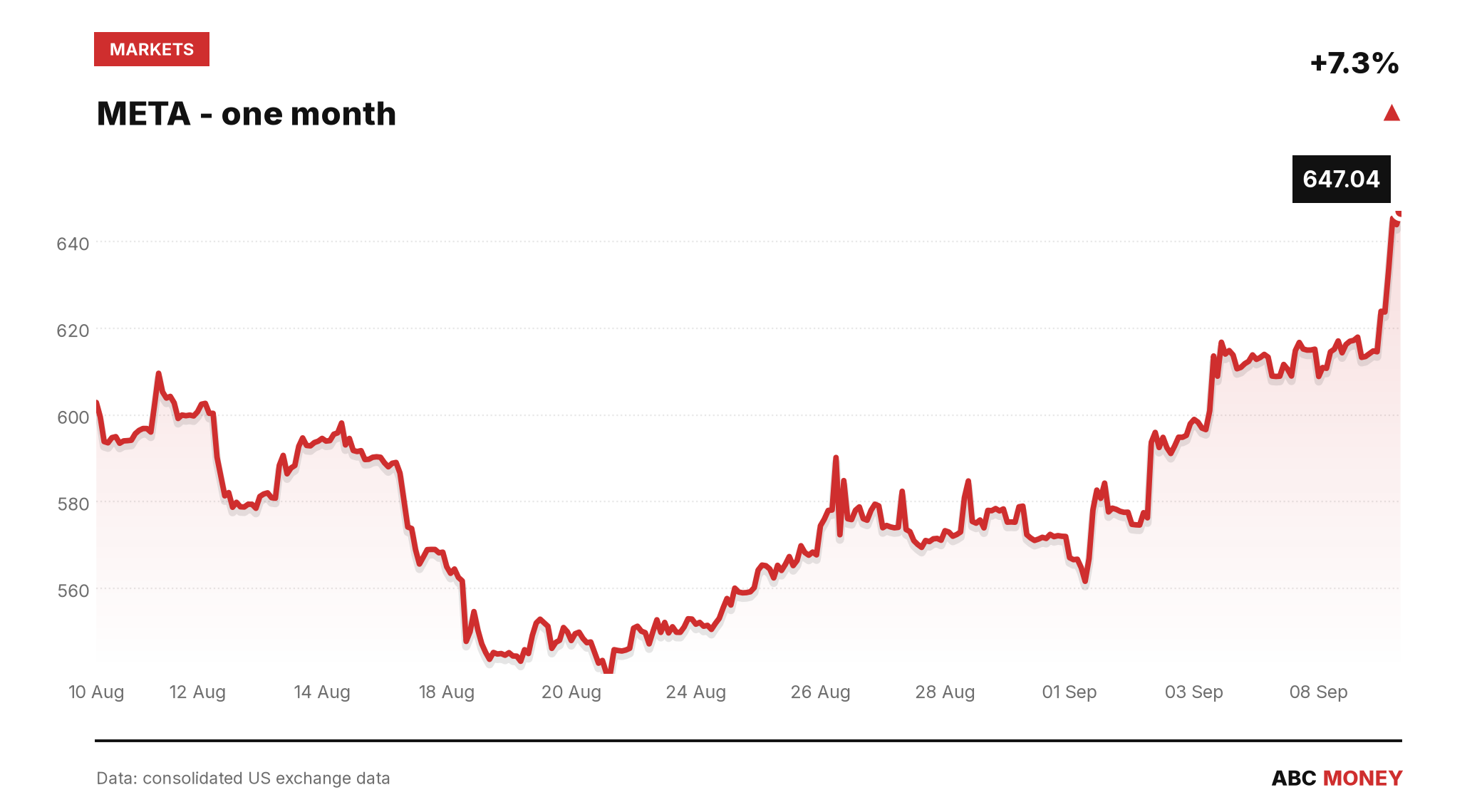
Meta Platforms (NASDAQ: META) unveiled its personal AI agent Muse on 8 September 2026, promising a digital assistant that can send emails, book travel, sell a car or haggle down a household bill on a user’s behalf. The stock responded: shares closed at $644.07, up 4.76% on the day and 17.28% over the prior 20 trading sessions, brushing a 20-day high of $645.40, according to Benzinga‘s trading-desk coverage.
The company’s own framing calls Muse the “world’s first personal AI agent built for everyone,” a claim that does not survive much scrutiny. Muse is explicitly modelled on the existing open-source agent OpenClaw, and it arrives into a field that already includes OpenAI’s Atlas and Google’s Gemini Agent, per MarketWatch‘s reporting on the launch. Meta’s own product page for Muse describes it more modestly, simply as “Meta’s personal AI agent,” without the superlative. The underlying product news is real and reasonably well corroborated; the marketing gloss around it is not.
What Muse actually does
Muse comes in a free tier alongside paid subscriptions at $20 or $100 a month, scaled by usage, according to reporting cited by Benzinga. Each agent runs on its own dedicated virtual machine inside Meta’s cloud infrastructure, with a built-in browser window the user can watch in real time, and it must ask for explicit approval before taking sensitive actions such as sending an email or completing a purchase — a design choice clearly aimed at heading off the obvious worry about handing an algorithm the keys to your inbox and your bank details.
That worry is not abstract for Meta right now. The company agreed an $18bn multistate settlement over allegations that its social platforms caused consumer harm barely a fortnight before Muse’s debut, which makes the timing of this launch look less like happy coincidence and more like a deliberate attempt to change the subject — from what Meta’s platforms have done to users, to what its software can now do for them. Chief executive Mark Zuckerberg has previously written that “everyone will have an exceptionally capable personal agent” working around the clock on their behalf, and Muse is the first consumer-facing product built to make good on that line.
A pop with unusually thin volume
The share move itself deserves a second look. A 4.76% one-day gain on a stock already up double digits over the preceding month is a meaningful repricing by any standard measure. But trading volume on the day of the snapshot ran at only 24% of the 20-day average — a strikingly quiet tape for a mega-cap stock that financial media were describing as “trending.” That combination doesn’t invalidate the move, but it does suggest the rally was driven by a relatively small number of buyers pushing the price higher rather than a broad wave of institutional repositioning.
Treasury yields offer no alternative explanation. The 10-year yield sat at 4.78% and the 2-year at 4.37% as of 4 September 2026, both essentially unchanged from prior sessions, according to Federal Reserve data. With the rate backdrop static, the Muse-linked share move looks like a stock-specific reaction to the product news rather than a shift in the broader macro mood.
No filing, but a growth story underneath
Meta has not filed anything with the US Securities and Exchange Commission specifically disclosing the Muse launch; the only recent submission in the period was a routine Form 4 covering an insider’s share transaction, unrelated to the product news, filed on 8 September 2026, per SEC EDGAR. That is unremarkable — a product announcement of this kind doesn’t typically trigger a material-event filing — but it does mean investors are, for now, reacting to press coverage and Meta’s own marketing rather than to anything filed under oath.
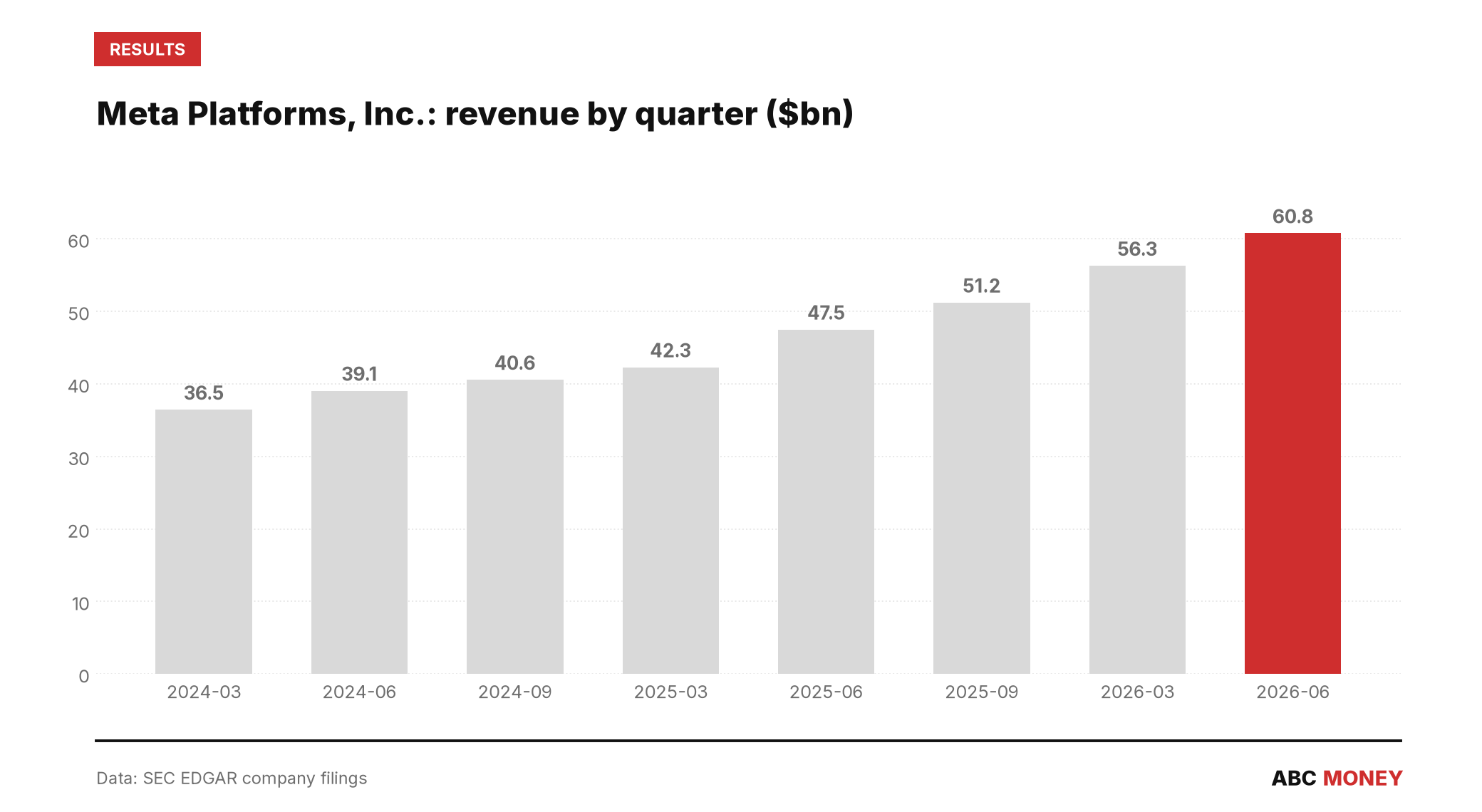
The financial backdrop against which Muse is landing is a business still growing briskly. Meta’s revenue for the quarter ended 30 June 2026 came in at $60.801bn, up from $47.516bn in the equivalent quarter a year earlier, based on the company’s own 10-Q filing. Diluted earnings per share for the same period were $6.18. That growth gives Meta the balance-sheet room to subsidise an ambitious, compute-hungry consumer product like Muse — dedicated virtual machines per user are not cheap to run at scale — even before it is clear how many people will pay $20 or $100 a month to let an AI agent manage their errands.
Whether Muse becomes a durable subscription business or a headline-grabbing pilot will likely turn less on the “world’s first” framing and more on something more mundane: how many users trust the agent enough to grant it access to their email and payment methods, at a moment when Meta’s broader reputation on user data is under more scrutiny than usual. That is the test worth watching, not the marketing copy.
This article is for information only and is not investment advice or a recommendation to buy or sell any asset. Markets move quickly; figures are correct as sourced at the time of writing. Always do your own research before making financial decisions.