
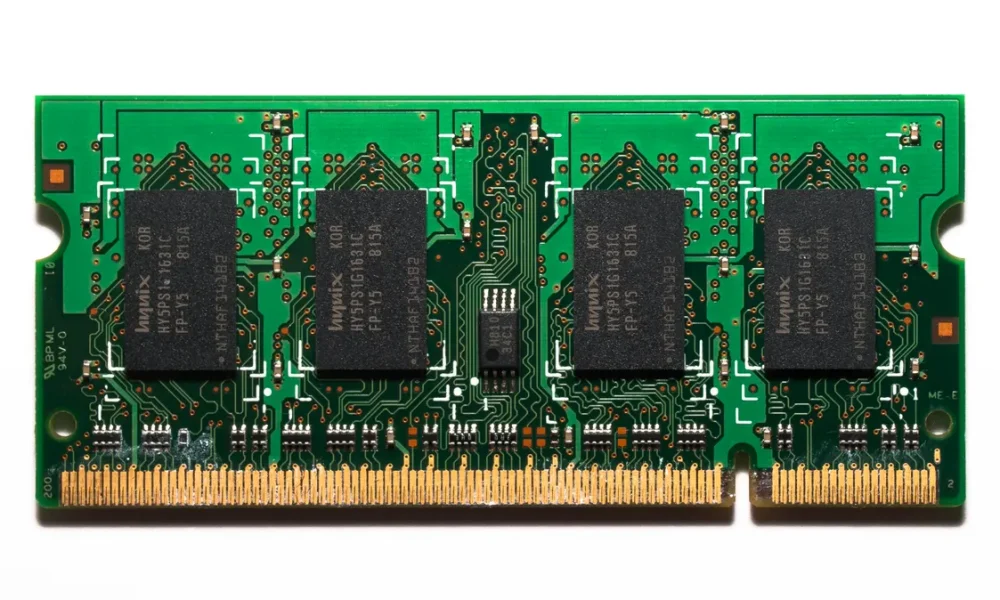
Apple’s memory cost pressure emerged as the central concern for AAPL investors after the company posted a record third-quarter result on 30 July 2026, sending the shares down roughly 6% despite earnings that beat on almost every headline metric.
A Record Quarter, With One Expensive Footnote
Revenue rose 16% year on year to $109.4bn for the quarter ending 27 June, a third-quarter record, according to the Apple Newsroom. Products revenue reached $78.7bn, up 18% year on year, while the services segment grew 12% to $30.7bn, itself a quarterly record. Net income came in at $29.8bn, diluted EPS rose 29% to $2.02 (partly assisted by tariff refunds of $0.11 per share), and operating cash flow hit $34.4bn, a June-quarter record.
iPhone sales jumped 22% to $54.3bn and Mac revenue surged 29% to $10.4bn, with the Mac lineup performing strongly despite price increases introduced in June 2026. Revenue rose across every geographic segment, setting June-quarter records in all regions, according to Axios. The one miss was iPad, where sales fell 5.9% to $6.19bn, below analyst expectations of $6.92bn; Tim Cook attributed the shortfall to a tough comparison against last year’s launch of the budget A16 iPad.
CFO Kevan Parekh stated that the installed base of active devices reached a new all-time high across all major product categories and geographic segments in the quarter.
Apple Memory Cost Pressure and the Q4 Margin Squeeze
The post-results selloff was driven by guidance. Management set Q4 revenue growth at 9%-11%, below the 12% analysts had modelled, and guided gross margin at 47%-48%, down from the 50.1% recorded in Q3. That guidance includes an expected benefit of approximately 1 percentage point from tariff refunds, meaning the underlying compression is steeper than the headline range implies. Strip out tariff effects from both quarters and the gross margin step-down is approximately 160 basis points, which management attributed primarily to memory costs, according to Trefis analysis. Q4 operating expenses are guided at $19.1bn to $19.4bn.
Cook was unsparing on the subject, telling CNBC that the memory situation is ‘difficult’ and ‘not good for the consumer,’ adding: ‘the memory prices are choking, and so we’ll have to look at alternatives.’ He confirmed that Apple has been paying more for memory across each of the past three quarters and stated: ‘We expect to pay even higher memory costs,’ with partial offset expected from inventory Apple has been holding and savings on non-memory components. Apple raised Mac and iPad prices in June 2026 but, as of the earnings call, had not extended hikes to iPhones in most markets.
This is the core of the Apple memory cost pressure problem for the near term: with gross margin already at 50.1% in Q3, each incremental rise in component costs lands visibly on the income statement. The Q4 guidance range makes that arithmetic plain.
On the supply-chain side, Cook announced a new agreement with Broadcom to design and produce custom silicon components and wireless connectivity technologies, expected to exceed $30bn as part of Apple’s American Manufacturing programme. The deal points toward reduced dependence on third-party component supply over the medium term, though it offers limited relief for the next cycle, Reuters reported.
CEO Transition Adds Another Variable for Investors
The earnings call was Cook’s final one before handing over CEO responsibilities to John Ternus on 1 September 2026. Cook has led Apple for fourteen years; the transition introduces a layer of leadership uncertainty that investors and analysts will continue to calibrate over the coming quarters.
Valuation and the Berkshire Position
Warren Buffett’s Berkshire Hathaway remains the most cited long-term endorsement of AAPL. Apple represents roughly 20%-22% of Berkshire’s disclosed US equity holdings, worth approximately $66bn-$70bn, according to the most recent 13F-HR filing on the Securities and Exchange Commission’s EDGAR system, dated 14 August 2026. The position underscores the quality-compounder case but does not speak to near-term price risk.
Wall Street’s consensus 12-month price target sits in the $322-$332 range, implying modest single-digit upside. Targets span $215 to $400, with TD Cowen at the upper end and Barclays carrying an Underweight rating near $245. One discounted cash flow model puts the stock as overvalued by as much as 22% at current levels. Apple has declared a quarterly cash dividend of $0.27 per share, payable on 13 August 2026 to shareholders of record as of 10 August 2026, providing modest income support.
The next test arrives with the Q4 print and the iPhone 18 cycle. If memory costs stabilise and Ternus commands early market confidence, the setup improves materially. If the Apple memory cost pressure deepens into the new device cycle, that 160-basis-point margin gap may prove only the opening move.


 Bitcoin
  Ethereum
  Tether
  BNB
BNB  USDC
USDC  XRP
XRP  Solana
  TRON
TRON  Lido Staked Ether
  Cardano
  Gram (prev. Toncoin)
  Avalanche