
Contributed content: this article was written by a third-party contributor and does not necessarily reflect the views of ABC Money. Editorial and Advertising Policy
A Hayward, California shop has spent three decades specializing in components most machine shops cannot physically accept. A look at the capability, the quality documentation, and the newly awarded ITAR registration that is opening the next chapter.
The part nobody can quote
Every manufacturing program eventually meets the same wall. There is one component that is not especially complex, does not carry unusual tolerances, and cannot get made. It is simply too large. The RFQ goes out and half the approved supplier list declines, not because the machining is difficult but because the part will not fit on the floor.
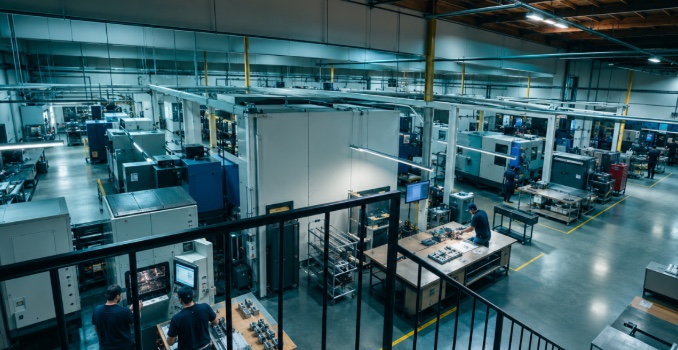
IMT Precision has built a thirty-year business on being the shop that says yes to those parts. From a 50,000 square foot facility in Hayward, California, the company machines large, complex metal components for programs where the part arrives by forklift and gets loaded by crane. Founded in 1995, it has grown from a small job shop into one of the largest CNC envelope capacities on the West Coast.
That is a narrow specialty, and the narrowness is the point. When a buyer needs an oversized structural component held to precision tolerances, the field is not crowded. It is a short list, and IMT has spent three decades earning a place on it.
The envelope, and the number underneath it
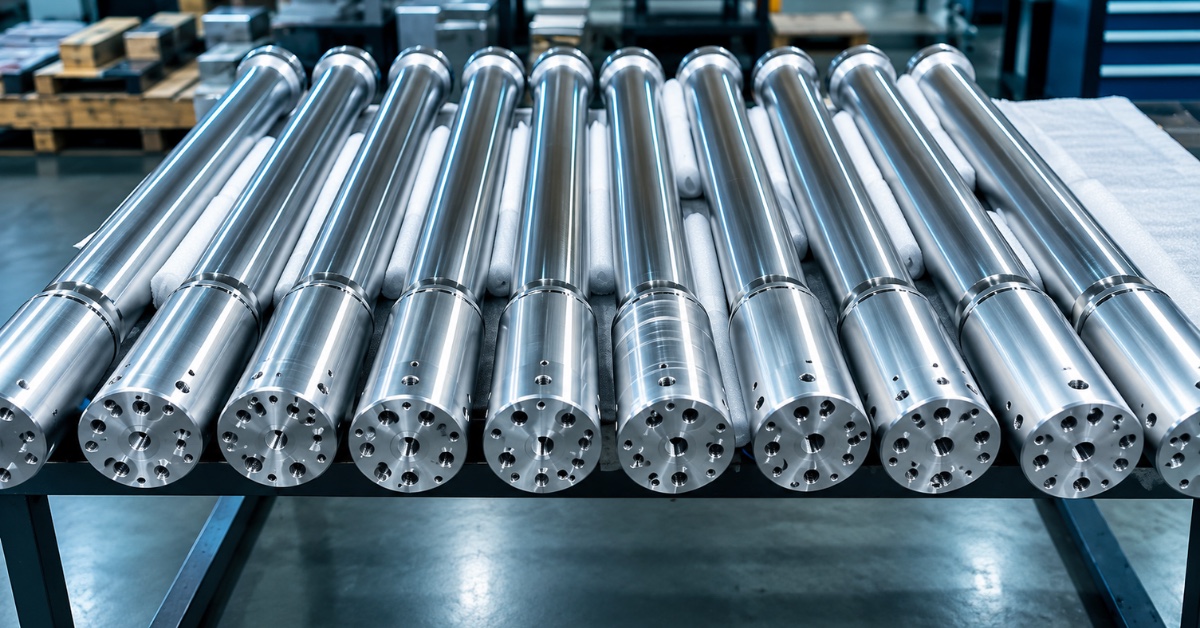
IMT’s large-envelope machining capacity includes up to 201 by 134 by 42 inches of travel on its vertical mill and 160 by 94 by 60 inches on its horizontal mill, supported by a 10-ton overhead crane. Those are the headline figures, and they are genuinely uncommon.
The more meaningful advantage sits underneath them. On oversized components, accuracy is usually lost between operations rather than during them. Every time a large part has to be unclamped, moved to another machine, and re-fixtured, the shop reintroduces stack-up error and adds hours the customer pays for. On a component that takes a crane to reposition, each of those moves also puts an already finished surface at risk.
A shop with the travel to complete more of the part in a single setup is not just working faster. It is producing a more accurate part, because it has eliminated the steps where accuracy typically degrades. IMT works across ferrous, non-ferrous, and exotic alloys including aluminum, stainless steel, titanium, Inconel, PEEK, and G10, delivering precision-shop performance at a scale most precision shops cannot approach.
One building, one accountable supplier
The capability that may matter most to a program manager is harder to put on a spec sheet.
Large components typically get split across vendors. One shop machines, another welds, a third assembles, and a fourth inspects. Every handoff adds freight, schedule, and a seam where responsibility gets ambiguous. When a dimension comes back out of tolerance after the third move, establishing where it went wrong is its own project.
IMT performs precision CNC machining, AWS-certified TIG and MIG welding, assembly and integration, and inspection under one roof in Hayward. Its capabilities also include Ultra High Vacuum systems, rapid prototyping, and engineering services covering design-for-manufacturability consultation and reverse engineering.
For an oversized component, single-source capability is not a convenience. It is the difference between a part that ships and a part that spends six weeks on trucks between four vendors. It also means one supplier owns the outcome from raw material to verified assembly, which is exactly what a program manager wants when the component is on the critical path.
Documentation that survives an audit
Quality on large parts is where marketing language usually gets vague, and where buyers should press hardest.
IMT operates an ISO 9001:2015 certified quality management system and delivers full material traceability, First Article Inspection, and CMM-verified dimensional data. For Ultra High Vacuum work, assemblies are helium leak tested. That combination is the documentation package that lets a program manager qualify hardware rather than take a supplier’s word for it.
Large-part inspection is worth a specific question from any buyer, at any shop. Conventional precision inspection assumes the component can be brought into a controlled environment and allowed to reach thermal equilibrium before measurement. On parts at the top of IMT’s envelope, that assumption has physical limits.
For components too large for a conventional inspection room, IMT measures at its external QC area, which is equipped with a 6-by-12-foot granite plate and a FaroArm Platinum with a 13.1-foot spherical measuring range. The shop accounts for material and thermal factors on a feature-by-feature basis, and every measurement ties back to a documented inspection report, so a customer auditing the paperwork can see exactly how each dimension was verified.
ITAR registration, and what it opened
IMT completed ITAR registration in June 2026, extending its large-format capability to controlled aerospace, space, and defense work.
Registration is a gate rather than a grade. It does not make a shop better at machining. It means the supplier has done the compliance work, has processes for handling controlled technical data, and can legally be considered for programs where that is a hard requirement. For a shop already producing flight-critical structural and propulsion components, it removes the last barrier between the capability and the programs that need it most.
The registration also lines up with where IMT’s demand has been heading. Defense procurement has been pushing toward domestic sourcing, and the supplier base capable of oversized precision work did not expand while that work was elsewhere.
Where the growth is: space and satellite
The clearest expansion around the shop is in space systems, and the fit is a natural one. Satellite and launch structures are large, tolerance-sensitive, and built from materials that are unforgiving to machine.
IMT’s space work covers satellite structural bus panels and frames, launch vehicle interstage and adapter structures, propulsion system housings and manifolds, antenna reflector backstructures, deployment mechanism components, reaction wheel and actuator housings, and integrated UHV assemblies. The shop’s large-format envelope accommodates the oversized structural panels, bus frames, and reflector structures that space platforms require, and the UHV welding and assembly capability means the shop can deliver vacuum-rated assemblies rather than loose parts.
Space hardware tolerates no defects, which puts the documentation package back at the center of the conversation. The combination of an oversized envelope, in-house certified welding, and CMM-verified inspection data under one ISO-certified system is what makes IMT a credible supplier to a commercial launch program rather than merely a capable machine shop.
The customer list as evidence
Capability claims are easy to publish. Customer rosters are harder to fake.
IMT’s published customers include Tesla, Applied Materials, and Thermo Fisher, alongside a growing roster of commercial space startups. National laboratories, semiconductor OEMs, and flight hardware programs all run demanding supplier qualification processes. A shop that clears them repeatedly, across sectors with different standards, has been audited more thoroughly than any review could manage.
The work spans beamline components and experimental hardware for national labs, process-critical vacuum chambers and gas delivery components for semiconductor fabs, machined housings and instrument components for biotech equipment, and components for power generation and clean energy systems.
Who this shop is for
IMT is a specialist, and it is worth being clear about the fit.
For high-volume runs of small parts, the field is wide and competes hard on unit price, and a large-format specialist has no structural advantage there. IMT’s value shows up when the component is oversized, when tolerances have to hold across a long span, when the part needs machining and welding and assembly and inspection rather than just one of them, and when the program requires documentation that will survive a customer audit.
The shop also runs quick-turn services using the same equipment, tolerances, and quality processes as production work, which matters for programs where a prototype iteration cannot wait in a standard queue.
The bottom line
Three decades in one building, an envelope few West Coast shops can match, certified welding and inspection in-house, a customer list that runs from national laboratories to commercial space, and now ITAR registration to serve controlled programs.
For a routine part in quantity, the field is wide. For a large, complex, tolerance-critical component that has to be right the first time, the list of shops that can genuinely take the job is short, and IMT Precision has spent three decades on it.
Frequently Asked Questions
What does IMT Precision do?
IMT Precision is a precision manufacturer in Hayward, California, specializing in large, complex metal components and assemblies for aerospace, defense, space, semiconductor, national laboratory, energy, and biomedical applications. The company was founded in 1995 and operates a 50,000 square foot facility.
What size parts can IMT Precision machine?
IMT Precision’s large-envelope machining capacity includes up to 201 by 134 by 42 inches of travel on a vertical mill and 160 by 94 by 60 inches on a horizontal mill, supported by a 10-ton overhead crane.
Is IMT Precision ITAR registered?
Yes. IMT Precision completed ITAR registration in June 2026, which extends its large-format machining capability to controlled aerospace, space, and defense programs.
Is IMT Precision ISO certified?
Yes. IMT Precision maintains an ISO 9001:2015 certified quality management system, with full material traceability, First Article Inspection, and CMM-verified dimensional data.
Does IMT Precision make parts for space and satellite programs?
Yes. The company machines satellite structural bus panels and frames, launch vehicle interstage and adapter structures, propulsion housings and manifolds, antenna reflector backstructures, deployment mechanism components, and integrated Ultra High Vacuum assemblies.
Does IMT Precision offer welding and assembly, or only machining?
The company provides AWS-certified TIG and MIG welding, assembly and integration, and inspection and metrology alongside precision CNC machining, all performed at its Hayward facility.
Where is IMT Precision located?
31902 Hayman Street, Hayward, California 94544, in the San Francisco Bay Area, roughly 25 miles south of Oakland and 30 miles north of San Jose.


 Bitcoin
  Ethereum
  Tether
  BNB
BNB  USDC
USDC  XRP
XRP  Solana
  TRON
TRON  Lido Staked Ether
  Cardano
  Gram (prev. Toncoin)
  Avalanche