
Oracle (ORCL) said on 23 September 2026 that it had expanded Digital Assets Data Nexus, the banking platform it first unveiled nearly a year earlier, adding payment execution tools, configurable wallet and smart-contract controls, and AI-assisted transaction oversight. The company’s announcement frames the update as helping banks “extend ISO 20022 payment operations into digital money” and hook into Swift’s new digital ledger and Oracle’s own banking-payments software.
The features themselves are not in dispute. Oracle’s release lists prebuilt integration with Oracle Banking Payments for orchestration, links to Swift Ledger, and governance policies that let a bank set its own rules for how wallets and smart contracts behave – the sort of plumbing a compliance officer would want before letting any digital-money product near live customer funds. Investing.com carried the same feature list the same day, sourced to the company statement, and no outlet has contradicted the specifics.
An expansion, not a launch
What is worth flagging is the framing. This is not a new product appearing from nowhere – Oracle first announced Digital Assets Data Nexus on 28 October 2025, describing it then as a “soon-to-be released” platform aimed at letting financial institutions issue and manage blockchain-based digital assets. Trade press covering that original unveiling, including Ledger Insights, reported the same 2026 target launch window for financial-institution clients that Oracle is now filling in with detail.
Eleven months on, the September update is best read as Oracle building out the plumbing it promised rather than debuting something wholly new. That is a perfectly normal way for enterprise software to roll out – vendors rarely ship everything at once – but it does mean the headline claim that this “helps banks operationalise digital money” remains Oracle’s own characterisation. Neither the press release nor the independent coverage of it names a single bank or financial institution actually running transactions through the new payment-execution or smart-contract controls. There is no accompanying material disclosure on Oracle’s SEC filings tied to the announcement; the only Oracle-related filings from that day are routine Form 4 insider-transaction reports, unconnected to the product news.
The market shrugged, mostly
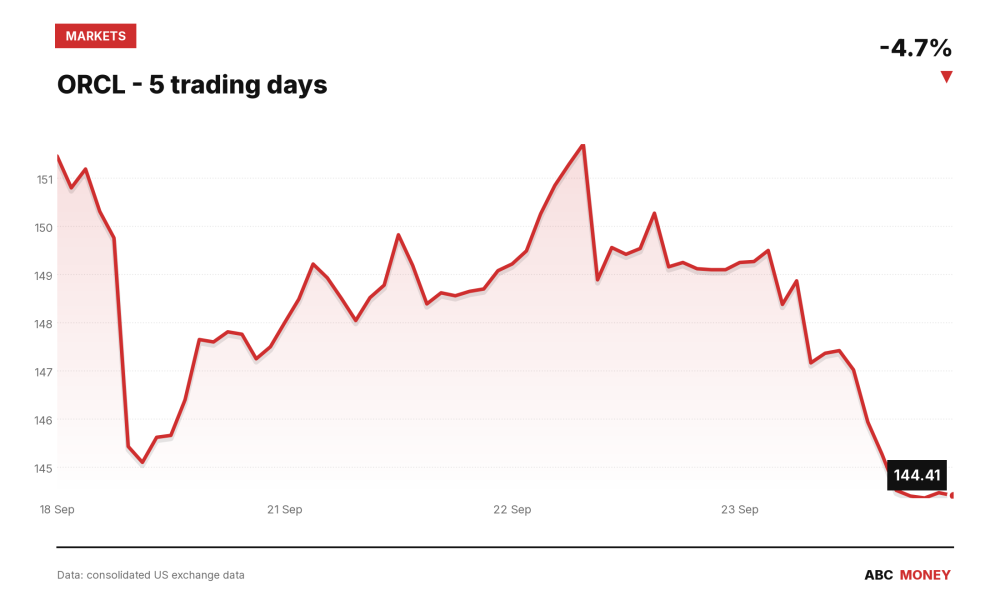
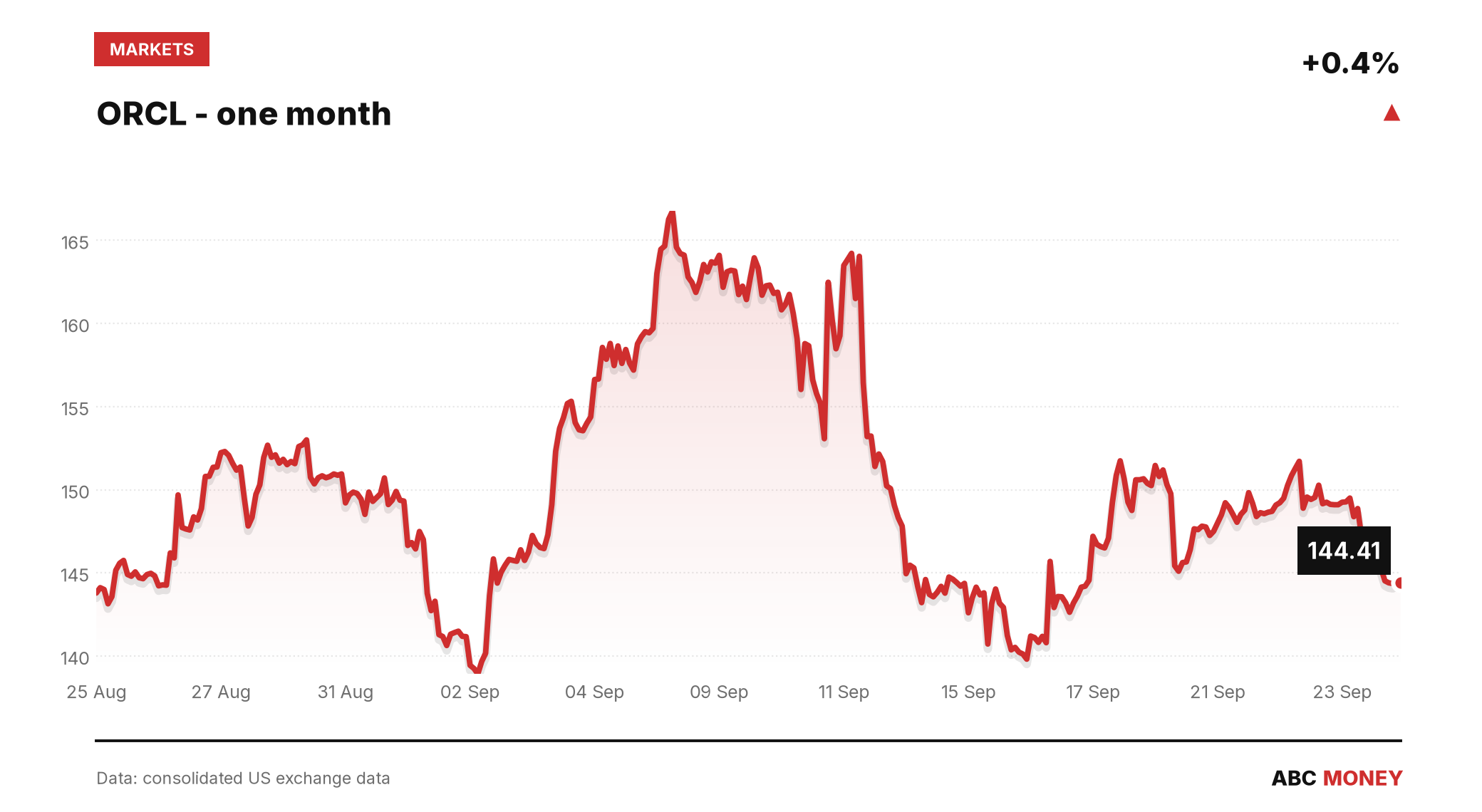
Oracle shares slipped on the day, changing hands around $144.40, down roughly 1.8% over 24 hours and about 1.9% over the prior 20 trading days, according to consolidated exchange data, with trading volume running below its 20-day average. That is a modest move, and nothing in the public record ties it specifically to the digital-assets news rather than the broader run of trading that week. Short-selling activity – the share of daily volume sold short, which traders watch as a rough gauge of bearish positioning – stayed within its normal recent band through the announcement, running between roughly 0.27 and 0.46 across the preceding fortnight according to FINRA’s daily short-sale data, with no spike coinciding with 23 September. In other words, whatever moved the stock that day, it does not look like traders positioning against the product news specifically.
Scale, and what would change the story
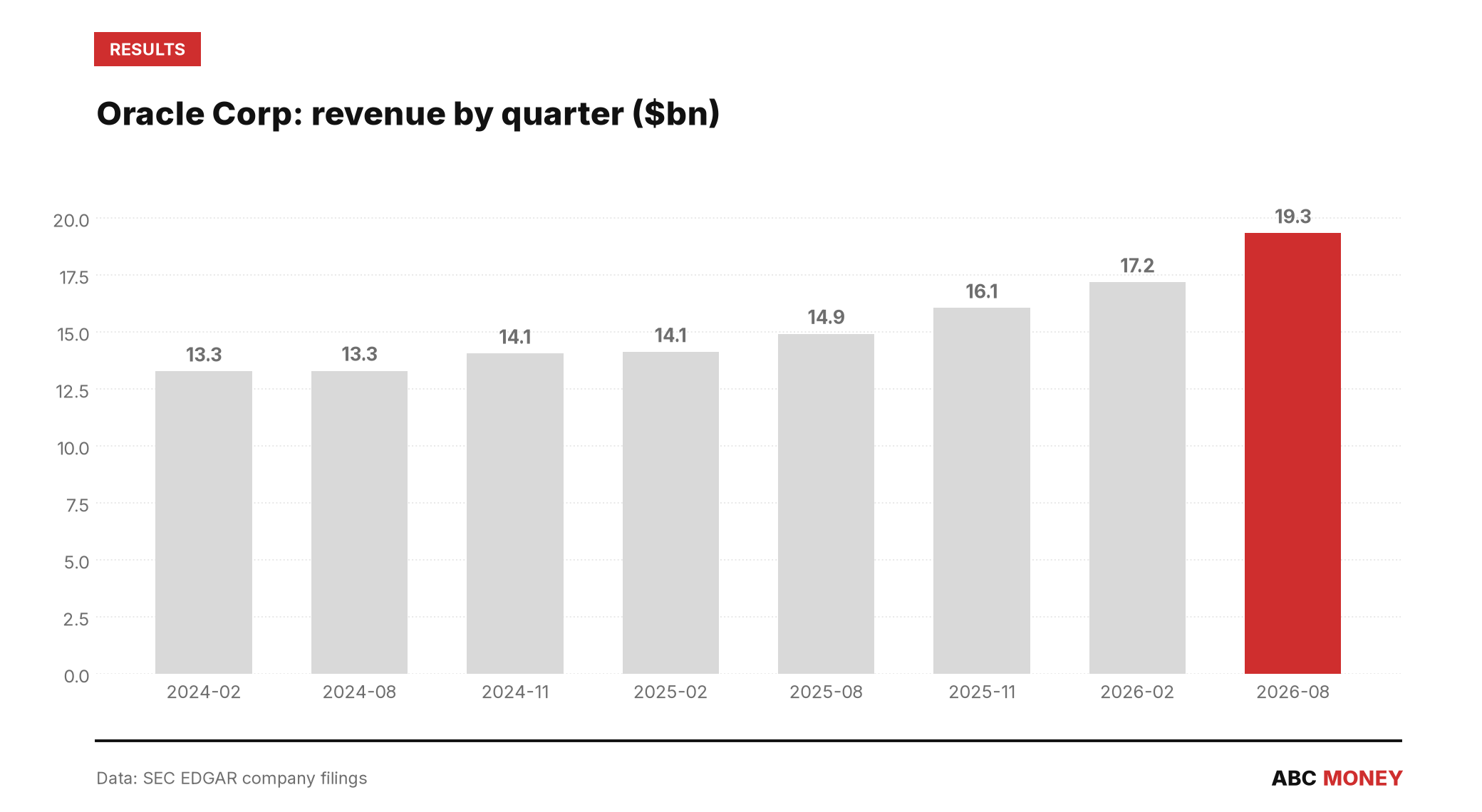
Context matters here because Oracle is not a startup pitching vapourware to win credibility – it is a company that reported $19.35bn in quarterly revenue for the period ended 31 August 2026, its most recent reported quarter, up from roughly $14.9bn a year earlier. That scale gives Oracle both the balance sheet and the existing bank relationships – through Oracle Banking Payments and its long-running core-banking software business – to plausibly bring digital-assets infrastructure to institutions that already run on its systems. The capability described this week, in principle, slots neatly into that existing sales relationship rather than requiring Oracle to win entirely new logos.
The gap, for now, is proof of use. A platform that lets banks configure wallet governance and route payments through ISO 20022 rails is only as significant as the institutions willing to put it into production. Oracle’s next disclosures – whether in a future earnings call, a case-study announcement, or a filing that names a financial-institution partner actually running transactions through Digital Assets Data Nexus – would be the marker that turns this from a capability announcement into evidence of banks operationalising digital money, rather than Oracle simply saying they can.
This article is for information only and is not investment advice or a recommendation to buy or sell any asset. Markets move quickly; figures are correct as sourced at the time of writing. Always do your own research before making financial decisions.


 Bitcoin
  Ethereum
  Tether
  BNB
BNB  USDC
USDC  XRP
XRP  Solana
  TRON
TRON  Lido Staked Ether
  Cardano
  Gram (prev. Toncoin)
  Avalanche