
Oracle (NASDAQ: ORCL) sent an Oracle force majeure notice to the developer behind its giant New Mexico data centre, Project Jupiter, giving itself contractual cover to delay payments if the site misses its 2028 target date, according to Reuters, which cited an earlier Bloomberg report. A force majeure clause is standard boilerplate in large construction contracts – it lets a party pause certain obligations when events genuinely outside its control, such as permitting delays, make performance impossible on schedule.
The developer on the other side of the contract is a unit of Blue Owl Capital (NYSE: OWL), whose Stack Infrastructure business is building the 1,400-acre campus. Crucially, Oracle is not trying to walk away as tenant. Reuters reported the software giant is seeking room to delay payments, not exit the lease, and Blue Owl said the notice “does not change financial commitments” to what it called a multi-year project.
A pipeline problem, not a change of heart
The trigger appears to be infrastructure rather than appetite. A natural-gas pipeline that Energy Transfer was building to fuel the site’s power plant has slipped roughly six months, to 1 February 2027, after New Mexico’s State Land Office denied permits, according to Bloomberg Law. Project Jupiter is designed to run on up to 2.45 gigawatts of Bloom Energy fuel cells and could cost as much as $165 billion (£130 billion) in total, per TheNextWeb. Reuters separately reported the project has already drawn $18 billion (£14.2 billion) in loans from a bank consortium – debt that keeps accruing interest whether or not fuel cells and gas turbines are ready on time.
Oracle’s public line has been carefully non-committal. Asked about the notice, the company told Reuters that “Project Jupiter remains on our planned schedule” – a statement that neither confirms nor denies the delay mechanics, but which stops well short of announcing a setback to guidance.
Why the market flinched anyway
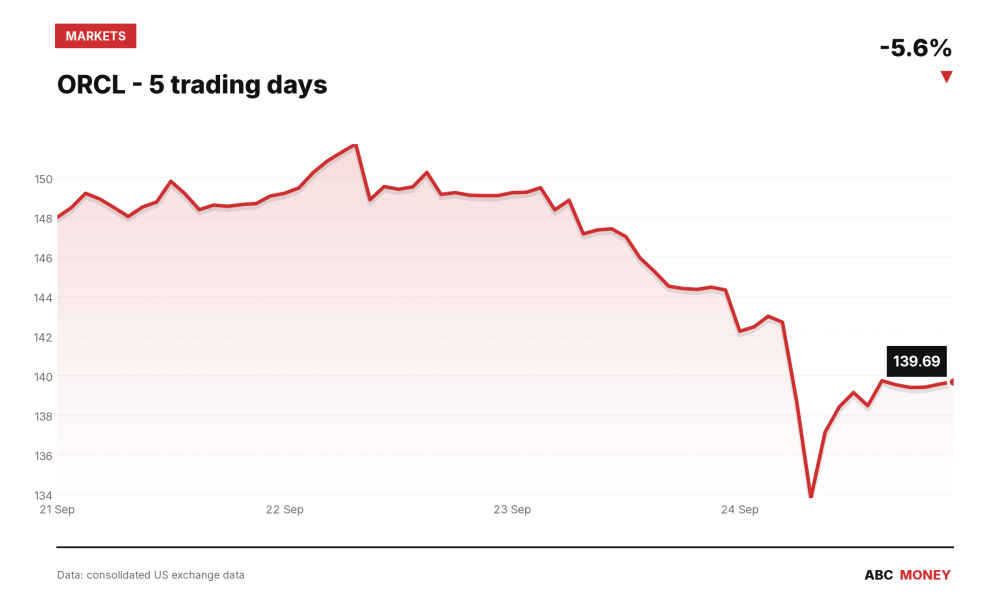
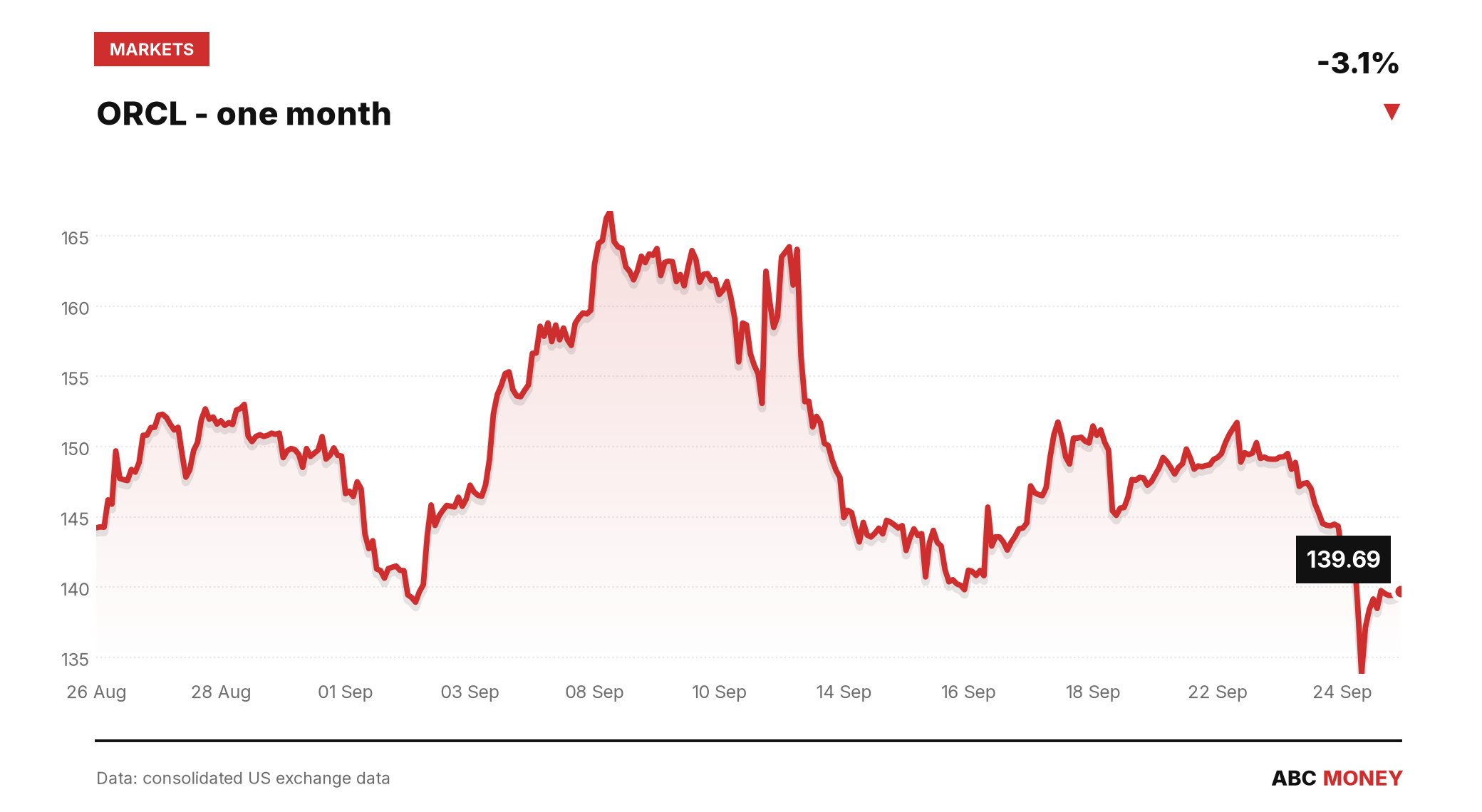
Oracle shares fell as much as 5% intraday on the report, Reuters said, while CNBC put the initial drop nearer 3%; CNBC also noted Bloom Energy shares, which are contracted to power the site, fell 3% in sympathy. By the close, though, Oracle had clawed most of that back, finishing the session up 0.38% at $139.67. That leaves the stock down 10.83% over the trailing month, a reminder that the force majeure headline landed on shares already under pressure well before Tuesday’s news.
Financing costs are part of that backdrop. The 10-year US Treasury yield has climbed to 5.11% from 4.96% a fortnight earlier, according to FRED data from the Federal Reserve Bank of St Louis – a move that raises the cost of servicing exactly the kind of debt-funded infrastructure loan stacked under Project Jupiter’s $18 billion facility. For an AI buildout that depends on cheap, patient capital, a rising rate environment sharpens the penalty for schedule slippage.
Guidance untouched, for now
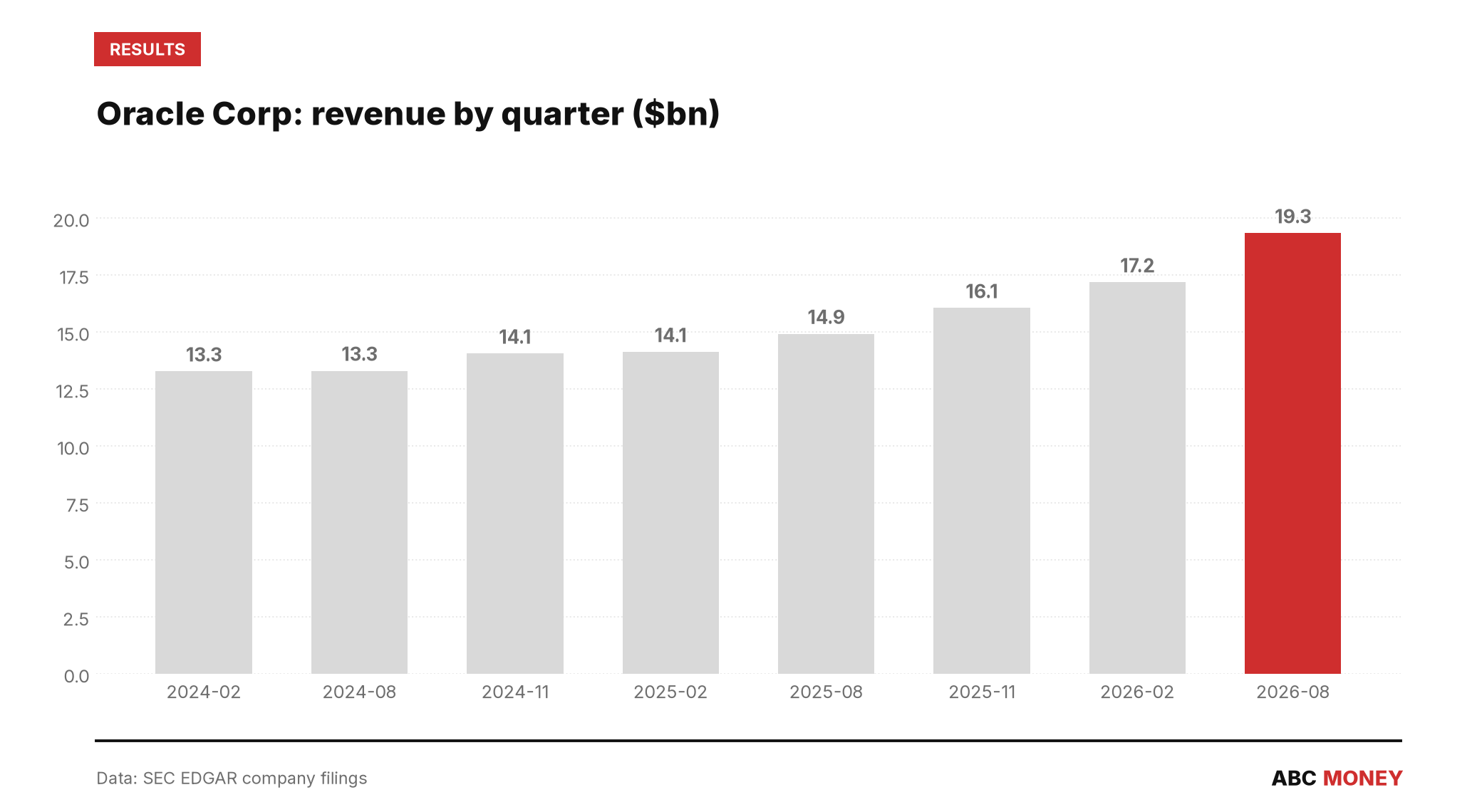
Oracle has tried to keep the story contained to one project. Co-chief executive Clay Magouyrk told analysts on the company’s 10 September earnings call that Project Jupiter would not affect previously stated fiscal 2027 revenue or earnings guidance, per CNBC’s reporting. That call came alongside another quarter of rapid top-line growth: Oracle’s revenue rose from $14.926 billion in the year-ago quarter to $19.345 billion in the three months to 31 August 2026, according to its latest 10-Q filing with the SEC – the kind of cloud and AI demand that underwrites commitments the size of Jupiter in the first place.
The New Mexico site has also become a local flashpoint, drawing community opposition ahead of the state’s midterm elections and prompting an Oracle public-outreach push, as TechCrunch has reported – context that makes the permitting delay feel less like a one-off contractor dispute and more like the kind of friction the entire AI data-centre boom is likely to keep running into as projects this size collide with local land, water and energy politics.
Separately, five Oracle insiders, including co-chief executive Clayton Magouyrk, filed disclosure forms with the Securities and Exchange Commission late on 23 September, hours before the Bloomberg report broke – the filings themselves do not detail the size or direction of any transactions.
The immediate contractual question is narrow: can Oracle delay payments if gas does not reach the site by February 2027, and does the developer accept that reading of the clause. The bigger one, for anyone pricing the AI infrastructure trade, is how many other multi-billion-dollar data-centre contracts are built on assumptions – permits granted on time, pipelines finished on schedule – that are now visibly under strain.
This article is for information only and is not investment advice or a recommendation to buy or sell any asset. Markets move quickly; figures are correct as sourced at the time of writing. Always do your own research before making financial decisions.

 Bitcoin
  Ethereum
  Tether
  BNB
BNB  USDC
USDC  XRP
XRP  Solana
  TRON
TRON  Lido Staked Ether
  Cardano
  Gram (prev. Toncoin)
  Avalanche