

Contributed content: this article was written by a third-party contributor and does not necessarily reflect the views of ABC Money. Editorial and Advertising Policy
Your Google reviews are being read before your sales team even picks up the phone. For multi-location businesses and SaaS platforms managing reputation at scale, finding the right tools for managing Google reviews is genuinely hard. Responding consistently across dozens of locations, flagging fake reviews before they stick, and encouraging satisfied customers to leave feedback without crossing Google’s anti-solicitation lines all take real coordination. After reviewing the top platforms in this space, this guide covers five tools worth your attention in 2026.
The shortlist methodology
Each platform was assessed using publicly available information gathered from official websites, user reviews, and documented case studies. Feature details were pulled from product pages, directory listings, and reputation management forums. Only tools with a clear, proven track record in the SaaS and multi-location review management space made the final cut.
→ See the full research breakdown
- Reviewly.ai – Best for multi-location review management and reputation monitoring
- MagicReview – Best for online reputation management and review collection
- Rayyan – Best for systematic literature reviews and evidence-based research
- Repmanager – Best for multi-location reputation management
- Reputation – Best for enterprise online reputation and customer experience management
Why the Right Tools For Managing Google Reviews Make a Difference
Picking the wrong platform doesn’t just slow you down. It creates gaps where negative reviews go unnoticed for days, where your team responds inconsistently across locations, and where satisfied customers never get prompted to share their experience.
The challenge with managing Google reviews at scale is that the volume compounds fast. One location is manageable. Twenty locations means hundreds of reviews a month, each one needing a timely, on-brand response.
The right tool closes those gaps. It catches fake or policy-violating reviews before they damage your average star rating. It keeps response times tight so your review response rate stays strong. And it helps you build monthly new review volume the right way, without putting your Google Business Profile at risk.
Top 5 Tools For Managing Google Reviews: Specs at a Glance
Note: All data in this table is sourced from review platforms and the official websites of the listed companies.
Company Name
Years Operating
Headquartered In
Reviewly.ai
Est. 2022
Phoenix, Arizona
MagicReview
Est. 2020
Not disclosed
Rayyan
Est. 2020
Cambridge, MA
Repmanager
Est. 2024
Netherlands
Reputation
Est. 2006
San Ramon, California
Reviewly.ai – Best for Multi-Location Review Management and Reputation Monitoring
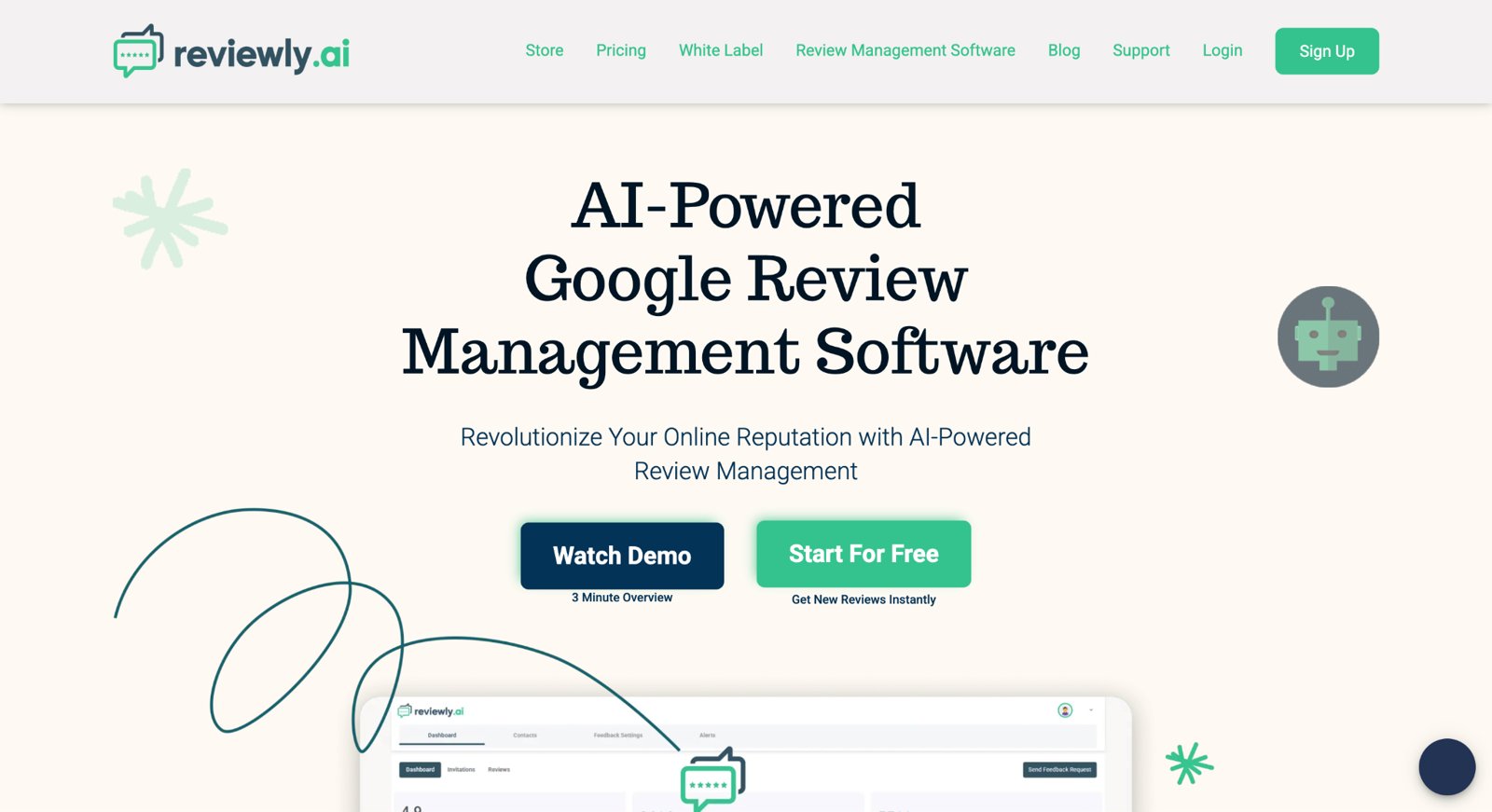
What Does Reviewly.ai Do?
Reviewly.ai is a Google review management platform built for businesses that need to collect and respond to reviews at scale. The platform runs what it describes as the first SMS review generation system across more than 100 countries, which is a meaningful claim for any team managing locations across multiple regions. Businesses already using Reviewly AI for managing Google reviews can capture customer feedback through QR codes, NFC tags, and physical Review Plates. Sentiment detection then sorts that feedback and generates personalized response drafts, which cuts the time a team spends on manual replies considerably.
What’s Reviewly.ai’s Real Advantage for Tools For Managing Google Reviews?
Most platforms handle review collection or response, but rarely both at a level that works for enterprise clients with dozens of active locations. That combination of SMS outreach, AI sentiment analysis, and white-label capability is what makes Reviewly.ai a serious option for agencies looking to build recurring revenue from reputation management services.
The Verdict from Users:
Reviewly.ai counts Jersey Mike’s and JW Marriott among its clients, which says something about how the platform holds up under real enterprise demand. From what the available information shows, the platform earns trust from clients who need multi-location reliability, not just a slick demo.
MagicReview – Best for Online Reputation Management and Review Collection
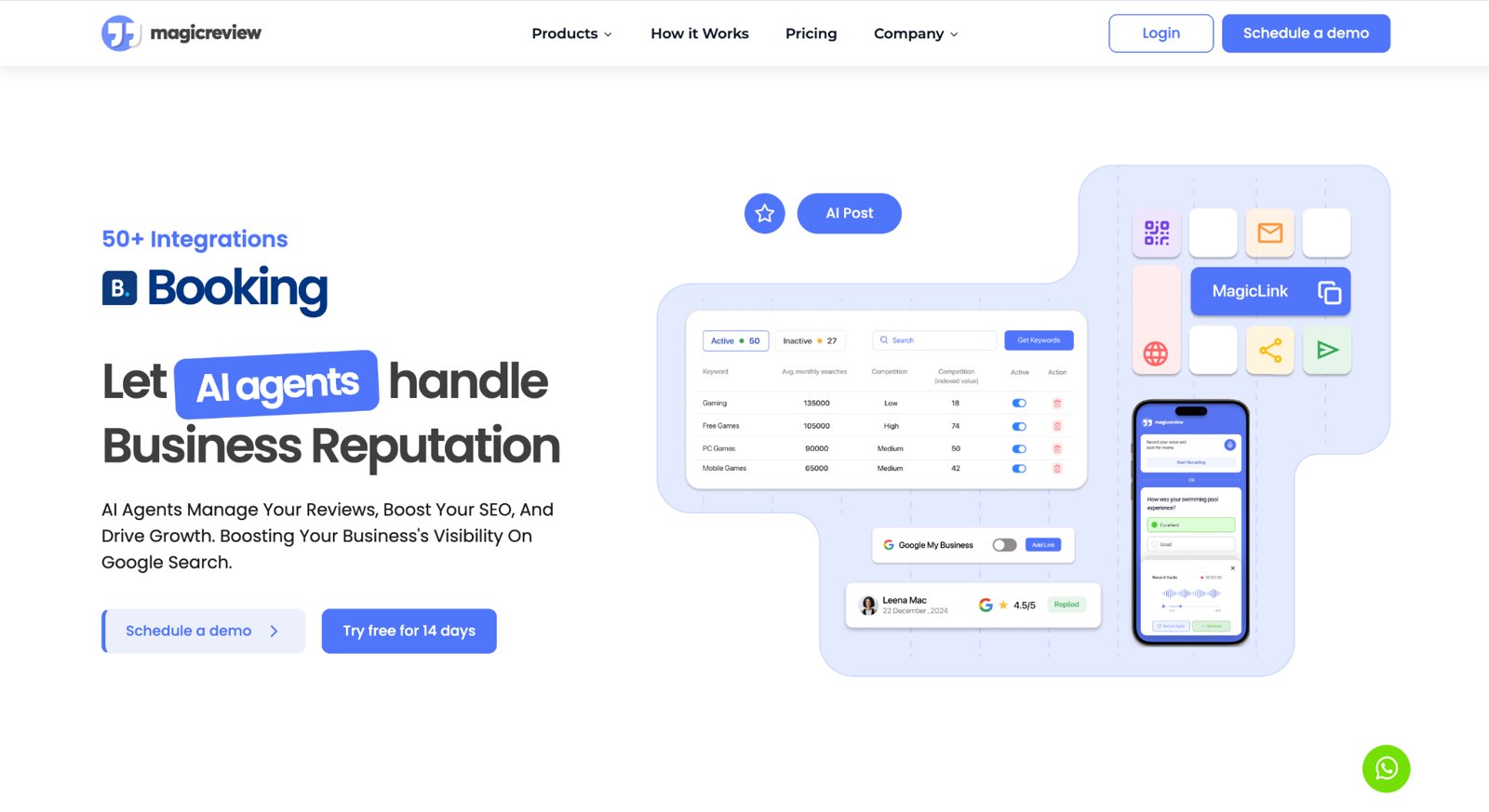
What Does MagicReview Do?
MagicReview focuses on making the review collection process faster and less painful for businesses that don’t want to micromanage every step of it. The platform generates SEO-friendly review suggestions through QR codes, which helps customers know what to say without businesses crossing into review coaching territory. What stands out is the routing logic: positive reviews get directed to Google, while negative feedback gets sent privately to the business owner instead. That keeps the public-facing rating clean while still capturing useful internal feedback.
What’s MagicReview’s Real Advantage for Tools For Managing Google Reviews?
Unsatisfied customers tend to post publicly while happy ones say nothing, and MagicReview’s routing system is a direct response to that problem. That kind of filtering is rare in platforms aimed at smaller businesses, and it reflects a clear understanding of how real review behavior works.
The Verdict from Users:
MagicReview’s public review footprint is limited, which makes a full verdict harder to form. For a platform serving 30+ businesses across multiple industries, there’s not much independent user commentary to draw from yet, so the track record is still building.
Rayyan – Best for Systematic Literature Reviews and Evidence-Based Research
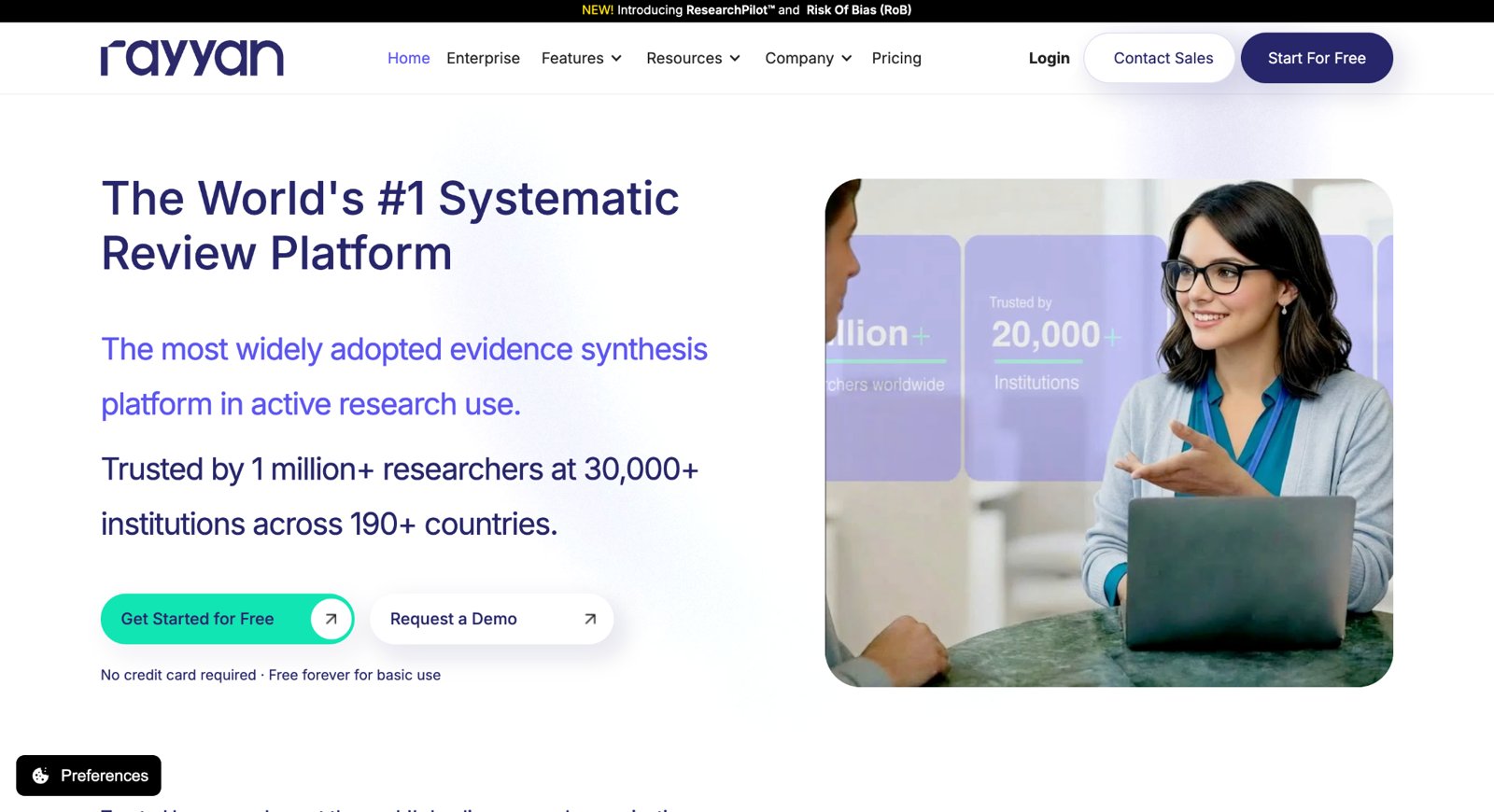
What Does Rayyan Do?
Rayyan is a SaaS collaboration platform built for researchers running systematic literature reviews, not for business reputation management. The platform uses natural language processing, machine learning, and AI agents to screen and extract data from research articles, cutting the time that process normally takes by up to 90%. More than 300,000 researchers across 180 countries have used it to work through over 700 million articles. That kind of scale shows what’s possible for a research tool, and the fact that it keeps a genuinely free version while generating $5 million in annual revenue says a lot about its product-market fit.
What’s Rayyan’s Real Advantage for Tools For Managing Google Reviews?
Rayyan’s strength is in how it handles large volumes of structured information quickly, which is the same underlying challenge that makes review management at scale difficult. Its approach to processing and filtering at volume is something the reputation management space could learn from.
The Verdict from Users:
Researchers from institutions like the Cochrane Airways group and Adelaide Health Technology Assessment have praised how quickly the platform can be learned and put to use. Rayyan’s users consistently point to its speed and low learning curve, which is a combination that’s genuinely hard to match in specialized software.
Repmanager – Best for Multi-Location Reputation Management
What Does Repmanager Do?
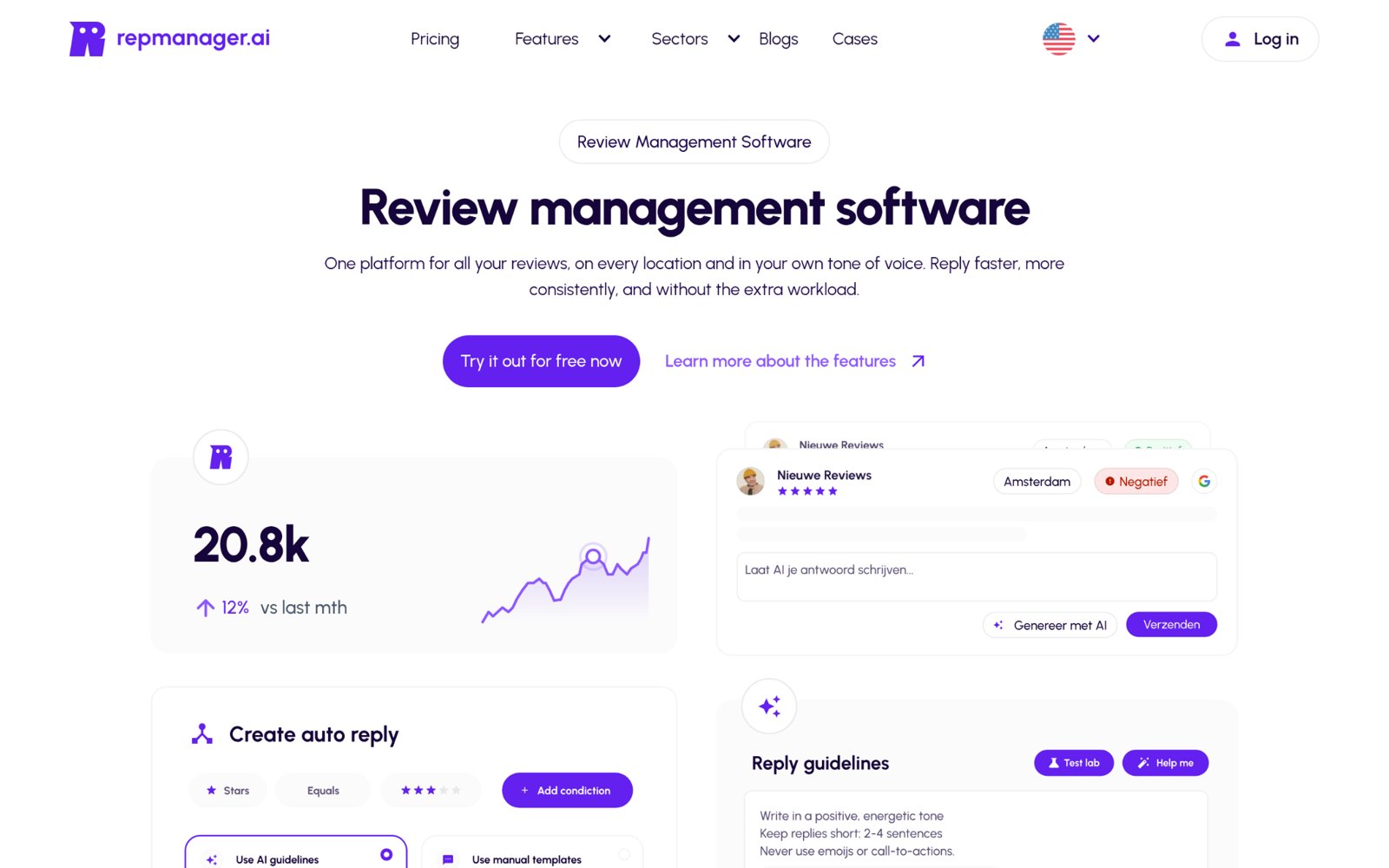
Repmanager is a platform built to bring all Google review activity across multiple locations into one dashboard. Launched in 2024, it targets franchises, retail chains, automotive dealers, and hospitality groups that need to track sentiment trends without logging into a dozen separate accounts. The platform generates customizable response suggestions, supports review collection through email, WhatsApp, and QR codes, and uses sentiment analysis to flag where attention is needed. Starting at $10 per month (genuinely accessible pricing for a multi-location tool), it positions itself as an affordable entry point for teams that are outgrowing manual processes.
What’s Repmanager’s Real Advantage for Tools For Managing Google Reviews?
Teams managing reviews across several locations often find that the bottleneck isn’t knowing what to write, it’s keeping up with the volume consistently. Repmanager’s centralized dashboard removes that coordination problem by giving one view across all locations, which means faster response times and fewer reviews that slip through unnoticed.
The Verdict from Users:
Beta access users rated Repmanager 4.8 out of 5, and early case studies from barber shops and retail businesses back up those initial numbers. Users appreciate the balance between AI-generated suggestions and the ability to edit before posting, which keeps responses feeling human rather than automated.
Reputation – Best for Enterprise Online Reputation and Customer Experience Management
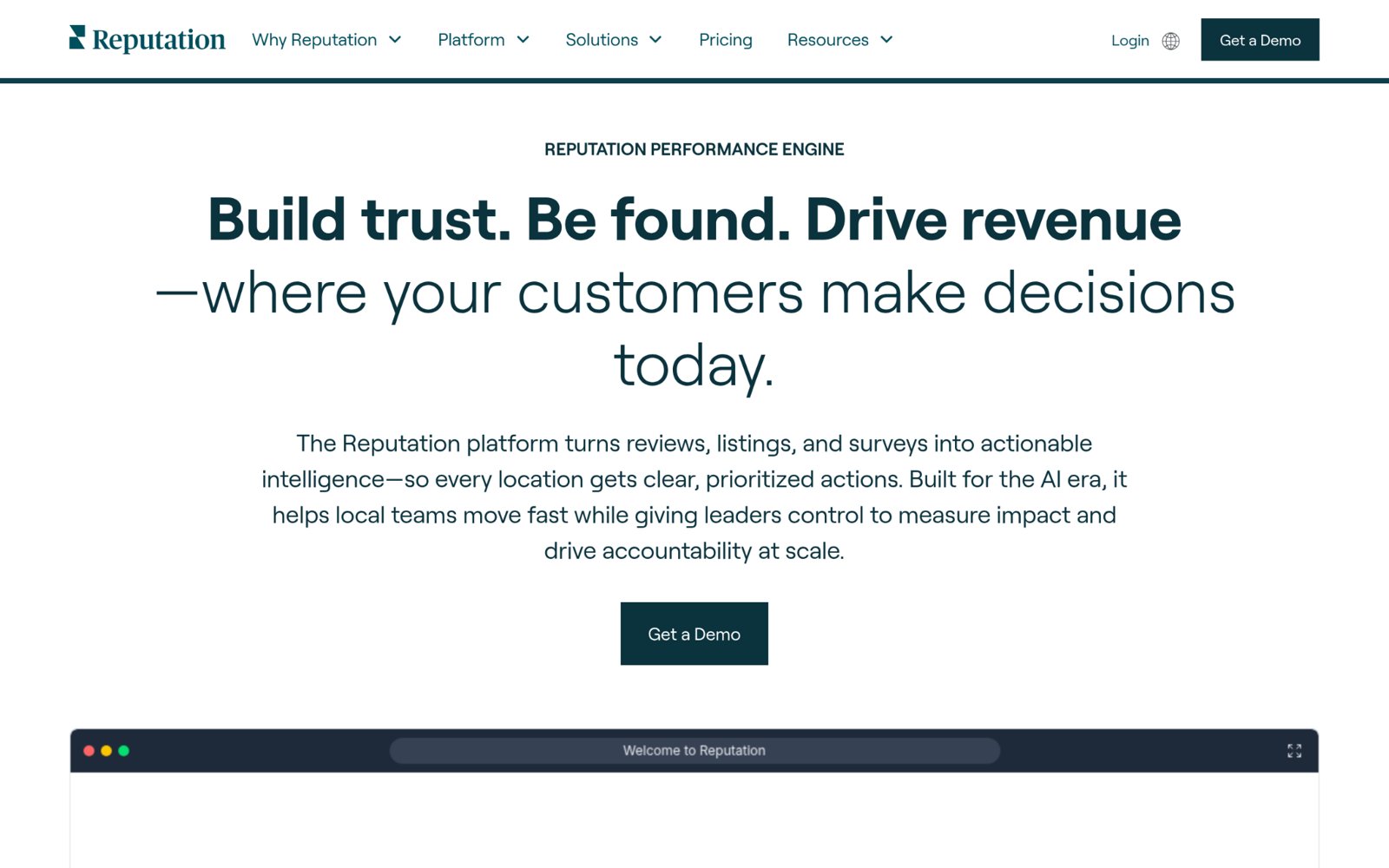
What Is Reputation?
Reputation is a B2B SaaS platform that covers the full spectrum of online reputation management, from monitoring reviews and social media to running surveys and analyzing customer sentiment at scale. It serves around 750 enterprise customers across 77 industries, including Banner Health, BMW, Ford, and General Motors. That client list puts it in a different category from most tools in this space (think enterprise pricing). The platform lets teams collaborate on operational improvements directly from customer feedback, which closes the loop between what customers say publicly and what the business actually changes internally.
What’s Reputation’s Real Advantage for Tools For Managing Google Reviews?
Where most tools stop at monitoring and responding, Reputation connects review data to broader customer experience workflows, so feedback doesn’t just get answered, it gets acted on. That closed-loop approach is what separates a reputation tool from a genuine business intelligence platform.
The Verdict from Users:
Reputation has earned the top spot in 26 G2 reports and collected over 500 Leader Badges since 2018, with recognition from Forrester Wave and Gartner’s Magic Quadrant adding weight to those numbers. Clients have reported review volume increases of 200 to 510%, which is the kind of outcome that justifies the investment at the enterprise level.
The Research Behind These Recommendations
Foundational Information Sources to Identify
Building the longlist started with a broad sweep of directories, software review platforms, and case study collections focused on reputation management and Google review tools. Sources included G2, Capterra, and platform-specific listing pages where feature details and customer reviews are documented consistently. Category pages within reputation management software directories helped surface names that appear repeatedly across multiple independent sources, which served as an early signal of sustained relevance rather than short-term visibility.
Candidate Screening Process
Once the longlist was assembled, platforms without verifiable real-world use were removed. This meant cross-referencing claimed features against what actual users described in reviews, and filtering out tools where the review history was too thin or too recent to draw reliable conclusions. Patterns in customer reviews were analyzed carefully: recurring complaints about specific weaknesses carried the same weight as recurring praise about strengths. Platforms with a strong feature set but no documented client outcomes were deprioritized at this stage.
The Fact-Check Process
Each shortlisted platform had its website claims checked against what users reported in third-party reviews and case studies. Where a platform claimed measurable outcomes (faster response times, higher star ratings, increased monthly new review volume), those claims were cross-referenced with available case study data. Discrepancies between marketing language and documented results influenced how each tool was positioned in the final list. Tools that could point to real, named clients and verifiable results scored higher in this stage than those relying on general capability claims.
Where Each Pick Stands in the Industry
Authority signals were factored in across several dimensions. Industry award recognition, appearances in analyst reports such as Forrester Wave and Gartner’s Magic Quadrant mentions, and documented inclusion in respected publications all contributed to each platform’s standing. For newer platforms without this kind of third-party recognition yet, the depth of their early adoption data and the specificity of their client case studies were used as substitutes. Reputation, for instance, carries a multi-year track record in analyst coverage. Repmanager’s strong early beta ratings suggest a platform still building that credibility.
Tools For Managing Google Reviews-Specific Validation
Final validation focused on each platform’s specific capability for Google review management tasks. This meant checking for dedicated service pages covering sentiment analysis, review response automation, multi-location dashboards, and review collection methods. Verified customer reviews that specifically mentioned Google Business Profile outcomes, review response rate improvements, or star rating performance were given additional weight. Case studies that connected platform use to documented review-driven results, rather than general satisfaction scores, were treated as the strongest evidence of real-world fit for this specific category.
User’s Guide: Choosing the Right Tools For Managing Google Reviews
Choosing a Google review management tool comes down to fit, not just features. The platform that works for a single-location business won’t necessarily hold up for a franchise with 50 locations and a team of five managing responses. Here’s what to check before committing.
- Industry/Domain Experience: Look for platforms with documented case studies in your specific business type. A tool built for healthcare reputation management will think about Google Business Profile content policies differently than one built for retail chains.
- Features and Services: Check whether the platform covers the full cycle: collection, monitoring, response generation, and sentiment analysis. Gaps in any of those areas usually mean more manual work on your end.
- Pricing Structure: Monthly subscriptions with no long-term lock-in are the safest starting point. Confirm whether multi-location pricing scales reasonably or jumps sharply as you add more sites.
- Results Measurement: The platform should give you clear reporting on average star rating, review response rate, and monthly new review volume. If you can’t measure it, you can’t manage it.
- Industry Knowledge and Compliance: Confirm the platform respects review gating restrictions and prohibited incentivized review practices. Tools that push the limits of Google’s review policies put your Business Profile at risk.
Summary
The best tools for managing Google reviews in 2026 share one thing: they reduce the manual work of keeping up with reviews at scale while keeping you on the right side of Google’s policies. Reviewly.ai leads for multi-location businesses and agencies. Reputation is the enterprise choice with the deepest track record. Repmanager is worth watching as a newer, more affordable option. As AI-driven automation in this space keeps improving, response time and review volume will only get easier to manage.



 Bitcoin
  Ethereum
  Tether
  BNB
BNB  USDC
USDC  XRP
XRP  Solana
  TRON
TRON  Lido Staked Ether
  Cardano
  Gram (prev. Toncoin)
  Avalanche