
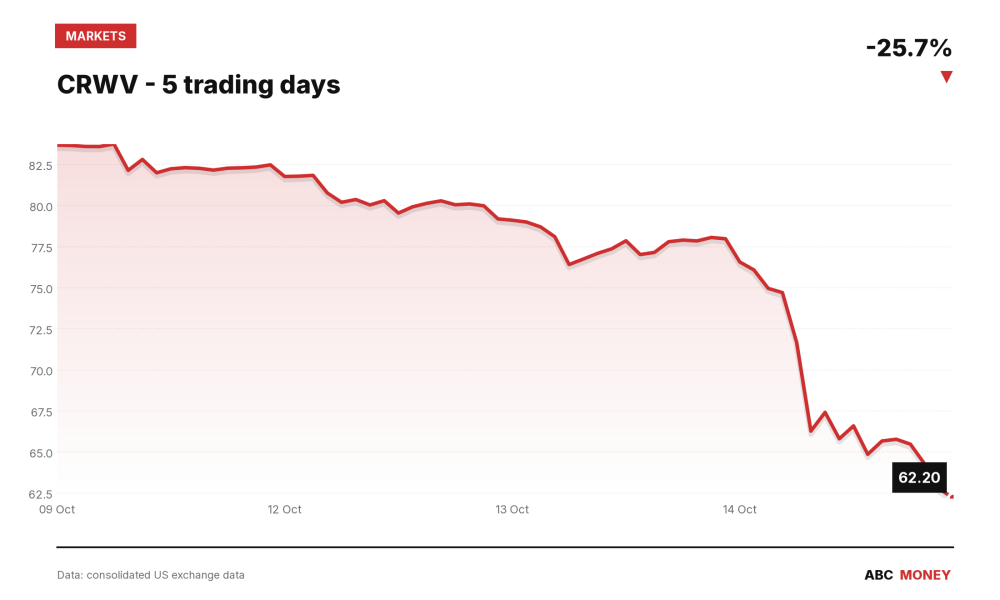
The CoreWeave stock plunge deepened on 14 October 2026, with shares in the AI infrastructure group closing down 15.46% at $65.78, according to The Motley Fool. The trigger was a Gartner research note warning that most so-called “neocloud” providers – the new wave of specialist firms renting out AI computing capacity rather than owning diversified cloud businesses like Amazon or Microsoft – may not survive as independent companies by 2030.
CoreWeave (CRWV) builds and rents out vast clusters of Nvidia graphics chips to AI developers, a model that has delivered explosive revenue growth but also heavy losses, and investors used Gartner’s warning as the excuse to reprice the whole sector in one session.
What the Gartner warning actually said
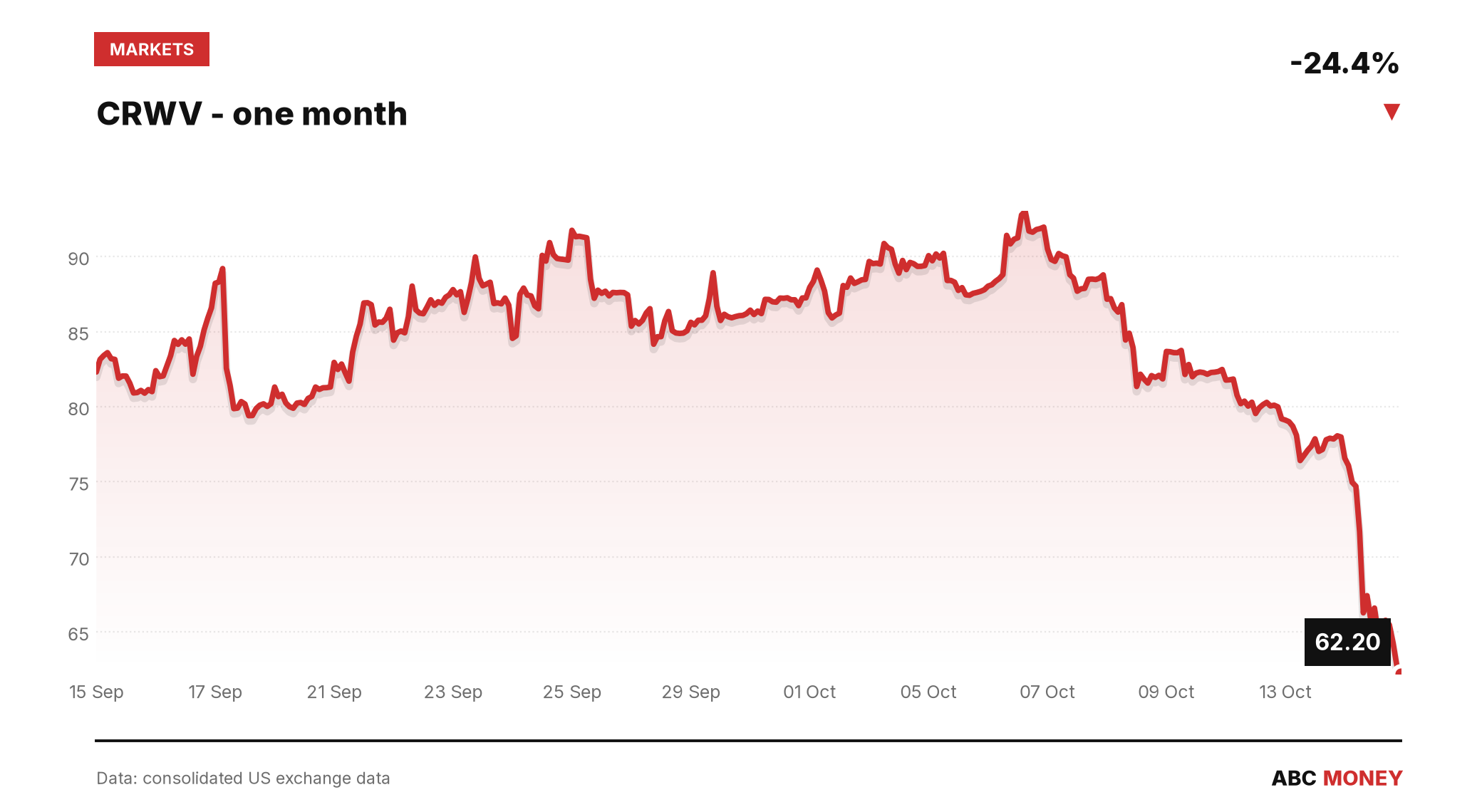
According to GuruFocus, Gartner’s analysts cautioned that as many as 80% of neocloud operators could lose their independent footing within the decade, squeezed between capital-hungry build-outs and customers who can walk to cheaper capacity elsewhere. Seeking Alpha framed it more starkly still, reporting the forecast as predicting that 80% of neoclouds “will evaporate” by the end of the decade.
That is a forecast, not a verdict on any single company, but markets treated it as a referendum on the whole category. CoreWeave was not alone: Nebius (NBIS) and IREN also fell sharply the same day, evidence this was a sector-wide stock plunge rather than a CoreWeave-specific stumble, as Yahoo Finance noted.
Inflation added a second shock
The Gartner note landed on a day already unsettled by macro data. September’s US consumer price index rose 0.6% month-on-month and 3.7% year-on-year, both above the 3.6% forecast, with core inflation also running hotter than expected, according to TheStreet. Official data from the Federal Reserve Bank of St Louis shows the underlying price index rose from 334.131 in August to 336.298 in September, a roughly 0.65% monthly increase broadly in line with that print, via FRED.
TheStreet reported that Treasury yields rose on the news as traders pared back expectations for Federal Reserve rate cuts – unwelcome for a capital-intensive, loss-making business like CoreWeave, which depends on cheap financing to keep building data centres. Higher borrowing costs bite hardest at companies still burning cash at scale, and few public names burn cash as fast as CoreWeave does right now.
A growth story still running deep losses
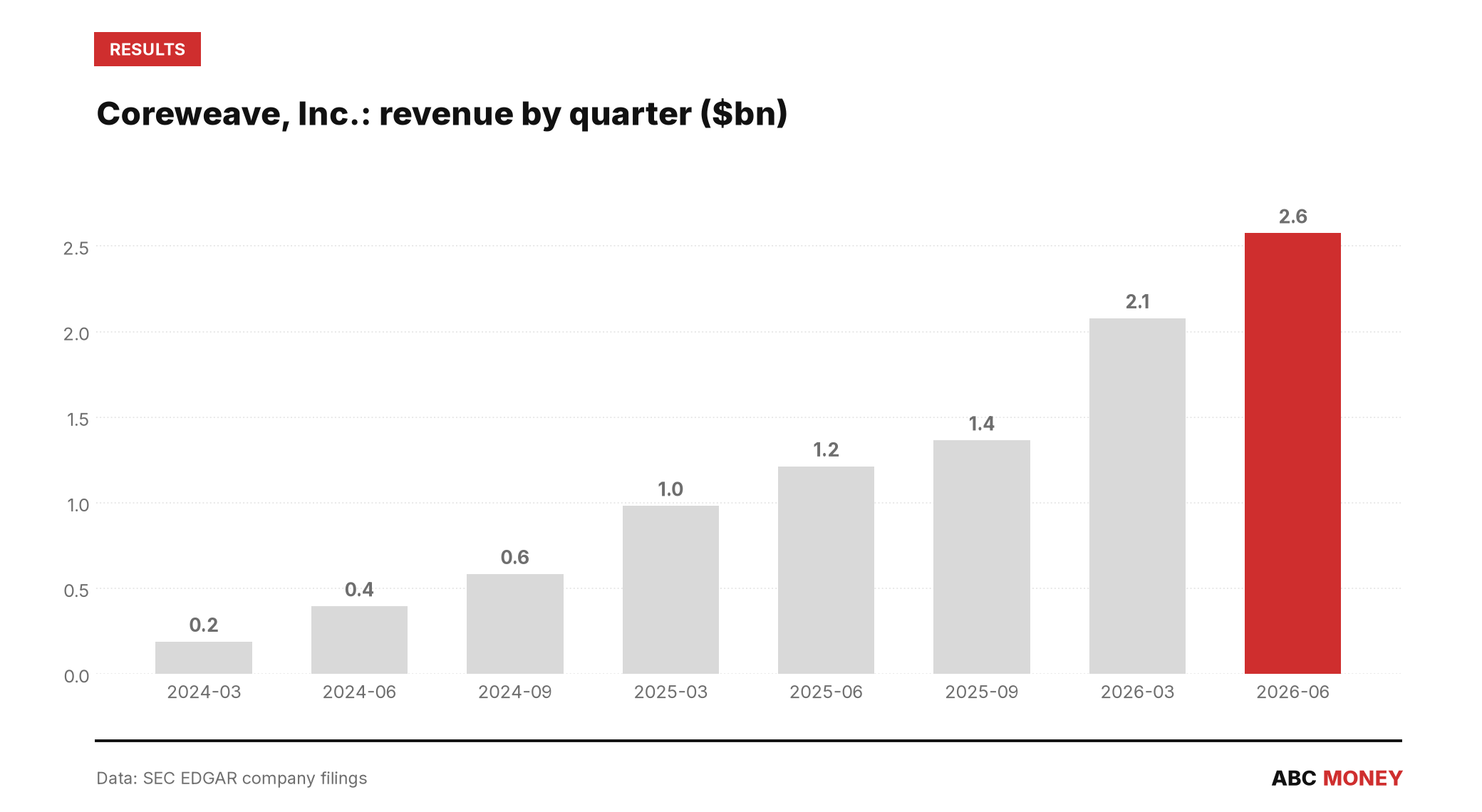
The financials explain why investors are jumpy. CoreWeave’s revenue has been compounding quickly – from $981.6 million in the first quarter of fiscal 2025 to $2.575 billion in the second quarter of fiscal 2026, per filings with the SEC. But net losses have scaled up alongside it: $740 million in the first quarter of fiscal 2026 and $626 million in the second, against that same revenue base, according to the company’s 10-Q filings. That combination – fast growth, heavy losses – is exactly the profile Gartner’s warning was aimed at, and it is why the sell-off hit CoreWeave harder than peers with cleaner balance sheets.
Two Form 4 filings landed with the SEC late on 14 October, after the stock’s plunge, from CoreWeave’s chief financial officer, Nitin Agrawal, and an officer named Jonathan Jones, though the index pages do not disclose share counts or dollar values. Separate filing summaries compiled by StockTitan show CoreWeave’s chief executive, chief financial officer, general counsel and chief strategy officer had each sold shares under pre-arranged 10b5-1 trading plans or tax-withholding arrangements in the weeks before the crash – a pattern of routine, scheduled selling that predates the Gartner note rather than a reaction to it.
No sign of a short squeeze unwind
One thing the sell-off was not: a positioning blow-up. FINRA’s daily short-sale data put CRWV’s short-volume ratio – the share of daily trading volume attributable to short sales, where traders borrow stock to bet on further declines – at 0.601 on 14 October, squarely within the 0.489-to-0.637 range seen over the preceding fortnight, per FINRA figures. There was no spike in bearish positioning on the day; this looked like long-only investors repricing the stock on the news itself, not short-sellers piling on or covering in a rush.
The episode also arrived with awkward timing for sentiment: the plunge came a day after CNBC’s Jim Cramer had praised CoreWeave, a reversal Fool.com itself flagged in its coverage the same afternoon. Whether Gartner’s 2030 forecast proves prescient or overly bearish will not be settled for years. What is settled, for now, is that CoreWeave’s valuation still prices in a great deal of execution risk, and investors showed on 14 October how quickly that risk can reprice when the macro backdrop turns unfriendly at the same moment.
This article is for information only and is not investment advice or a recommendation to buy or sell any asset. Markets move quickly; figures are correct as sourced at the time of writing. Always do your own research before making financial decisions.

 Bitcoin
  Ethereum
  Tether
  BNB
BNB  USDC
USDC  XRP
XRP  Solana
  TRON
TRON  Lido Staked Ether
  Cardano
  Gram (prev. Toncoin)
  Avalanche