Bitcoin
 Ethereum
 Tether
 BNB
 USDC
 XRP
 Solana
 TRON
 Lido Staked Ether
 Cardano
 Gram (prev. Toncoin)
 Avalanche
Joel Kaplan leaving Meta after 15 years running its Washington operation is now confirmed, with the company telling Reuters that its chief global affairs officer will depart next year. The news was first reported by Axios, which said Kaplan had spent more than 15 years as Mark Zuckerberg’s top adviser on regulation, lobbying and government relations.
What makes this more than a routine executive reshuffle is the succession plan – or rather the absence of one. Meta is not replacing Kaplan with a single policy chief. Instead, his responsibilities are being split between two existing executives, according to reporting citing Axios and Bloomberg sourcing: president and vice chairman Dina Powell McCormick picks up external affairs on top of her current remit, while C.J. Mahoney, who became chief legal officer in January, absorbs the policy duties. Mahoney previously served as a Trump administration trade official and as Microsoft’s general counsel.
Why Meta is dissolving the policy chief job
Kaplan’s title mattered because it concentrated Meta’s Washington relationships in one person – a model dating to his arrival as the company built out its public policy function under scrutiny from both US political parties. He later became deputy White House chief of staff for policy under George W. Bush before joining Meta, and moved into the top global affairs job as Donald Trump prepared to return to office in early 2025, a period in which Kaplan was credited with fostering closer ties between Meta and the administration.
Splitting that single role between a legal-and-trade specialist and an executive already overseeing broader company affairs suggests Meta now sees Washington risk running less through classic lobbying and more through legal exposure, trade policy and the infrastructure build-out around artificial intelligence – the kind of issues Mahoney and Powell McCormick are each already positioned to handle. Zuckerberg’s own tribute, reproduced by Quartz, framed Kaplan’s tenure in sweeping terms: “Joel has worked on virtually every tough issue Meta has faced for more than 15 years.”
Kaplan isn’t walking out the door immediately. Reporting indicates he will stay through the 2026 US midterm elections and into 2027 to manage the handover, giving Meta a buffer to bed in the new structure before a fresh Congress is seated.
Markets shrugged, and the numbers explain why
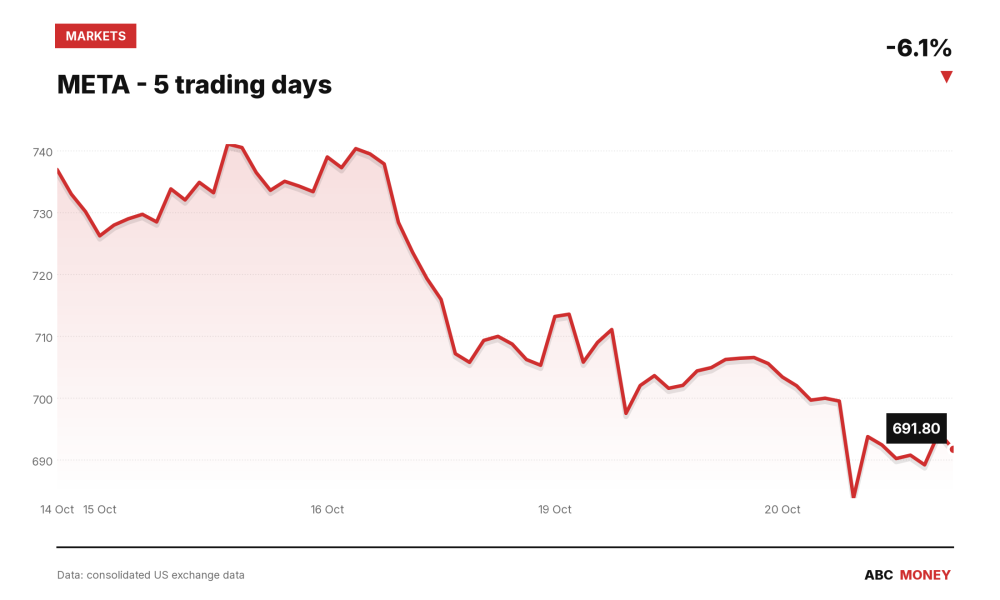
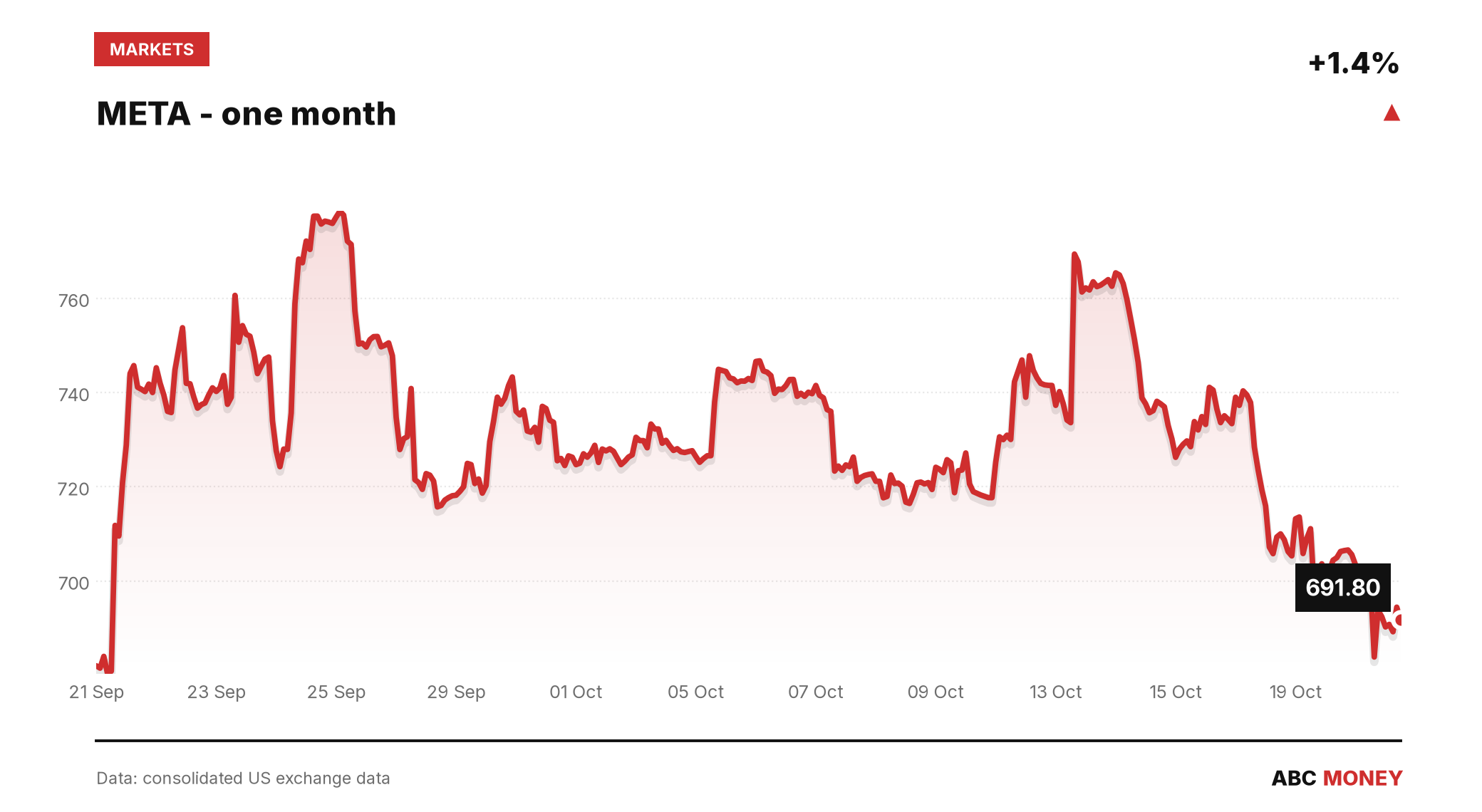
Meta’s shares closed at $691.75 on 20 October 2026, up 1.15% on the day but still down 6.37% over the prior 20 trading sessions – a move that long predates the Kaplan news and owes more to the broader de-rating in high-multiple tech names than to any personnel story. Daily short-sale volume ratios on FINRA’s tape ran between roughly 0.27 and 0.46 across the fortnight before the announcement, showing nothing resembling a build-up of bearish positioning tied to the departure.
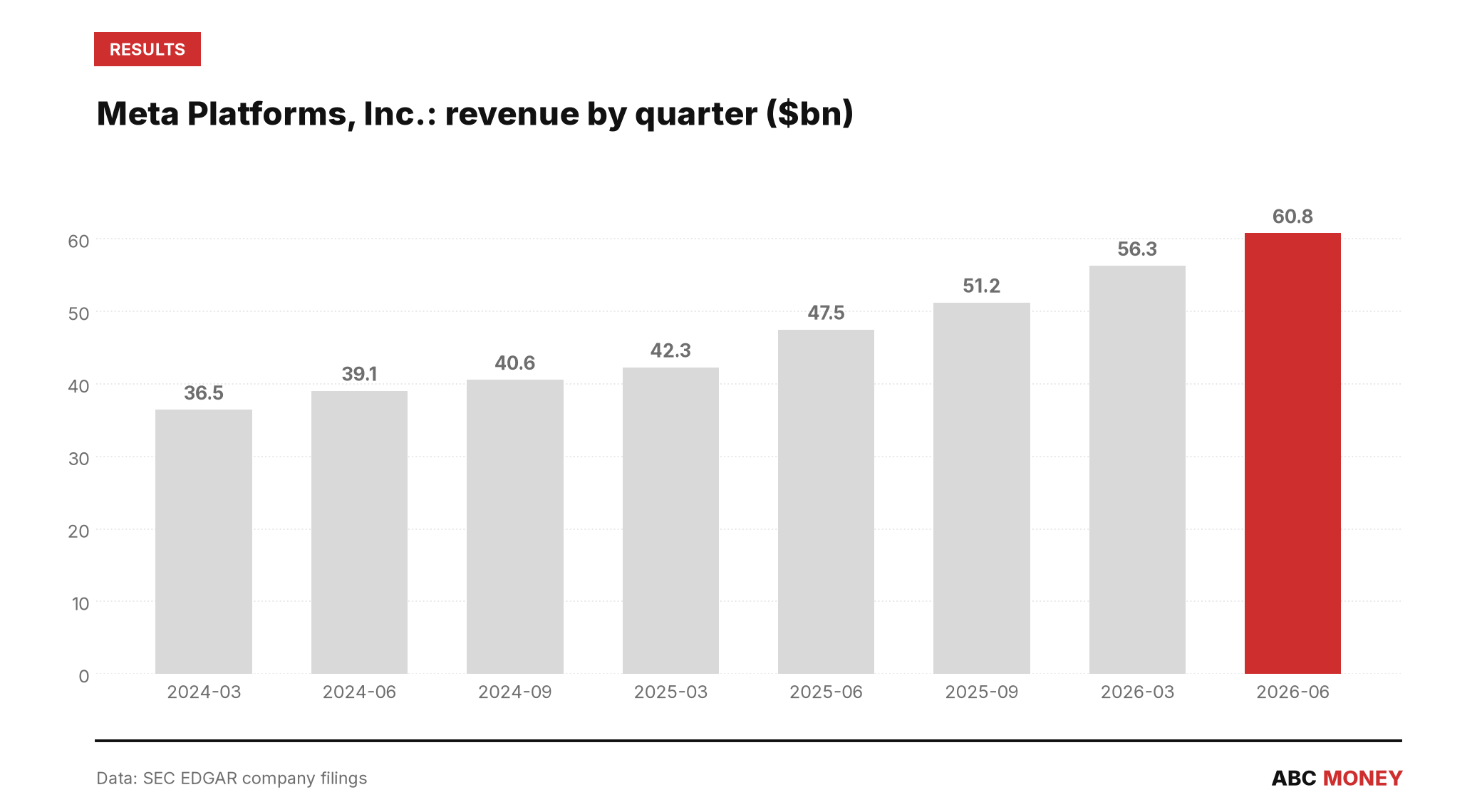
That muted reaction fits the underlying business. Meta’s most recent quarterly 10-Q filing with the SEC showed revenue of $60.8bn for the quarter to 30 June 2026 and net income of $15.8bn – comfortably ahead of the $36.5bn in revenue the company reported for the first quarter of 2024, and evidence of a business whose growth trajectory has had little to do with who occupies the policy chief’s office. Investors, in other words, are pricing Meta on advertising demand and AI capital spending, not on Washington headcount.
The timing question
The departure lands in the same week Meta is scheduled to report third-quarter 2026 earnings, a coincidence that has fuelled some speculation about timing even though nothing in the reporting ties the two events together. Kaplan’s own account of his exit, and Meta’s confirmation to Reuters, both point to a planned, multi-month transition rather than an abrupt exit – the kind of departure companies choreograph well in advance precisely to avoid rattling a results week.
For Meta watchers, the more durable question isn’t when Kaplan leaves but whether the two-headed replacement structure holds. A single, visible policy chief has long served as a kind of lightning rod and translator for Washington; splitting that function between a legal chief and a company president is a bet that Meta’s political risk now needs lawyers and dealmakers as much as it needs lobbyists. Whether that bet pays off will become clearer as the midterms approach and the new arrangement is tested under real pressure rather than in a transition memo.
This article is for information only and is not investment advice or a recommendation to buy or sell any asset. Markets move quickly; figures are correct as sourced at the time of writing. Always do your own research before making financial decisions.