
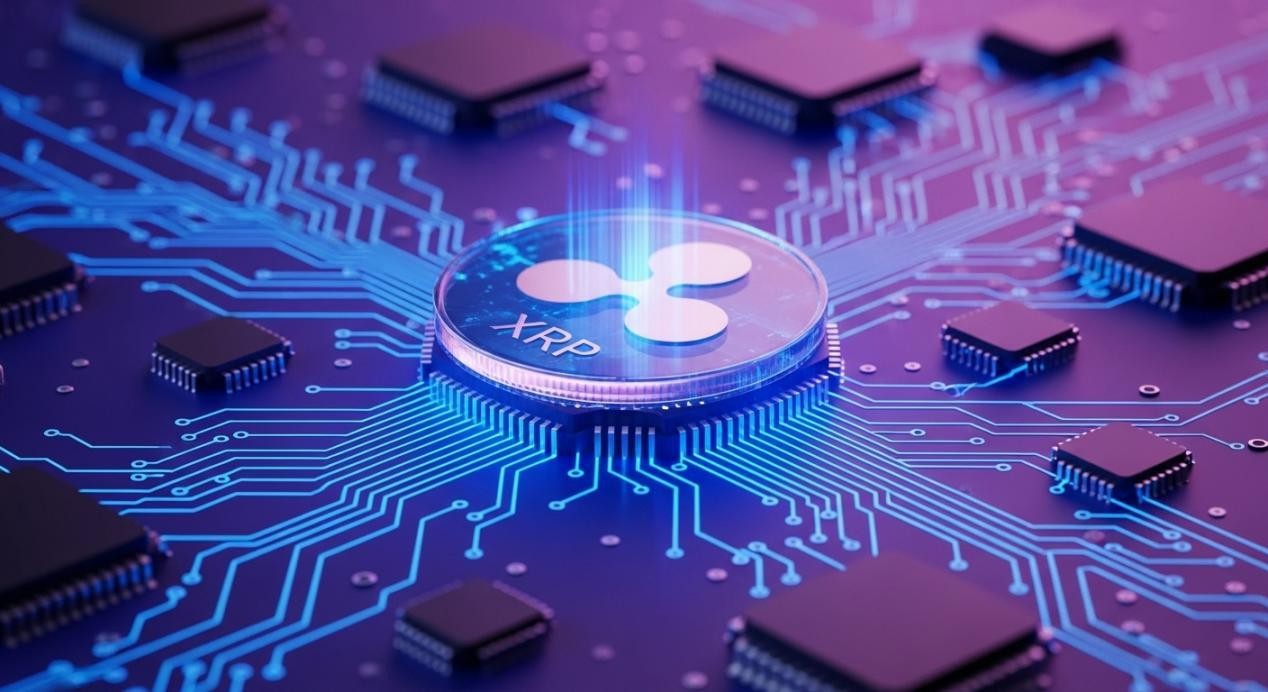
The mining industry for cryptocurrency is facing a crucial choice in 2026. Over the years, experts in the field have predicted they would see Bitcoin miners would eventually shift toward AI-based infrastructures and capitalize on the AI computing growth. However, the reverse is taking place. Particularized Bitcoin miners are investing more on ASIC hardware, while remaining dedicated to their core business. This shift has important implications about the profitability of their business, the returns on investment, and the potential of various computing strategies.
The debate is a bit counterintuitive. Artificial intelligence infrastructure has snared massive capital investment, and is now attracting high valuations and promising an exponential growth. Bitcoin mining, in contrast, is a business with a small margin with predictable, but low yields. What is the reason rational investors would stick in mining? Answers to this question are found in the careful study of the figures, not the hype.
This article explains the reasons that bitcoin mining in 2026 continues to draw serious capital, despite this AI boom. We’ll look at the financial reasons to continue focusing on mining and compare the returns of mining infrastructure and AI infrastructure. We will also examine what this suggests about the long-term investment plan in the technology sector.
A Great Pivot that Never Really Happened
A few years back, predictions from industry indicated that mining firms were likely to shift their computational resources towards AI learning and inference. The reasoning seemed reasonable: AI computing demands exponential growth. AI chips are expensive, mining margins are tense. Moving resources seemed to be the best economic option.
Reality turned out to be more complex. Numerous mining companies had the opportunity to test using AI infrastructure. The results were mixed. Certain operations showed improved profit in the short run. Others realized that implementing AI infrastructure caused operations that were more complicated and did not yield the same profits. They also realized that mining equipment specifically designed for Bitcoin produced more predictable and less risky revenue than all-purpose AI infrastructure.
The cryptocurrency mining community learned a valuable lesson: specialization wins over diversification when operating on the profitability edge. Bitcoin mining equipment is designed for one purpose: solving the SHA256 algorithm. This specialized approach creates efficiency that common-purpose AI chips can’t compete with. While AI infrastructure requires continuous upgrades, maintenance as well as management Bitcoin mining technology simply operates.
A variety of factors led to this realization
- Functional simplicity: Bitcoin mining hardware runs a single, fixed algorithm continuously, with no need for frequent software updates or compatibility adjustments.
- Predictable income: Mining generates cryptocurrency directly through computation, with earnings transparently determined by network difficulty and the Bitcoin price.
- Capacity efficiency: Mining equipment can start generating revenue from day one, unlike AI infrastructure, which depends on customer acquisition and longer sales cycles.
- Technological stability: Bitcoin mining prioritizes operational reliability and disciplined maintenance rather than constant software innovation or optimization.
ASIC Mining vs AI Infrastructure The Reality of the Financial Reality
Knowing ASIC mining and AI infrastructure involves comparing actual returns, not just theoretical. Let’s examine realistic 2026 scenarios for both approaches.
Bitcoin Mining Investment ($1 Million Hardware Deployment)
- Initial investment: $1,000,000 in ASIC miners
- Monthly electricity cost: $120,000–$150,000
- Monthly mining revenue: $80,000–$220,000
- Monthly net profit: $30,000–$100,000
- Break-even period: 10–15 months
- Annual return: ~30%–50% of invested capital
AI Infrastructure Investment ($1 Million Deployment)
- Initial investment: $1,000,000 in AI chips and servers
- Monthly operating cost: $80,000–$120,000
- Monthly income: Highly variable ($50,000–$200,000)
- Customer acquisition period: 3–6 months before meaningful revenue
- Break-even period: 18–36 months
- Annual return: Uncertain, typically 15%–60%
The mining model produces reliable revenue right away. The AI model generates unpredictable revenues with longer payback times. For investors who are cautious mining’s predictability is a plus despite the possibility of lower risk.
Take a look at a specific instance. For instance, a dogecoin miner with a small investment in equipment produces approximately $2,000 to 3,000 in monthly revenues. The predictable stream of income funds operating expenses and generates profits. An AI infrastructure company with similar capital investment needs to identify clients, negotiate contracts, in addition to managing the relationships. The potential revenue is greater but it isn’t as certain.
This comparison of financials explains why mining companies are still committed to their primary business. Specialization creates predictable returns. A diversification process into AI infrastructure results in operational complexity, but without guaranteeing returns.
Mineral Profitability Drop 2026 Understanding The True Trends
The phrase “mining profitability decline” 2026 is frequently used in discussions about industry, however truth is more nuanced. Mining profitability hasn’t declined generally. It has actually increased both operationally and geographically.
A variety of factors influence the mining industry’s profit in 2026.
- Increased difficulty: Bitcoin’s network difficulty adjusts every two weeks based on total computing power, making changes expected, transparent, and broadly predictable.
- Electricity cost variation: Power prices dramatically affect profitability—miners in regions like Iceland (~$0.03/kWh) remain highly profitable, while miners in high-cost areas such as Germany (~$0.25/kWh) face tight margins.
- Hardware efficiency gains: New-generation hardware like the Antminer S21 and comparable 2026 models deliver roughly 20–30% higher efficiency than 2023–2024 units, helping well-capitalized operators offset rising network difficulty.
- Bitcoin price volatility: Mining rewards are paid in Bitcoin, so price declines can reduce profitability even when operational efficiency improves.
The reality is that the profitability has not decreased when operating efficiently in favorable areas. Instead, it has been more discerning. Businesses that have low electricity costs as well as modern hardware and capital invested in patiently continue to generate high returns. Marginal operations using outdated equipment or costly electricity have left the market.
Regional profitability is extremely variable. Iceland provides $0.03-0.05/kWh electricity with 50-60 percent annual returns. Texas using renewable energy can offer $0.05-0.08/kWh for returns of 40-50. Central America provides $0.06-0.10/kWh for 35-45 percent returns. Northern Europe delivers $0.10-0.15/kWh for 20-35 percent returns. Germany’s $0.20-0.30/kWh results in marginal to non-profitable conditions.
Why Specialization Is More Effective Than Diversification In 2026?
Its mining sector’s determination to concentrate on mining and not pivot towards AI is a more fundamental premise that applies to capital-intensive industries that have razor-thin margins giving competitive advantages, which diversification erodes.
Bitcoin mining is successful due to an extreme level of optimization. Every aspect of the operation is optimized to increase the efficiency of mining. From the procurement of electricity to the design of cooling systems to the configuration of networks, everything is focused on mining. Mining operations with large scales incur costs that small-scale operations cannot meet, which creates natural obstacles against the competition. Specialized systems perform predictably. Managers are able to identify risk and are able to allocate capital efficiently. Highly skilled operators with more than 10 years of experience in mining are aware of the subtleties that new entrants aren’t able to quickly grasp.
The process of diversifying to AI infrastructure is to lose these advantages. It is a way of competing with companies who are solely focused on AI infrastructure, with more understanding of the technology, better customer relations and better-performing operations.
For the majority of mining companies, the most sensible option is to stay concentrated. Let the specialized AI infrastructure companies service those who market. Mining Bitcoin profitably at locations that are conducive to. This strategy has proven to be successful in 2026.
Practical Considerations For Mining Operations
If you’re thinking about mining as a way to invest, there are a few practical considerations to consider. Find out the electricity rate in your area. when it’s higher than $0.12/kWh mining is marginal. Target $0.10/kWh or less. Choose reliable and efficient hardware from well-established manufacturers. New technology (2026) will pay for itself by enhancing efficiency. Mining requires constant maintenance monitoring, management, and supervision. Consider it as a business and not just as a pastime. Set up operations for at least 24 months. The shorter time frames expose the company to price volatility as well as difficulties in adjusting cycles.
Find operators who are knowledgeable about mining well. ASIC Marketplace provides hardware knowledge and advice. People who want to estimate their personal financial return should visit miningnow.com to calculate returns depending on the specific electricity cost hardware, local conditions.
Conclusion
The mining industry’s dedication to Bitcoin mining by 2026 in spite of an AI technology boom shows an economic rationality in decision-making. Mining operations that are specifically designed for specific purposes generate predictable returns that other strategies are unable to achieve. Analysis of financials shows that mining is in a position to compete with general-purpose infrastructure investment.
For miners who are considering their 2026 strategies, keep their eyes on optimizing their location, optimization, and the selection of equipment. If you are an investor looking to invest in mining know that mining provides constant cash flow, but with less volatility than other investments. The argument about profitability decline ignores the fact that well-run operations at favorable sites are extremely profitable.
The future of mining is dependent on meeting Bitcoin’s needs for computational security effectively. The operators who are aware of this need and implement accordingly will be successful by 2026, and even beyond. Mining can be best understood as a focused, specialized business, exactly as the most successful operators are doing currently. The mining landscape of 2026 rewards the ability to focus, know-how and effective execution.


 Bitcoin
  Ethereum
  Tether
  BNB
BNB  XRP
XRP  USDC
USDC  Solana
  TRON
TRON  Lido Staked Ether
  Cardano
  Avalanche
  Toncoin