
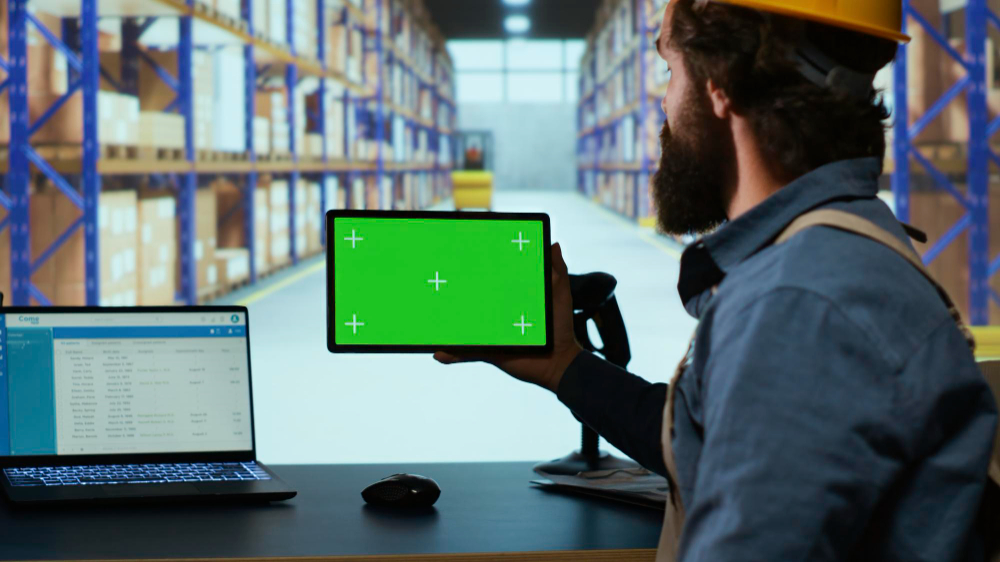

When I first entered a fulfillment center a few years ago, I was more impressed by the choreography than the noise—workers and robots moving in unison like a practiced group, each movement timed to an unfailing digital pulse.
These days, algorithms are the source of that beat.
Regulators in Kent, Washington, have adopted an unusually confrontational approach, questioning not only Amazon’s productivity targets but also the function of automated oversight systems that silently pace the work, track performance, and, according to state inspectors, contribute to hazardous conditions.
| Detail | Information |
|---|---|
| Topic | Washington State Challenges AI‑Driven Workplace Surveillance at Amazon Warehouse |
| Location | Kent, Washington |
| Parties Involved | Washington State Department of Labor & Industries (L&I); Amazon |
| Core Issue | AI‑enabled productivity monitoring tied to worker injuries |
| Enforcement Action | Safety citations alleging “serious willful” violations |
| Legal Response | Amazon sued L&I, arguing due process concerns |
| Broader Context | Debate over AI oversight, worker safety, and automation |
| Source | Reuters reporting on Amazon lawsuit and safety citations |
The Kent factory was charged by the Department of Labor & Industries (L&I) for alleged “serious willful” violations of worker safety regulations, citing high-speed activities that were fueled, at least in part, by algorithmic monitoring. Ten different processes that increased the risk of musculoskeletal injuries—shoulder, knee, wrist, and back—were discovered by the state’s inspectors, alarming both regulators and labor activists.
Washington’s move is the most recent development in the ongoing conflict between automation and human limitations, not a hasty decision. A regulator perceives strain where an AI system may see throughput. An injured worker sees fatigue and achy joints where a warehouse manager may see efficiency. These viewpoints may have remarkably comparable statistics, yet their lived experiences may differ greatly.
Amazon took a firm stance. It filed a lawsuit against L&I in federal court rather than following the abatement order and then going to court. The lawsuit argues that the state’s mandate to make potentially expensive operational modifications prior to a complete appeal is a violation of the due process safeguards provided by the 14th Amendment. Amazon’s attorneys contend that requiring a redesign on the basis of unresolved claims essentially punishes the business without a full trial.
A procedural concern with wider ramifications is at issue: when AI and safety collide, should enforcement come before adjudication? Amazon says no. According to the state, employee safety cannot wait.
The company’s justification on the vagueness of ergonomic requirements was one aspect of the dispute that struck a chord with me. Amazon noted that neither Washington nor federal law have clear, widely accepted guidelines for repeated motion dangers. When it comes to something as complicated as algorithmic pace-setting, regulators are left to rely on general safety rules that require businesses to maintain a hazard-free atmosphere. However, this norm might feel elastic.
That argument is seen as evasive by those who oppose Amazon’s position. They contend that the actual injuries that employees are reporting are not diminished by the absence of comprehensive ergonomic coding. They characterize AI-enabled performance tracking and workflow rates as a feedback loop that forces workers to push themselves to the maximum without enough breathing room.
Additionally, although Amazon emphasizes that it has invested more than $300 million in safety enhancements, such as vehicle controls and technological advancements, L&I officials contend that these initiatives fall short in addressing the systemic hazards that inspectors found related to the measurement and enforcement of duties.
There have already been some early developments in the judicial struggle. Four of the listed offenses were rejected by a Washington appeals judge who concluded that the state’s evidence was not as strong as anticipated; the state is currently appealing this decision. Multiple postponements of court proceedings have resulted in what insiders characterize as a procedural maze that prolongs uncertainty rather than providing any benefits.
It’s amazing how this disagreement reflects a broader change: automated systems are no longer only tools in warehouses; rather, they now dictate performance, pace, and, in some respects, policy. Regulators are essentially stating that it is insufficient to let an algorithm determine the pace for human labor without human supervision. Engineers and managers may create a schedule, but the workers’ joints and backs suffer as a result.
As expected, employees have a variety of opinions. Some claim that oversight provides regulators with a unique perspective on everyday reality that they have long reported but found difficult to validate. Others warn that a hostile relationship with employers could stifle cooperation on safer solutions that could be more easily implemented.
Speaking on condition of anonymity, one union organizer observed that AI systems can resemble a swarm of bees—continuously buzzing, constantly pushing employees along. They claimed that even though you can’t always see it, you can feel the strain. The elusiveness and relentlessness of automated performance demands—something that is difficult to measure or ignore—are both encapsulated in that concept.
Critics of Amazon also cite more general data on injury rates, which several advocacy groups claim are often higher in large fulfillment centers than in warehouses with less stringent oversight. Federal investigations into injury data reporting were prompted by some of the same worries, indicating that this isn’t a singular conflict but rather a trend that merits close examination.
Notwithstanding the conflict, there is a hopeful undercurrent among supporters who think this legal effort may make clear how automation and artificial intelligence must be balanced with worker welfare. Winning a case that supports the state’s strategy might enable other agencies to impose comparable guidelines, encouraging businesses to create AI systems that are not only very effective but also more sensitive to human considerations.
On the other hand, a decision in Amazon’s favor might reassure business executives that cautious regulation need not impede quick innovation—a possibility that worries some labor activists but appeals to Silicon Valley strategists.
A common understanding that this isn’t just about one institution or one collection of citations permeates everything. As robotics, artificial intelligence, and real-time analytics become more commonplace, the topic of how humans and machines can coexist in demanding workplaces will only become more important.
Meanwhile, employees keep showing up for work, walking the aisles, and meeting dashboard- and alert-shaped expectations. Supervisors struggle with both human concerns and technology mandates. Additionally, legal teams interpret constitutional provisions that few people thought would have such a direct bearing on scanning devices and conveyor belts.
Regulators aren’t giving up, though, which is a positive indication. They are posing challenging queries regarding priority, pressure, and pace. Despite the case’s convoluted appeals, it shows that states are prepared to face automation’s consequences head-on rather than passively accept them.
This disagreement, at the very least, marks an important development. It implies that careful regulation need not impede innovation and that monitoring AI in work environments can be both progressive and protective. Rather, it can assist in guiding the use of technology so that advancement doesn’t outstrip safety and speed doesn’t overshadow protection.
If the legal system can establish guidelines that respect human limitations without discounting the benefits of automation, then efficiency and empathy can coexist in harmony.



 Bitcoin
  Ethereum
  Tether
  XRP
XRP  BNB
BNB  USDC
USDC  Solana
  TRON
TRON  Lido Staked Ether
  Cardano
  Avalanche
  Toncoin