
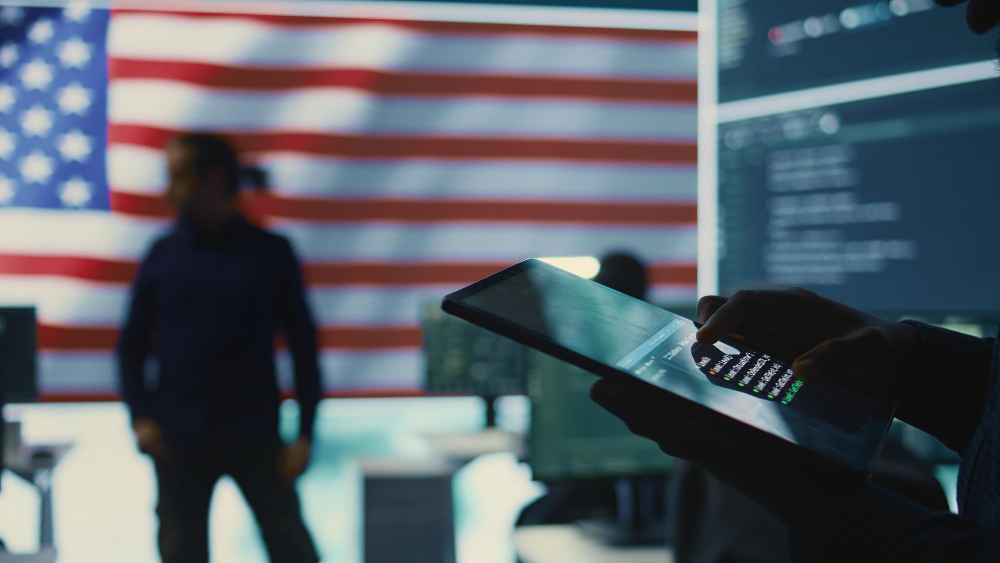

One of the most subtly significant pieces of equipment in town has emerged over the past year: a computer screen inside a small police station sandwiched between a hardware store and a diner that still closes early on Sundays. The screen glows steadily as officers start their shifts.
By evaluating historical crime data and predicting potential trouble spots, the software helps officers prepare rather than just respond after something has already gone wrong. This is something that used to be solely instinctual.
| Key Context | Details |
|---|---|
| Technology | Artificial intelligence predictive crime system |
| Accuracy Level | Approximately 52 percent accuracy in this town’s deployment |
| Research Foundation | Built using spatial and temporal crime prediction models developed at the University of Chicago |
| Core Function | Forecasts where crimes may occur based on historical patterns, not identifying suspects |
| Primary Goal | Helps police allocate patrols more effectively and prevent crime proactively |
| Community Impact | Improved planning but also raised important discussions about fairness and trust |
| Reference | Nature Human Behaviour study, University of Chicago |
The system, which was created with research affiliated with the University of Chicago, examines patterns in space and time, detecting signals that would be difficult for human observation to pick up on with such remarkable accuracy.
Its accuracy rate in this town is roughly 52 percent, which may seem low at first, but officers say it has significantly increased their awareness by providing them with a starting point that feels grounded rather than random.
Through the use of sophisticated analytics, the system divides neighborhoods into smaller areas and tracks changes with an accuracy that is remarkably similar to weather tracking, where specific conditions raise the risk of storms without ensuring they will occur.
This capability has proven especially helpful for police officers juggling a tight staff and growing responsibilities, enabling patrols to concentrate attention where it may be most needed while preventing needless strain on already overburdened resources.
According to one patrol officer, the software serves as a guide who makes recommendations rather than giving orders, maintaining the human element at the core of every choice rather than taking the place of human judgment.
During one night shift, I observed an officer take a quick look at the screen before leaving, and I was struck by how easily he embraced its existence, as though it had subtly earned a spot next to radios and patrol plans.
This acceptance illustrates how technology gains credibility over time—not through assurances but rather through consistent utility—and how it subtly and remarkably successfully becomes a part of everyday life.
Town officials have recently characterized the system as being extremely adaptable, assisting in the identification of trends pertaining to vehicle theft, burglary, and property crime, thereby facilitating preventative measures that have greatly shortened response times.
Officers have occasionally prevented incidents from happening by strategically placing patrols, fostering situations where prevention took the place of reaction and bolstering trust in the system’s usefulness.
However, its limitations are still very evident, serving as a reminder to everyone that artificial intelligence does not forecast individual behavior but rather highlights probabilities influenced by past occurrences and environmental influences.
This distinction has been crucial for community members because it guarantees that the system is viewed as a planning tool rather than an accusatory mechanism, maintaining trust while promoting public safety.
With each data point adding to a larger structure, the technology functions similarly to a swarm of bees moving in unison, producing patterns that offer insights that are far more profound than any one observation could.
This collective intelligence has proven incredibly successful in spotting slow-developing trends, enabling officials to spot changes early and react with well-considered, measured plans.
Similar predictive systems have been tested in larger cities over the last ten years, showing promise for further advancement as technology advances and achieving noticeably higher accuracy in controlled research settings.
Though predictions are less accurate in smaller towns due to the inherent difficulties caused by the smaller data volume, they are still very creative in aiding in resource planning and decision-making.
Officers report that their sense of readiness has significantly increased since the system was implemented, enabling them to approach shifts with more defined expectations and organized patrol tactics.
The software repeatedly flagged a parking lot close to a closed shopping center, according to one officer. At first, nothing happened, but the repeated signal prompted additional patrols, which ultimately stopped a break-in attempt.
The system’s true strength is demonstrated by this type of incremental benefit, which supports prevention through preparation and acts as an early warning mechanism that raises awareness rather than providing certainty.
The department has developed a workflow that feels extremely efficient by incorporating this technology into everyday operations. It combines computational insight and human experience to produce outcomes that neither could produce on its own.
Although no system is flawless, residents have reacted with cautious optimism, acknowledging that employing tools that enhance efficiency and planning is a particularly creative step toward safer communities.
Fairness and transparency have been discussed at town meetings in order to ensure that the system functions responsibly while upholding accountability and public confidence.
These discussions, which are developing gradually, show how communities carefully adjust to new technology while striking a balance between optimism and careful evaluation of the ethical ramifications.
With the help of more data and better design, predictive systems like this one should become much faster and more accurate in the upcoming years, enhancing their capacity to assist with prevention initiatives.
In order to maintain these models’ exceptional reliability while avoiding the biases that have called into question previous methods, researchers are constantly improving them.
Law enforcement organizations are forming alliances that encourage responsible innovation by working with academic institutions and tech companies, guaranteeing that advancements benefit all.
What is most notable is how subtly this change is taking place—not through grandiose declarations, but rather through incremental advancements that are progressively changing the way communities view readiness and safety.
In this town, artificial intelligence has become a very dependable companion, supporting decisions, enhancing awareness, and enabling officers to serve their community with more clarity and confidence. However, it has not taken the place of human responsibility.



 Bitcoin
  Ethereum
  Tether
  XRP
XRP  BNB
BNB  USDC
USDC  Solana
  TRON
TRON  Lido Staked Ether
  Cardano
  Avalanche
  Toncoin