
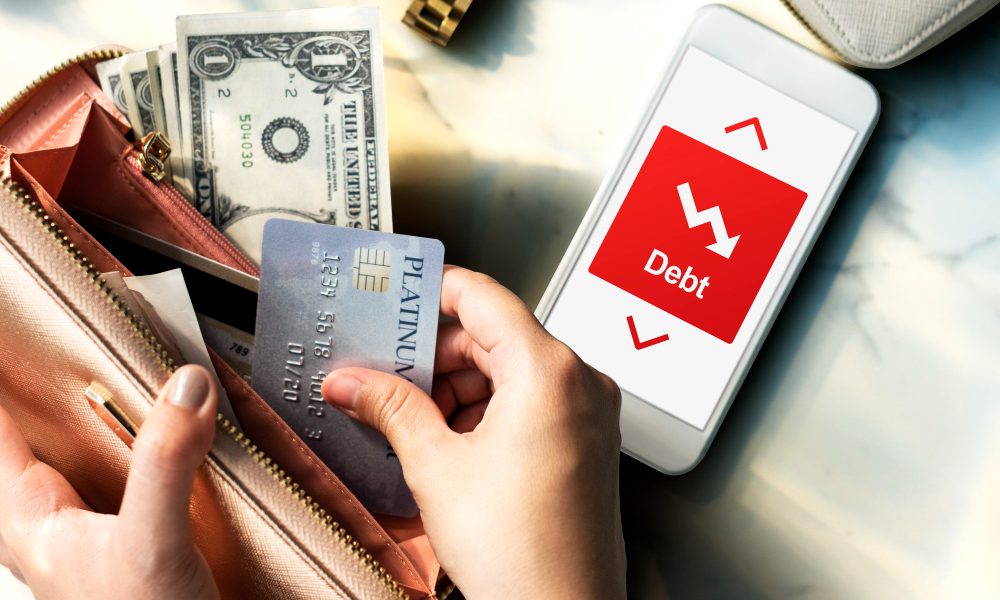
One figure, $1.28 trillion, is steadily rising like water in a basement. The Federal Reserve Bank of New York estimates that as of early 2026, Americans owed that much on their credit cards. In the last quarter of 2025 alone, the amount increased by $44 billion. This increase may seem insignificant until you take into account the underlying factors, such as families having to choose between groceries and minimum payments and people using up all of their remaining credit limit in order to keep the lights on.
Walking through any mid-sized American city makes it difficult to ignore the growing disconnection between the surface story and the true story. Restaurants are bustling. There is foot traffic in malls. By the majority of headline metrics, consumer spending appears robust. However, there is a problem beneath that activity, somewhere between the monthly statement and the point-of-sale terminal. Approximately half of all cardholders, or 111 million Americans, are unable to pay their monthly balances. It’s not a fringe group. That’s the nation.
| Key Information | Details |
|---|---|
| Report Source | Federal Reserve Bank of New York — Household Debt and Credit Report |
| Total U.S. Credit Card Debt (2026) | $1.28–$1.3 Trillion (record high) |
| Q4 2025 Increase | $44 billion single-quarter jump |
| Year-over-Year Growth | +5.5% |
| Average Credit Card APR | ~20–22% |
| Americans with Credit Cards | ~227 million (4 in 5 adults) |
| Cardholders Carrying a Balance | ~111 million (roughly 60%) |
| Cardholders Only Paying Minimum | ~27 million |
| Delinquent Credit Card Debt | $163.4 billion |
| Interest Paid Since Trump Took Office | $240.7 billion |
| Reference Website | Federal Reserve Bank of New York — Household Debt |
For its part, the Federal Reserve is stuck. Raising interest rates puts more pressure on borrowers who already pay 20 percent or more annually. If rates are cut too drastically, inflation risks could resurface at a time when tariff pressures and a job market that is beginning to show signs of strain are already shaking the economy. Speaking with economists and examining the Fed’s own survey data gives the impression that decision-makers are trying to fix a potentially broken needle. In a year, fewer consumers anticipate that their financial circumstances will improve, and more anticipate that things will worsen. These figures do not represent a nation that believes it has a soft cushion on its back.
What the researchers at the New York Fed refer to as a “K-shaped economy” is no longer a theoretical notion. The delinquency data shows it. Mortgage default rates are rising at the fastest rate in zip codes with the lowest incomes. “There’s an affluent half of the population whose financial lives aren’t disrupted by momentary inconveniences,” said Andrew Housser, co-founder of the debt management company Achieve. Financial trade-offs and triage, however, are a way of life for everyone else. Political commentary is not what that is. When you examine the numbers closely enough, that’s exactly what they tell you.
The picture of interest rates exacerbates the situation. As of early 2026, credit card rates were almost twice as high as they were just over ten years prior, averaging about twenty percent. It turns out that since the 2008 financial crisis, banks have increased their profit margins by over 109 percent, making greater use of the difference between their borrowing costs and their customer fees. Since 2010 alone, Americans have paid a total of $2.1 trillion in credit card interest. That figure surpasses the nation’s total outstanding student loan debt. It exceeds the total amount of auto loan debt that Americans have. In all honesty, it is a startling transfer of wealth from regular households to financial institutions, and it has been occurring so slowly that it hardly ever makes the front pages.
During his campaign, President Trump proposed a 10 percent cap on credit card interest rates, which would have provided significant relief to the 27 million Americans who currently only make minimum payments and watch as their balances hardly change each month. That pledge was never fulfilled. As usual, banks put up a fierce fight, and in the end, the administration gave up and decided to block a rule that would have capped late fees at $8. The typical late fee is at least $32. That is an additional burden for the approximately 30 million Americans who have fallen behind on at least one card. It’s a concerning set of priorities, depending on your tolerance for tactful understatement.
According to Achieve’s survey, 55% of people with credit card balances use their cards to cover necessities. Not holidays. not high-end purchases. groceries. utility invoices. gaps in rent. This occurs when the safety net has gaps, when wages have not kept up with the actual cost of living, and when credit is the last line of defense between a household and a real crisis. By 2025, the median percentage of “debt-stressed” borrowers using credit had increased from 63.8 percent in 2018 to 70.7 percent. The median utilization rate for borrowers with the lowest credit scores is 99.2%. There is hardly any runway left for these people.
Whether the Fed will find a middle ground in all of this—a carefully calibrated series of rate changes that lowers debt costs without rekindling inflation or starting a recession—remains to be seen. However, it appears more obvious that the issue is no longer solely one of monetary policy. The disparity has widened and the numbers have increased to the point where the standard tools seem inadequate. The accumulation of a record $1.3 trillion in credit card debt is not an accident. Millions of people who had fewer options than necessary contribute to its gradual accumulation month after month, and the financial system has been adept at making money off of this situation.



 Bitcoin
  Ethereum
  Tether
  BNB
BNB  XRP
XRP  USDC
USDC  Solana
  TRON
TRON  Lido Staked Ether
  Cardano
  Avalanche
  Toncoin