
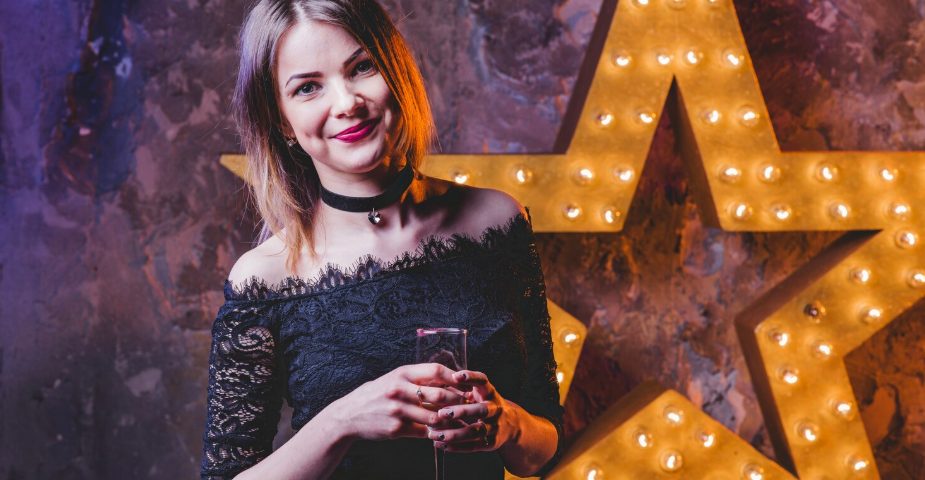

This year’s 2026 Actors Awards carpet felt particularly tense. Publicists whispered into headsets as flashbulbs popped against the pale Los Angeles sky, and then Jenna Ortega emerged from a black SUV wearing a vintage, slightly unraveled Christian Cowan gown with holes punched in it. It was the type of clothing that challenged people’s preconceived notions. And they did.
Ortega has previously received nominations for the Screen Actors Guild, Golden Globe, and Emmy, primarily for her work on Wednesday. Not only did the show do well, but in a matter of weeks it surpassed one billion viewing hours. It seems as though the awarding organizations were initially unsure of how to handle her. Was she an actress in the horror genre? A former child of Disney? A phenomenon of streaming? It seemed like there were too few categories.
| Category | Details |
|---|---|
| Full Name | Jenna Marie Ortega |
| Born | September 27, 2002 |
| Birthplace | Rancho Mirage, California, U.S. |
| Breakthrough Role | Wednesday Addams in Wednesday (Netflix) |
| Notable Films | Scream (2022), X (2022), Beetlejuice Beetlejuice (2024) |
| Major Nominations | Golden Globe, Primetime Emmy, Screen Actors Guild |
| Notable Win | Imagen Award (Stuck in the Middle) |
| Industry Recognition | Forbes 30 Under 30 (2024), THR Power 100 (2023) |
| Known For | Horror roles, goth glam style, Gen Z “scream queen” |
| Official Reference | https://www.imdb.com/name/nm4911194/ |
It has been odd, but in the best way, to watch her career take off. Her modest Disney sitcom, Stuck in the Middle, earned her an Imagen Award years ago. She spent hours riding in her mother’s car to audition while commuting between school and Los Angeles at the time. When she stands beneath the chandeliers of a major awards venue, that picture of a teenager balancing algebra homework with commercial callbacks lingers. It feels like a real distance.
The atmosphere in the room changed when she received her Emmy nomination on Wednesday. Industry insiders started leaning in and speaking differently. Although Netflix’s campaign machine might have played a role, the performance itself was significant. She reshaped a legacy role without replicating previous iterations by playing the character with an unnerving stillness, blinking slowly, and speaking with clipped precision. She held it together, even according to critics who didn’t like certain aspects of the show.
Awards attention hasn’t shielded her from criticism, though. Her choice of attire at the 2026 Actors Awards received just as much attention as her nomination. Viewers debated cohesiveness, balance, and silhouette on fashion blogs and Reddit threads. It was referred to as daring. Some referred to it as confused. That conflicted energy of awe and skepticism permeated the red carpet outside the Dolby Theatre. It’s difficult not to observe how young actresses are analyzed differently and have their risks scrutinized more critically.
The discussion of awards is complicated by her film work. She added a rawness that elevated well-known slasher beats in Scream and Scream VI. She struck a balance between deadpan humor and something almost tender in Tim Burton’s Beetlejuice, which drew large crowds of younger viewers. Globally, the movie brought in over $450 million. While box office receipts don’t ensure awards, they do influence stories. Investors seem to think she moves tickets, and yes, studios think like investors.
However, not all projects are successful. Critics criticized Hurry Up Tomorrow, calling it confused. Although the movie itself struggled, Ortega’s performance was praised in a number of reviews. Voters for awards observe this discrepancy. Whether she will go from being a regular nominee to a consistent winner is still up in the air. It’s more difficult than it seems to go from “promising” to “inevitable.”
The amount of control she seems to be claiming is what makes her awards story so compelling. She became a producer by the second season of Wednesday, attending casting meetings, talking over scripts, and changing lines in the middle of filming. That action seems calculated, enhancing her power while safeguarding her artistic impulses. She seems determined to avoid the early fame that many young actors experience.
The cultural layer is another. Fashion magazines credit her with igniting a goth revival, and media outlets have dubbed her “Gen Z’s scream queen.” Historically conservative award organizations don’t always give genre performers prompt recognition. Actors in the horror genre have long been neglected. Her nominations might represent a gradual change, an acknowledgment that prestige and commercial impact can coexist.
She appeared composed as she stood on that carpet in 2026, the frayed edges of her dress captured on camera. Nearly analytical. It felt more like a public experiment than a request for approval. It seems as though she is still forming the type of award-winning actor she wants to be as she observes this trajectory—the nominations piling up, the sporadic controversy resurfacing, the deliberate recalibration of her image. After all, awards are just snapshots. Careers are longer.
The way she’s rewriting expectations may be more important than whether she eventually gathers a shelf of golden statues or keeps circling them, creating anticipation. Predictability is frequently rewarded in Hollywood. Ortega continues to oppose it. And it may be precisely that resistance—both unsettling and fascinating—that propels her further into the awards discourse in the years to come.



 Bitcoin
  Ethereum
  Tether
  BNB
BNB  XRP
XRP  USDC
USDC  Solana
  TRON
TRON  Lido Staked Ether
  Cardano
  Avalanche
  Toncoin