
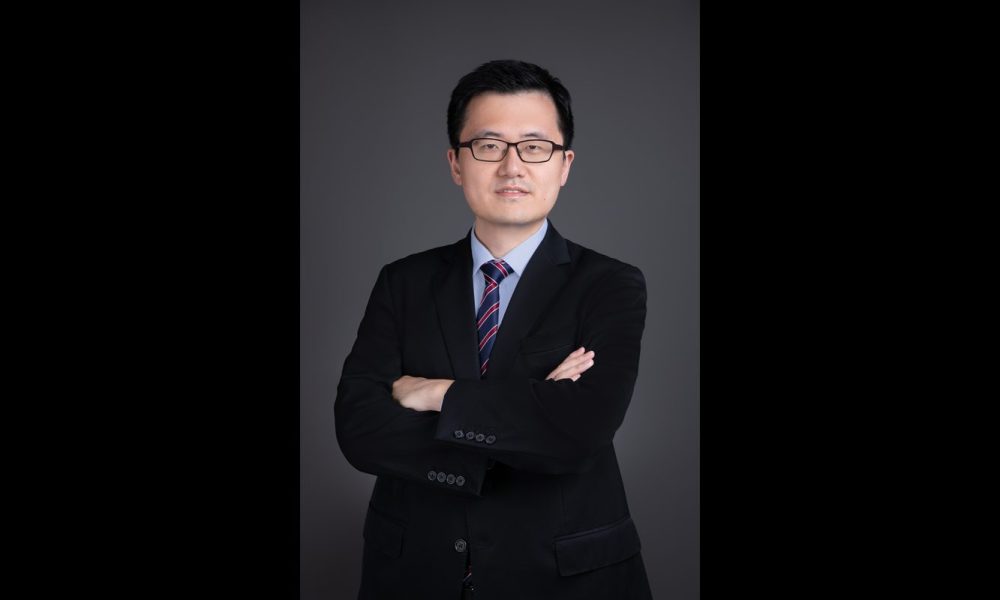
The question Henry Chen, Chief Business Officer of SNZ Holding, kept returning to was simple: Where do serious Ethereum builders in Asia gather and connect?
Chen was not thinking about another panel, side event or crowded reception built around the momentum of festival week. Leading SNZ business team, he and other partners were thinking about something more permanent: a place where founders could pressure-test ideas on an ordinary Tuesday, developers could meet infrastructure partners without waiting for the next summit, and institutions trying to understand on-chain finance could begin the conversation without needing a private introduction.
Asia already had builders, capital, technical talent and institutional curiosity. What it did not have was a permanent room where those groups could keep finding each other after the spotlight moved elsewhere.
So SNZ helped build one.
Hong Kong Ethereum Community Hub (or “ETH Hong Kong Hub”), was built as Asia’s first permanent physical home for the Ethereum community, officially opened April 21, 2026, in West Kowloon. The hub is backed by the Ethereum Foundation’s Ethereum Everywhere team and co-operated by SNZ Holding, where Chen serves as Chief Business Officer, and ETHTAO.
Its grand opening drew more than 1,500 registrants, and welcomed high-profile guests including Ethereum co-founder Vitalik Buterin, Ethereum Foundation President Aya Miyaguchi, Hong Kong Legislative Council member Duncan Chiu and senior representatives from HashKey Group etc., as well as over 20 founders / CEOs and SVPs representing their respective projects or community as guest speakers The launch became one of the most visible Ethereum gatherings during Hong Kong Web3 Festival 2026.
However, the opening was not the point. It was proof of demand.
ETH HK Hub was designed for what happens after the crowd leaves, when the real work begins. The space brings together co-working, recurring programming, company incorporation support, talent services, ecosystem incubation and institutional connectivity under one roof in West Kowloon.
Its mission statement, “Connect the Eastern and Western Community,” is simple, but the strategy behind it is more ambitious: create a physical layer for a digital economy that still depends on trust, proximity and repeated interaction.
Henry Chen’s extensive career experience incorporates strategic and leadership positions at KU Holdings (HoldCo of KuCoin), Summer Capital, Goldman Sachs, and UBS, while he continues to contribute to the global ecosystem of digital finance through community-building initiatives across Hong Kong and beyond.
That background matters because Chen approaches Web3 community-building less like a branding exercise and more like infrastructure development. His work sits at the intersection of capital, founders, institutions and operators, where the question is not simply who shows up, but whether the right people keep showing up long enough to build something durable.
“In-person gatherings are where the most meaningful insights emerge unexpectedly,” Chen said. “Informal conversations reveal where capital is moving, where founders are adjusting their strategies, and where institutions are becoming more engaged. That cannot be replicated through online commentary alone.”
Building The Room, Not Just Attending It
In Web3, visibility often gets mistaken for contribution. Executives attend panels. Investors appear at conferences. Founders circulate through private dinners and Telegram groups. Much of that activity creates momentum, but not always continuity.
Henry Chen’s role with ETH HK Hub points in a different direction. He is not merely participating in events. He helped create the environment where those events happen, and where their value can compound over time.
The Hub has hosted 3 monthly meetups in 2026, prior to its official opening. Speakers from the Ethereum Foundation and other projects and companies such as Ant Group, Yunfeng Financial Group, Brevis, China AMC, Chainlink, Hashkey, Asseto, Spark, Taiko, DeBank, Morpho, Cap Money, Lido, Ether.Fi, Baillie Gifford, WisdomTree, Arbitrum, Safe etc. gathered for sessions on privacy, institutional adoption, artificial intelligence, real-world assets and decentralized finance. The programming reflected the kind of cross-sector conversation Chen believes the market needs more of: technical builders in the same room as capital providers, application developers alongside institutional participants, and Web3-native teams speaking directly with professionals who are still learning how on-chain systems may affect their industries.
That mix is intentional.
ETH HK Hub’s inaugural membership already spans more than 30 ecosystem participants across infrastructure, DeFi, institutional services and emerging applications. The community includes builders working on protocol layers, researchers focused on cryptography and tokenomics, founders connecting traditional finance with on-chain products, investors looking for long-term exposure to decentralized markets, and professionals from finance, law and technology moving into Web3.
In a younger market, that kind of diversity can look messy. To Chen, it is the design.
The most consequential conversations in emerging technology rarely happen among people who already agree. They happen at the edges, where a developer and a compliance expert are forced to examine the same problem from different angles, where a founder hears what an institution would actually need before adoption becomes possible, and where capital learns to distinguish short-term market noise from real technical progress.
Those conversations are difficult to manufacture online. They require enough trust for people to speak honestly, enough repetition for relationships to mature, and enough structure for a room to become more than a gathering place.
“Online discussions are useful for speed and reach,” Chen said. “But in-person events provide a much clearer read on conviction, seriousness, and intent. Face-to-face conversations reveal whether people are genuinely building, whether an institution is truly committed, and whether a market theme has real depth behind it.”
Henry Chen: ‘The Strongest Opportunities Usually Emerge Where Strategy, Timing, And Real-World Utility Align’
The digital asset industry has always had a tension between speculation and substance. Bull markets reward speed, attention and narrative. Durable ecosystems require something slower: discipline, execution and the ability to separate real use cases from temporary hype.
That tension shapes how Henry Chen thinks about ETH HK Hub.
The goal is not to create the loudest room in Hong Kong. It is to create a useful one.
“Community-driven gatherings can create a purer environment with less noise,” Chen said. “When the conversation is focused on innovation, critical thinking, and long-term value creation rather than short-term profit chasing, the entire ecosystem becomes healthier. That is where real progress tends to happen.”
That philosophy mirrors the way Chen describes SNZ’s broader investment approach.
“The philosophy has always been to back the hard but right thing for the long term,” he said. “We are not looking to trade around trends. We are most interested in real applications on-chain, whether in fintech, payments, AI, content, or other use cases that can create lasting value.”
Applied to ETH HK Hub, that mindset becomes operational. Programming is not simply about filling a calendar. Membership is not simply about scale. The value of the space depends on whether it can bring together people who are serious about building beyond the current cycle.
That includes founders who can translate technical innovation into products people actually use. It includes developers working on infrastructure that may never become consumer-facing but is critical to the health of the ecosystem. It includes investors who understand the difference between a market theme and a durable company. It includes institutions willing to do the slower work of understanding what on-chain systems can realistically change.
In that environment, integrity becomes more than a personal virtue. It becomes market infrastructure.
“In a market as noisy as digital assets, discipline matters,” Chen said. “The strongest opportunities usually emerge where strategy, timing, and real-world utility align.”
ETH HK Hub is designed to increase the chances of that alignment happening in Hong Kong, not once during festival week, but repeatedly throughout the year.
What Comes Next
Many people in Web3 are building for the next cycle. SNZ and Henry Chen is helping build for the one after that.
ETH HK Hub’s early traction shows there is demand for a more permanent Ethereum community platform in Asia. Its inaugural membership includes more than 30 ecosystem participants. Its programming has already brought together technical teams, institutional players and emerging application builders. Its opening drew global names, but its longer-term relevance will depend on what happens when there is no spotlight at all.
That is the real test of community infrastructure.
Do founders keep coming back? Do developers find collaborators? Do institutions become more informed and more active? Do projects move from conversation to execution? Does Hong Kong become a stronger bridge between traditional finance and Ethereum-based innovation because the right people now have a place to meet consistently?
That is where Chen’s operator mindset shows most clearly. The hub is not positioned around his personal brand. It is positioned around what he is helping make possible for others.
“The future of the sector depends not only on innovation, but also on the ability to work in a proper, responsible, and collaborative way,” Chen said. “That is where the real long-term opportunity lies.”
Asia’s first permanent Ethereum hub is now open. Its success will not be measured only by attendance numbers, launch photos or event recaps. It will be measured by the companies that get built through it, the partnerships that form inside it, the institutions that move closer to on-chain finance because of it and the founders who find the community they need to keep going.
Chen helped build the room.
Now the real measure is what the room makes possible.



 Bitcoin
  Ethereum
  Tether
  BNB
BNB  USDC
USDC  XRP
XRP  Solana
  TRON
TRON  Lido Staked Ether
  Cardano
  Gram (prev. Toncoin)
  Avalanche