Bitcoin
 Ethereum
 Tether
 BNB
 USDC
 XRP
 Solana
 TRON
 Lido Staked Ether
 Cardano
 Gram (prev. Toncoin)
 Avalanche
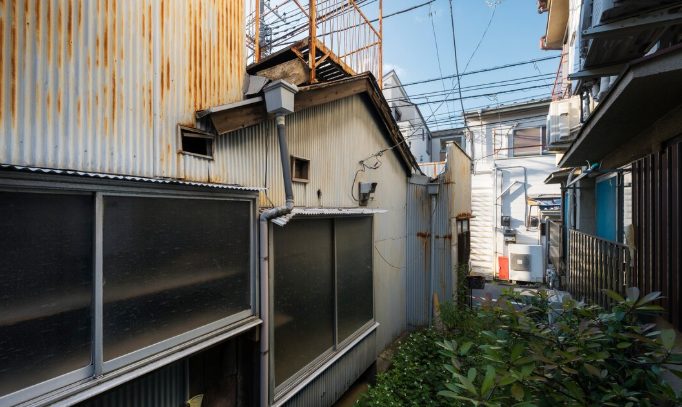
The silence in any second-tier Chinese city today conveys a message that the official statistics attempt to downplay. Five winters of waiting have worn down the concrete shells of unfinished apartment buildings that stand against the skyline. Above them, cranes are motionless. The keys to some of these buildings, which were sold off-plan to families who contributed their savings years ago, have yet to be delivered. As you pass these locations, you get the impression that the nation is in the slow phase of a narrative whose loud chapter has already come to an end.
Although the numbers don’t fully convey the mood, they are astounding. Eighty-five percent of the housing market’s gains between 2011 and 2021 have vanished, according to researchers. Prices are at their lowest point in 20 years. Developers that were once household names—the kind whose logos appeared on football jerseys and theme parks—have either disappeared or been placed in liquidation, and the market, which was once valued at about $60 trillion, has lost about a quarter of its value. In early 2024, a Hong Kong court unwound Evergrande, which had previously been the most indebted property group in the world.
| Topic Profile: Chinese Property Sector Crisis | Details |
|---|---|
| Crisis Name | Chinese Property Sector Crisis (2020–present) |
| Start Date | August 2021 |
| Trigger Event | Default of Evergrande Group |
| Key Policy | “Three Red Lines” rule, introduced in 2020 |
| Estimated Market Value (early 2020s) | Approximately $60 trillion |
| Estimated Losses | Over $100 billion among major developers |
| Key Companies Affected | Evergrande, Country Garden, Kaisa, Sunac, Fantasia, Sinic, Modern Land |
| Evergrande Liabilities | 2 trillion RMB (around $310 billion) |
| Liquidation Order | Hong Kong Court, 29 January 2024 |
| GDP Impact | Roughly 2 percentage points reduced from annual real GDP growth in 2024 and 2025 |
| Current Status | Fifth consecutive year of decline |
| Price Decline | Roughly 25% value erosion; lowest in 20 years |
It’s important to keep in mind how this all began because it now seems almost charming. The “three red lines,” a set of borrowing restrictions imposed by Beijing in 2020, were directed at developers who had been viewing debt as an endless resource. Xi Jinping reiterated his statement that homes should be used for habitation rather than speculation. At the time, the phrase sounded almost philosophical. In actuality, it destroyed a sector that had been dependent on borrowed funds and borrowed hope for twenty years.
As was to be expected, Evergrande crossed all three lines. Then came the August 2021 letter to the Guangdong government alerting them to a financial crisis, which was widely read after it was leaked online. The stock fell. One anonymous executive later acknowledged that wealth management products sold to regular investors were “too risky for retail investors,” and these products began to default. Individuals who had invested their entire life savings in what appeared to be a secure yield found themselves pursuing executives in lobby areas. Eventually, some of those executives suffered far more severe criminal penalties than any margin call.
It is still difficult to quantify how the economic harm spreads. According to GAM analysts, the real estate crisis reduced annual GDP growth by about two percentage points in both 2024 and 2025. In April, Brookings described it as the fifth year in a row of decline with no discernible bottom. Local governments are currently in a panic after becoming dependent on land sales as a source of income. Banks are vulnerable. Suppliers are not compensated. Additionally, households that owned roughly 70% of their wealth in real estate have naturally become more frugal with their expenditures.
The lack of a clear playbook distinguishes this slump from a housing crash in the West. Before the late 20th century, private property hardly existed in China, so there are no historical recollections or references to the 1991 or 2008 recessions. Although it’s still unclear if Beijing has the necessary tools, investors appear to think the country will eventually engineer some sort of soft landing. Observing this from the outside, it’s difficult to ignore how much of the world economy secretly believed Chinese real estate would continue to rise indefinitely. It’s no longer an assumption. The more difficult question is what takes its place.