
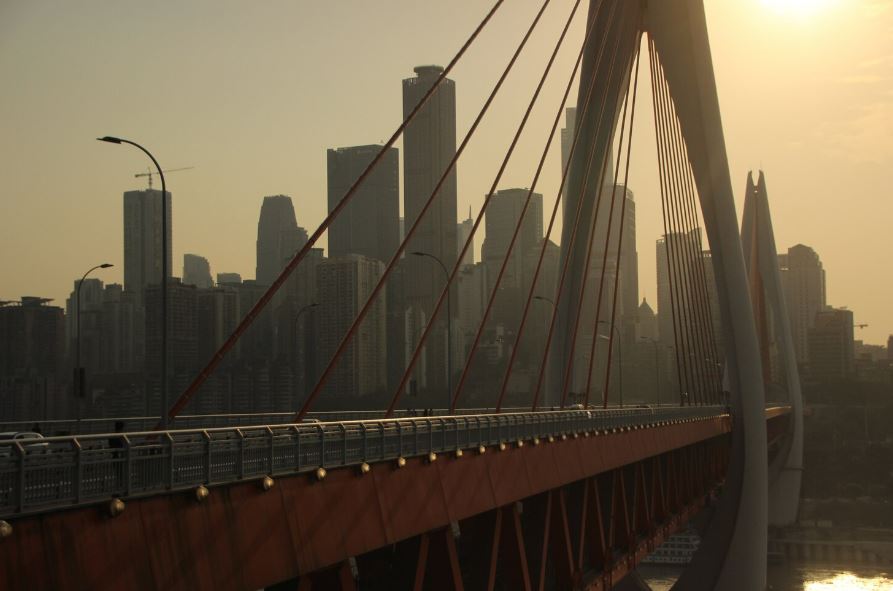
The Infrastructure Deficit: Why the U.S. Needs $3 Trillion Just to Keep Its Bridges from Collapsing

You’ll see it before you read about it if you drive across nearly any river in the American Midwest in late autumn. The rattle of the expansion joints is a bit too loud. The concrete piers resemble scar tissue more than engineering because of the rust streaks that run down from the rebar inside. Even at sixty miles per hour, it seems like someone has been delaying a phone call for a very long time.
The current value of that phone call is $3.7 trillion. In its 2025 report, the American Society of Civil Engineers, which has been rating the nation’s water mains, bridges, and dams since 1998, finally gave the United States a “C”—its highest rating to date. Nevertheless, for some reason, the funding gap widened. $373 billion of it comes from bridges alone. $684 billion is needed for roads. Just to stop sewage from leaking into rivers, wastewater systems—the unglamorous plumbing that no one wants to think about—need close to $700 billion.
| The Infrastructure Deficit at a Glance | Details |
|---|---|
| Issue | America’s aging bridges, roads, water systems, and energy grid |
| Total Funding Gap (2025) | $3.7 trillion |
| Bridges Specifically | $373 billion shortfall |
| Overall ASCE Grade | C (highest ever, up from C-) |
| Structurally Deficient Bridges | Roughly 7.5% of the nation’s 617,000 bridges |
| Reporting Body | American Society of Civil Engineers, founded 1852 |
| Report Frequency | Every four years since 1998 |
| Average Annual Cost per U.S. Household | About $3,400 in lost income |
| Notable Failures | I-35W Mississippi River bridge collapse (2007), Flint water crisis, LaGuardia delays |
| Major Recent Legislation | Infrastructure Investment and Jobs Act (2021) |
| Projected Gap by 2040 if Unaddressed | Over $5 trillion |
Reading those figures and shrugging is tempting. For years, trillions have blended together. However, human translation is more accurate. According to ASCE’s calculations, poor infrastructure—such as burned-out tires, longer commutes, water bills inflated by Victorian-era pipes, and deliveries delayed by closed bridges—is quietly costing every American household $3,400 annually. No one voted for this tax, which is paid for by the occasional tragedy and minor daily annoyances.
The parts that endure are the tragedies. It was meant to be a wake-up call when the I-35W bridge collapsed into the Mississippi in 2007. Flint was, too. The New Orleans levee failure was the same. Every time there are hearings, opinion pieces, and a brief burst of bipartisan agreement, the nation reverts to postponing maintenance in the same way that some people postpone dental work because they know it will hurt more in the future and hope it doesn’t happen.
The existence of the money is what makes the math so annoying. About $20 trillion is sitting in institutional pools and pension funds, much of which is looking for the kind of long-term, inflation-resistant returns that water utilities and toll roads once offered. Investors appear eager. Elections take place every two years, infrastructure pays out over decades, and the political machinery simply isn’t designed to move quickly.
More than doubters anticipated, the 2021 Infrastructure Investment and Jobs Act was beneficial. 60,000 projects received funding. No infrastructure category got a D- for the first time since the Clinton administration. However, the engineering community is quietly worried about what will happen next, particularly since data centers and EVs are expected to increase electricity demand by 47% by 2040. The AI boom is expected to be powered by a grid that already falters in a Texas cold snap. The disconnect is difficult to ignore.
Washington’s patience for the kind of long-term, dull, decades-long commitment this calls for is still up for debate. Until they are brand-new, bridges are not suitable for ribbon-cutting pictures. Re-tensioning cables, replacing bearings, and repouring decks at three in the morning to ensure the morning commute survives are examples of work that is mostly invisible. In a single generation, America constructed its interstate system. It turns out that the more difficult issue is maintaining it. Furthermore, the bill can no longer be discreetly passed into the next administration. Rust doesn’t hold back.


 Bitcoin
  Ethereum
  Tether
  BNB
BNB  USDC
USDC  XRP
XRP  Solana
  TRON
TRON  Lido Staked Ether
  Cardano
  Gram (prev. Toncoin)
  Avalanche