
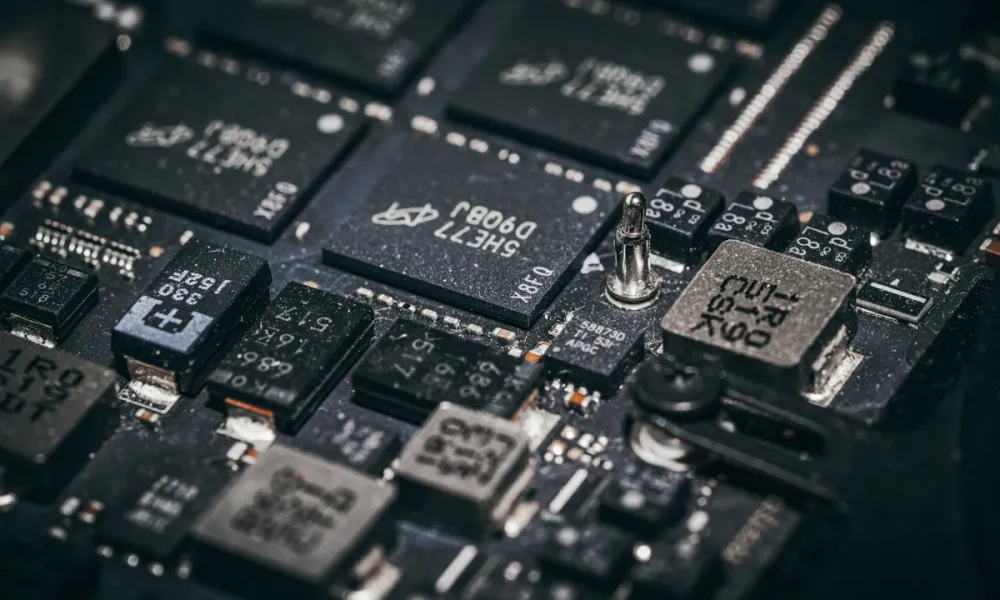
The MSCI Emerging Markets index is up 20% in sterling terms so far this year, a performance that looks improbable given higher oil prices and the risk-off episodes that have rattled global investors. The explanation, once you dig into the index’s composition, is less about emerging-market fundamentals and more about a concentrated bet on the same artificial intelligence theme driving US technology stocks.
Taiwan and Korea: The Hidden Engine
Two countries that most investors would not instinctively place alongside Brazil or India dominate the index. Taiwan and South Korea together account for around 50% of the MSCI Emerging Markets index. Both retain certain currency and market-access restrictions that Marquette Associates and others note keep them outside MSCI’s developed-markets classification, even as their economies are wealthier and more sophisticated than several countries that do qualify. On 2026 year-to-date figures, Taiwan represents roughly 27% of the index and South Korea around 23%.
Within those country weights, three stocks do the heavy lifting. Taiwan Semiconductor (TSMC), Samsung Electronics and SK Hynix together account for almost 30% of the entire MSCI Emerging Markets index. TSMC alone represents 55% of the MSCI Taiwan index; Samsung Electronics and SK Hynix together account for 60% of the MSCI Korea index. All three are direct beneficiaries of the AI hardware buildout: TSMC fabricates the leading-edge chips that Nvidia and others design, while Samsung and SK Hynix supply the high-bandwidth memory that AI accelerators require.
The concentration in these names is a relatively recent development. Callan’s analysis of emerging-market index construction shows that in 2016 and 2017, the single largest constituent was only around 3% to 4% of the index, the top ten names together made up roughly 23%, and the four largest country weights combined to approximately 63%. The index is also the benchmark for more than $1 trillion in assets under management, which means the concentration risk is systemic for a large pool of institutional capital.
| Stock / Country | Weight in MSCI EM (approx.) | AI exposure |
|---|---|---|
| TSMC | ~15% of index; 55% of MSCI Taiwan | Advanced chip fabrication |
| Samsung Electronics | Part of ~30% combined with SK Hynix; 60% of MSCI Korea combined | HBM memory, foundry |
| SK Hynix | As above | High-bandwidth memory |
| Taiwan (country) | ~27% (2026 YTD) | Semiconductor supply chain |
| South Korea (country) | ~23% (2026 YTD) | Memory, display, components |
The MSCI Emerging Markets Index: A Concentrated AI Bet
TSMC’s earnings profile has been revised sharply upward to reflect AI demand. VanEck’s first-quarter 2024 emerging-markets commentary noted that TSMC saw upward earnings forecast revisions early in the period, with one-year EPS growth projections exceeding 20%. For investors holding a broad emerging-market fund, this has been a windfall. The corollary is that the index no longer behaves like a diversified developing-world exposure: it is, in material part, a play on the same AI capex cycle lifting the Nasdaq.
China’s diminished weight reinforces this picture. Marquette Associates tracks China’s index weight peaking at 29.7% in 2020, falling to 19.7% on 2026 year-to-date data. Geopolitical friction, regulatory crackdowns and weaker domestic growth have all compressed China’s share, leaving the AI semiconductor names in Taiwan and Korea to fill the gap.
Diversification Requires a Different Mandate
Investors who want genuine geographic and sector diversification within emerging markets will not find it in a broad index fund. The two investment trusts most obviously positioned to offer it are BlackRock Frontiers (LSE: BRFI) and Barings Emerging EMEA Opportunities (LSE: BEMO). BEMO’s mandate is to achieve capital growth principally through investment in emerging and frontier equity securities across Eastern European, Middle Eastern and African markets. The trust runs a concentrated portfolio of around 35 high-conviction stocks, according to BEMO’s published factsheet. The management team at Barings expanded with Alay Patel joining as co-portfolio manager alongside Matthias Siller and Adnan El-Araby, bringing eleven years of experience on the Barings Emerging Equities Team.
Neither BRFI nor BEMO has kept pace with a broad MSCI Emerging Markets index tracker this year. The absence of AI semiconductor exposure is the arithmetic reason; the ongoing uncertainty across parts of the Middle East and Africa has not helped. That underperformance is the price of the diversification they provide.
There is no pressing case to rotate out of broad emerging-market exposure while the AI capex cycle continues. The question worth tracking is what happens to the index if that cycle stalls: a meaningful derating of TSMC, Samsung and SK Hynix would transmit directly into any fund benchmarked against the MSCI Emerging Markets index, regardless of how the underlying economies of Brazil, India or South Africa are performing. The next earnings cycle from the major US hyperscalers, and any shift in their AI infrastructure spending guidance, is the trigger to watch.



 Bitcoin
  Ethereum
  Tether
  BNB
BNB  USDC
USDC  XRP
XRP  Solana
  TRON
TRON  Lido Staked Ether
  Cardano
  Gram (prev. Toncoin)
  Avalanche