
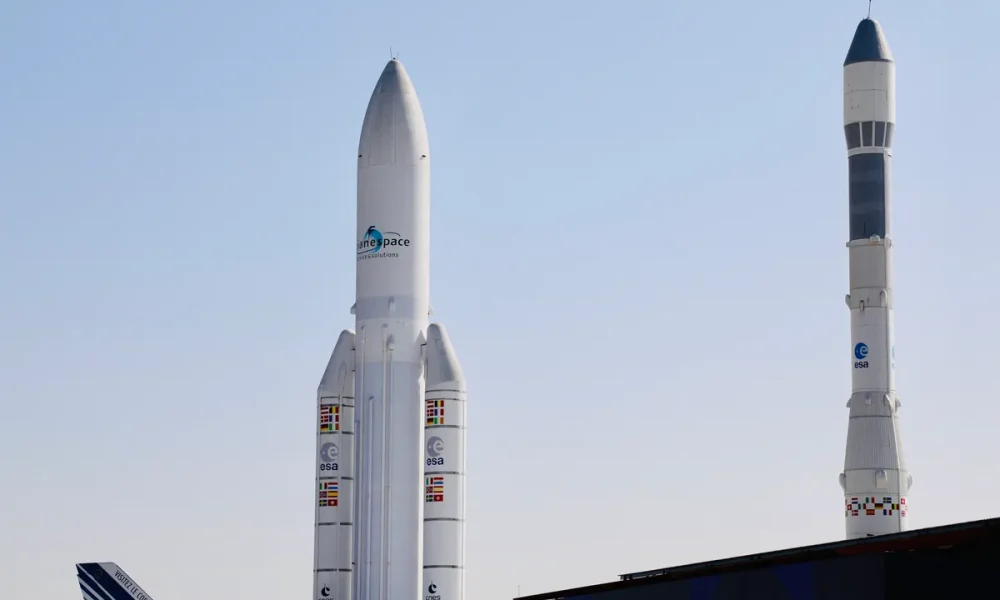
SpaceX IPO space stocks surged in the three months before the company’s 12 June debut on the Nasdaq, with shares opening at $150, an 11% premium to the $135 IPO price. The implied valuation reached $1.77 trillion at listing, per Nasdaq exchange data, above the $1.75 trillion target cited before the offering.
The $75 billion raise is the largest in history. At SpaceX’s Starbase facility in Texas, Elon Musk marked the occasion: ‘A little company that started in a warehouse in El Segundo is now going public with the largest IPO ever.’ The company had remained private for 24 years before Thursday’s listing.
Reuters reported that SpaceX reserved 30% of shares for retail buyers, an unusually large allocation, and fixed the offering price before the roadshow rather than through the conventional banker-investor negotiation process. Underwriters also hold an option to purchase a further 83.3 million shares at $135 within 30 days, which would generate up to an additional $11.25 billion, according to SpaceNews.
SpaceX IPO Space Stocks: Who Benefited in the Run-Up
AJ Bell tracked the most popular space-related purchases on its DIY investor platform over the three months to 8 June 2026, ranked by net buys. SpaceX IPO space stocks and funds dominated the list, displacing blue-chip stalwarts that typically feature among the platform’s most bought names.
‘Investors keen to join the race to space haven’t sat on their hands waiting for the SpaceX IPO,’ said Dan Coatsworth, head of markets at AJ Bell. ‘Space-related investments feature heavily in the most popular purchases on the AJ Bell DIY investor platform over the past three months, as excitement builds ahead of SpaceX’s stock market debut on Friday 12 June.’
| Stock/Fund/Trust | Relevance to Space | 1 Year Return | 3 Month Return |
|---|---|---|---|
| Scottish Mortgage Investment Trust | Owns stake in SpaceX | 44% | 24% |
| BAE Systems | Developing Azalea satellite system | 1% | -12% |
| Seraphim Space Investment Trust | Has portfolio of space companies | 160% | 42% |
| VanEck Space Innovators ETF | Has portfolio of space companies | 167% | 35% |
| AST SpaceMobile | Satellite designer and manufacturer | 195% | 3% |
| Rocket Lab | Launch services and satellite tech | 293% | 62% |
| RIT Capital Partners | Owns stake in SpaceX | 19% | 6% |
| Filtronic | Radio frequency tech provider for SpaceX | 188% | 104% |
| Schiehallion Fund | Owns stake in SpaceX | 101% | 20% |
| Redwire | Builds spacecraft | 1% | 118% |
| Chemring | Space component supplier | -12% | -4% |
| Baillie Gifford US Growth Trust | Owns stake in SpaceX | 41% | 25% |
| Planet Labs | Satellite imagery | 461% | 30% |
| Qinetiq | Space-related testing and training | -14% | -5% |
| Airbus | Largest space company in Europe | 7% | 1% |
Source: AJ Bell. Based on highest number of net buys 8 March to 8 June 2026 on AJ Bell DIY platform.
Not every name gained. BAE Systems fell 12% over the three months; Chemring and Qinetiq also declined. Rocket Lab returned 293% over one year, while Filtronic and Redwire both more than doubled in the three-month period.
‘More people bought shares in Scottish Mortgage, Seraphim or the VanEck Space ETF during the past three months than blue chip stocks Shell, BP, AstraZeneca and National Grid, all of which regularly feature in the most popular names with UK investors,’ said Coatsworth. ‘That’s remarkable as these names are stalwarts of ISAs and pensions across the country, with investors often buying shares in them every month for their attractive dividends and long history of generating solid earnings.’
Proxy Routes for UK Investors
The underlying financials deserve scrutiny before investors chase the sector. SpaceX reported $18.67 billion in revenue for 2025, up from approximately $14.1 billion in 2024, per Forbes. Starlink, which provides high-speed internet to 164 countries, drives the bulk of recurring income. Yet the company posted a net loss of more than $4.9 billion for the full year 2025 and a net loss of nearly $4.3 billion against $4.7 billion in revenue in the first quarter of 2026, per SpaceNews.
For UK investors seeking indirect exposure, investment trusts with existing SpaceX stakes offer one route: Scottish Mortgage (SMT), RIT Capital Partners and the Schiehallion Fund (MNTN) all hold pre-IPO positions. Schiehallion holds eight of the ten largest private companies in the world, with the majority of its portfolio in unlisted names. Darius McDermott of Chelsea Financial Services also points to the Schroder US Mid Cap Fund for diversified supply-chain exposure through holdings such as Hexcel, MACOM Technology Solutions and BWX Technologies.
Thematic ETFs provide broader coverage. The VanEck Space Innovators UCITS ETF (JEDG) and WisdomTree’s Space Economy UCITS ETF (WSPG), which launched on the London Stock Exchange (LSE) on 5 June, each offer a portfolio approach to the sector. Seraphim Space Investment Trust (SSIC) focuses exclusively on space companies.
The immediate catalyst to watch is index inclusion. SpaceX has reportedly made early entry into the Nasdaq-100 a condition of listing, and unlike the S&P 500, the index carries no seasoning requirement, per Forbes citing CNBC. If that condition is met, forced passive buying could arrive within days of the debut rather than months, a technical tailwind for SpaceX IPO space stocks and for the ETFs tracking the index.



 Bitcoin
  Ethereum
  Tether
  BNB
BNB  USDC
USDC  XRP
XRP  Solana
  TRON
TRON  Lido Staked Ether
  Cardano
  Gram (prev. Toncoin)
  Avalanche