
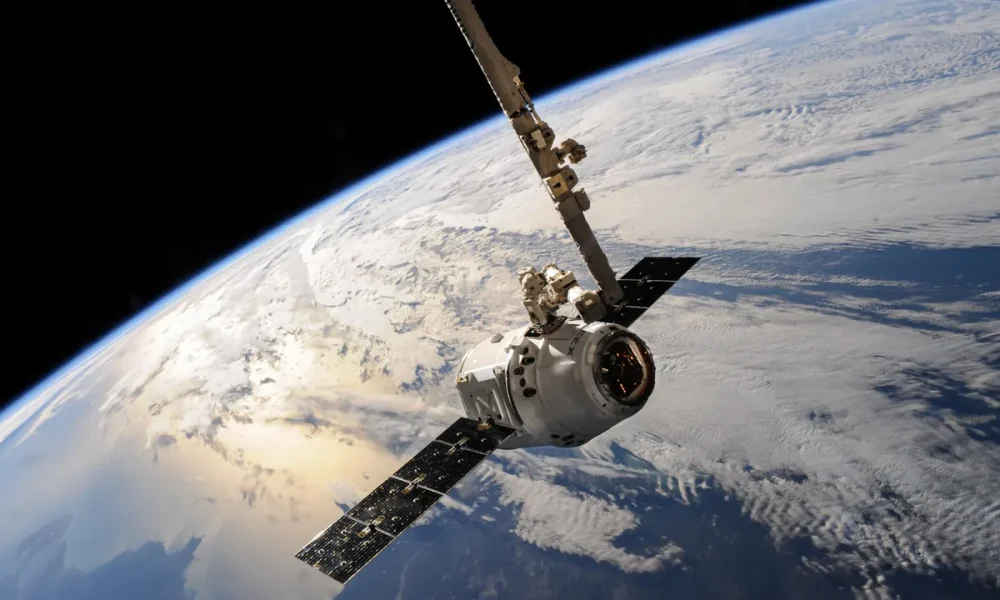
The SpaceX IPO valuation has moved faster than almost any comparable float of its scale. SPCX priced at $135 per share on 15 June 2026, closed its first session at around $160, a gain of nearly 20%, then added 16.6% on Monday 16 June to reach $192. With futures pointing higher still as of that writing, a market capitalisation approaching $3 trillion looked plausible, which would place SpaceX ahead of both Amazon and Microsoft in the global rankings.
SpaceX IPO Valuation: What the Prospectus Actually Shows
The IPO itself was substantial in structure. Per the SpaceX Form 8-K filed on 15 June 2026, the company sold 638,888,888 Class A shares at the $135 offer price, a total that includes the full exercise by underwriters of their greenshoe option covering 83,333,333 additional shares. Proceeds before expenses on the primary offering were $74,499,999,925, per the 424B4 final prospectus.
The financial picture inside that filing is mixed: full-year 2025 revenue reached $18.7 billion, representing 33% growth, but the segments tell different stories. The Connectivity segment, encompassing Starlink, generated non-GAAP Adjusted EBITDA of $7.2 billion in 2025 (up from $3.8 billion in 2024), and that recurring-revenue profile is the foundation of the bull case. The AI segment posted non-GAAP Adjusted EBITDA of negative $1.2 billion, while the Space segment fell to $0.7 billion from $1.2 billion in 2024, reflecting $3.0 billion in R&D investment for Starship development, per the IPO factsheet filed with the SEC.
The aggregate GAAP picture is less comfortable. SpaceX reported a loss of nearly $5 billion for full-year 2025 and a further $4 billion in the first quarter of 2026 alone. Those numbers include the consolidated results of X.AI Holdings Corp., merged into SpaceX effective 2 February 2026, and X Holdings Corp., absorbed by xAI in March 2025, because both transactions were between entities under common control.
At $192 per share, the SpaceX IPO valuation is trading at a multiple of independent analyst estimates that conventional frameworks struggle to justify. Reuters reported on 1 June 2026 that Morningstar placed a $780 billion valuation on SpaceX, 48% below its then-current private-market valuation. At the $3 trillion level implied by futures, the stock is trading at nearly four times that estimate. The xAI division and the Mars programme represent ambitions that no earnings model can price with confidence.
A Google Cloud Contract and a $60bn Acquisition Arrived Alongside the Float
Two corporate actions filed in the days surrounding the IPO change the revenue and strategic picture considerably. On 5 June 2026, SpaceX entered into a Cloud Service Agreement with Google LLC, under which Google agreed to pay SpaceX $920 million per month from October 2026 through June 2029, for access to compute capacity comprising approximately 110,000 NVIDIA GPUs and related components, per the FWP filing covering the Google agreement. Capacity ramps through September 2026 at a reduced fee. If SpaceX fails to deliver the committed GPU access by 30 September 2026, Google may terminate the agreement or accept a pro rata reduction in monthly fees.
On 16 June 2026, the day after the IPO closed, SpaceX disclosed a merger agreement to acquire Anysphere, Inc., the developer of the Cursor AI coding tool, at an implied equity value of $60.0 billion, with consideration paid in SpaceX Class A common stock valued at the volume-weighted average closing price over the seven consecutive trading days immediately preceding closing. The transaction is expected to close in the third quarter of 2026, per the Form 8-K filed on 16 June.
Starlink’s operational scale gives those headline numbers some grounding. As of 31 March 2026, the service had approximately 10.3 million subscribers across 164 countries, with more than 9,600 satellites in orbit. That subscriber base underpins the Connectivity segment’s adjusted earnings and gives SpaceX a recurring revenue stream that most aerospace businesses cannot replicate.
UK investors gained access through the UK Retail Offer launched on 4 June 2026 via Marex Financial, as detailed in the UK Retail Offer prospectus filed with the SEC, and through Computershare depositary interests as part of the international offering. Elon Musk retains approximately 82.4% of the voting power of SpaceX’s common stock immediately following the offering, principally through Class B shares carrying 10 votes each against one vote per Class A share. Public shareholders can move the share price; they have limited ability to move the board.
The next test for the SpaceX IPO valuation is concrete and near-term: whether the Google contract’s October revenue ramp and the Cursor integration can narrow the GAAP loss trajectory before post-float enthusiasm fades. The first public financial disclosures under full public-company obligations will be the first real stress-test of a valuation that currently sits at nearly four times Morningstar’s $780 billion estimate.



 Bitcoin
  Ethereum
  Tether
  BNB
BNB  USDC
USDC  XRP
XRP  Solana
  TRON
TRON  Lido Staked Ether
  Cardano
  Gram (prev. Toncoin)
  Avalanche