Bitcoin
  Ethereum
  Tether
  BNB
BNB  USDC
USDC  XRP
XRP  Solana
  TRON
TRON  Lido Staked Ether
  Cardano
  Gram (prev. Toncoin)
  Avalanche
The Hidden Cost of Small Car Repairs: Why Ignoring Your Number Plate Light Is a False Economy

Picture this. You sail through your annual service, the mechanic gives you the thumbs up on brakes and tires, and you drive away feeling like a responsible car owner. Then, three weeks later, a police officer pulls you over on a well-lit road and points out that your number plate light has blown. A minor inconvenience, you might think. Until the fixed penalty notice arrives.
This is one of the most common and entirely avoidable situations UK drivers find themselves in every year. Small, inexpensive components get overlooked because they seem trivial compared to the bigger mechanical items on a service checklist. But when the law treats a blown number plate bulb the same way it treats a faulty brake light, “trivial” starts to feel like a costly misjudgment.
Why Number Plate Lights Matter More Than People Think
The number plate illumination light is a legal requirement under UK road vehicle lighting regulations. When driving in darkness or poor visibility, your rear number plate must be lit so that it is clearly visible to other road users and to law enforcement cameras. A failed bulb means your plate effectively disappears in low light, which is both a safety issue and a straightforward legal offense.
What surprises many drivers is how quickly this one small component can cascade into larger financial consequences. A vehicle stopped for an unlit number plate can receive a fixed penalty notice and, in some cases, points on a license. More immediately, a car presenting with this fault at an MOT will receive a failure. That means a re-test fee on top of the cost of fixing the fault itself, which brings the total spend well above what a simple replacement would have cost.
According to the official GOV.UK guidance on vehicle lighting requirements, number plate lights are among the compulsory lighting systems on any road-legal vehicle. There is no grey area and no leniency for bulbs described as “just going.”
The True Financial Logic of Small Car Repairs
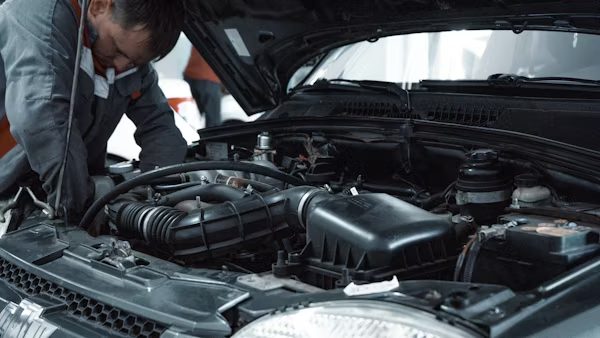
There is a persistent and expensive habit among UK drivers of deferring minor repairs. The psychology is understandable. When a car is running well and no warning lights are flashing, spending money on it feels unnecessary. The number plate light is a perfect example of this thinking in action. It costs next to nothing to fix, but it sits at the very bottom of most drivers’ mental priority lists.
The maths, however, tell a different story. A straightforward replacement part, particularly if you shop smart and source compatible components online before booking a garage visit, typically costs a fraction of what a failed MOT re-test or a roadside penalty costs. Understanding how much an MOT costs and the additional charges that come with a failure and re-test puts the investment in preventative maintenance into sharp financial perspective.
The cost of staying on top of minor repairs is almost always lower than the combined cost of deferred maintenance, failed inspections, and any enforcement action that follows.
What to Look for When Sourcing a Replacement
Not all number plate light assemblies are the same, and buying the wrong part is a frustratingly common mistake. The housing, bulb fitting, and lens design vary significantly between vehicle makes, models, and production years. A component that fits a 2015 hatchback will not necessarily fit the same model in a 2019 facelift, even if the cars look almost identical from the outside.
Before purchasing a replacement, you need to confirm three things: your vehicle’s exact make, model and year of manufacture, the bulb type used in the original fitting, and whether your car uses a single or dual plate light assembly. Consulting a parts catalogue that allows you to search by precise vehicle specification eliminates guesswork and returns. Checking the number plate light price by vehicle type gives you an immediate sense of what a fair replacement cost looks like, and helps you avoid overpaying at a garage that marks up parts significantly before labour is even added.
The right part, sourced correctly, turns what might feel like a trip to the garage into a quick and budget-friendly fix.
DIY or Professional Fitting: Knowing When Each Makes Sense
One of the reasons number plate lights get overlooked is that many drivers assume replacing one requires a garage visit. In reality, the majority of number plate light assemblies are among the most accessible components on a modern car. The housing is typically secured by one or two screws, and the bulb itself clips or twists into place. For many vehicle models, the whole job takes under ten minutes with no specialist tools.
That said, some manufacturers have moved toward integrated LED light strips or sealed assemblies that are slightly more involved. If your car uses an LED strip rather than a traditional bulb, the replacement process may require removing a small section of trim around the boot or tailgate. In these cases, it is worth watching a model-specific guide before starting, or booking a short appointment with a local garage if you are not confident with trim removal.
Either way, the cost remains modest. The key is acting on it promptly rather than adding it to a mental list that never quite makes it to the top.
Building a Smarter Approach to Motoring Costs
The number plate light is a small thing, but it represents a broader mindset around vehicle ownership that has real financial implications. UK drivers who treat minor faults as tomorrow’s problem consistently spend more on their vehicles over time than those who address small issues as they arise.
This connects directly to the wider conversation around the true cost of car ownership. Beyond the obvious expenses of insurance, fuel and finance, it is often the accumulation of deferred small repairs that quietly erodes a maintenance budget. As explored in analysis around UK car ownership and finance pressures, many drivers are already stretched when unexpected vehicle costs land. Reducing the frequency of those unexpected costs by addressing minor issues early is one of the most straightforward ways to keep motoring affordable.
A Practical Checklist Approach
Rather than relying on the annual MOT to surface small faults, experienced motorists develop a habit of running through basic lighting and visibility checks every few months. This takes around five minutes in a car park at night and involves checking all exterior lights: headlights, taillights, indicators, brake lights, fog lights and, yes, the number plate illumination.
It is not a mechanical inspection. It requires no tools and no expertise. But it catches the kind of minor faults that turn into costly surprises at exactly the wrong moment.
Conclusion
The number plate light is easy to dismiss as an inconsequential component. It is small, inexpensive, and invisible in daylight. But it sits at the intersection of road safety legislation, MOT requirements, and the kind of deferred maintenance thinking that costs UK drivers considerably more than it saves them. Addressing it promptly, sourcing the right part at a fair price, and building a habit of basic regular checks is not diligent. It is simply the financially rational way to run a car.