
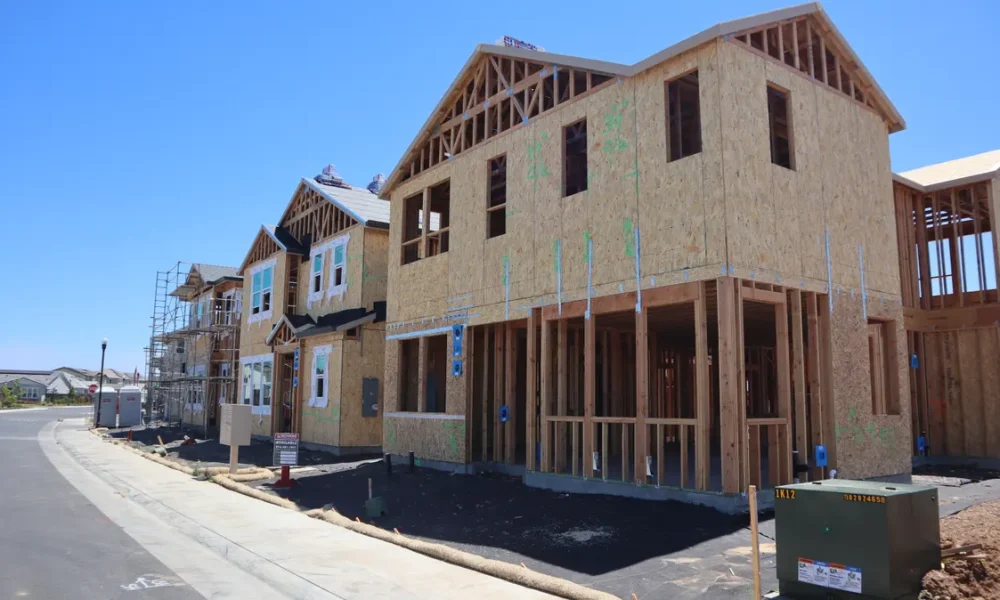
The Barratt Redrow share price gained 11.25% in a single week, making BTRW the third fastest-rising stock on the FTSE 100 over that period, yet the shares still offer a forecast dividend yield of 4.87% for 2026, well above the index average of 3.3%. The move was driven by sentiment, not results: no trading update accompanied it. Investors appear to be pricing in a Middle East de-escalation that would ease oil prices, inflation and, ultimately, mortgage rates.
Why the Barratt Redrow Share Price Has Lagged for a Decade
The five-year decline of 60%, and a 36% fall over the last twelve months, reflect headwinds that landed on the entire sector rather than any single company’s failings. The shock of the 2016 Brexit vote sent housebuilder valuations into a prolonged reset. Resurgent post-pandemic inflation then drove mortgage rates higher, eroding affordability. The end of the Help to Buy scheme in 2023 removed a structural prop for first-time buyers, and the sector as a whole has shouldered a cladding remediation bill of more than £3.5bn in the wake of the Grenfell Tower disaster.
Barratt itself was in the middle of a significant corporate transition during this period. The company agreed a £2.5bn takeover of rival Redrow in February 2024; the combined group, now trading as Barratt Redrow, was cleared by the relevant authorities and the deal completed in October 2024. Integrating a business of that scale while navigating a depressed market is not straightforward, and the share price reflected that complexity throughout 2024 and into 2025.
Margins remain thin. Employers’ National Insurance increases and two rounds of minimum wage rises have squeezed build costs, and London in particular continues to underperform. Planning constraints and labour shortages are structural, not cyclical.
What the Latest Numbers Show
Beneath the macro drag, the underlying financials have begun to improve. For the full year to June 2025, Barratt Redrow reported revenue of £5.58bn, up 34% from FY2024, with net income of £186.4m, up 63% year on year, according to full-year earnings data. The profit margin reached 3.3%, up from 2.7% the prior year. These are not spectacular returns by any historical measure, but the direction of travel matters given where the group has come from.
Progress continued into the current financial year. At the half-year stage, EPS came in at £0.072, up from £0.056 in the equivalent period a year earlier, per H1 2026 earnings data. The interim results, released on 11 February 2026, also showed revenue of £2.63bn against a consensus forecast of £2.41bn, a beat of roughly nine percentage points on the revenue line, according to Investing.com earnings data.
The forward price-to-earnings ratio sits at 11.6. The trailing dividend yield is 6.23%, though investors should note the board has already reduced the payout; the forecast yield for 2026 of 4.87% is the more relevant benchmark, and it still sits comfortably above the FTSE 100 average of 3.3%.
What Would Need to Go Right for the Barratt Redrow Share Price to Sustain a Recovery
The bull case rests on a sequence that is plausible but not certain. A genuine easing of Middle East tensions would dampen oil prices and, with a lag, headline inflation. Markets currently expect inflation to approach 2% next year; if that materialises, the Bank of England has room to continue cutting rates, mortgage affordability improves, and transaction volumes recover. Housebuilders with large land banks and planning permissions would be early beneficiaries.
The sector has produced false dawns before. Rate-cut optimism in late 2024 briefly lifted the group, before the Iran conflict reignited energy-price concerns. The same pattern could repeat.
The next concrete read on the business comes soon. According to the company’s own financial calendar, a trading update covering the FY26 52-week period to 28 June 2026 is scheduled for 15 July 2026, with full annual results on 16 September 2026. Those two dates are the next real tests of whether the earnings trajectory has held through the spring selling season.
For investors with a long time horizon and tolerance for volatility, the valuation and yield combination is not without appeal. The 15 July trading update is where the sentiment rally either finds fundamental support or begins to fade.



 Bitcoin
  Ethereum
  Tether
  BNB
BNB  USDC
USDC  XRP
XRP  Solana
  TRON
TRON  Lido Staked Ether
  Cardano
  Gram (prev. Toncoin)
  Avalanche