Boomers Investment Exposure Risk Is the Retirement Crisis Nobody Wants to Talk About

Being the richest generation in American history and yet remaining so financially precarious is somewhat ironic. Those born roughly between 1946 and 1964 are known as baby boomers. They have spent decades building portfolios, funding retirement accounts, and watching compound interest work silently. However, the accumulated wealth may currently be in a more vulnerable position than most people are aware of.
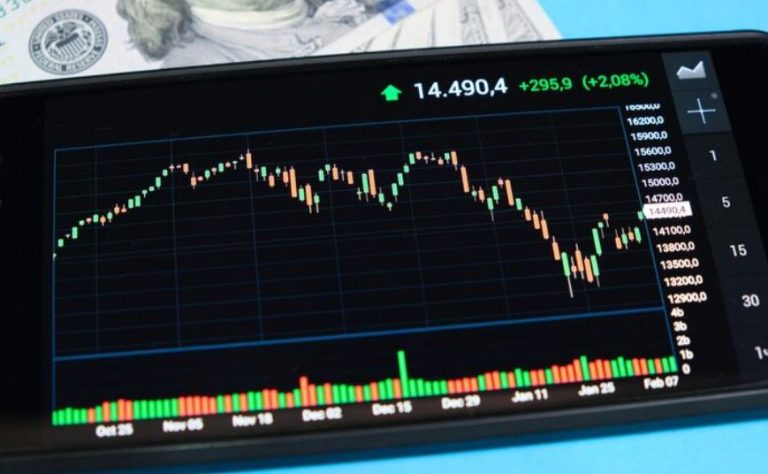
The managing partner of Oxbow Advisors, a company that manages over $2 billion in assets, Ted Oakley, has been saying something that usually makes people stop talking. He thinks the market is headed toward what he refers to as a “generational bear market,” which is a sharp, protracted decline that could cause the S&P 500 to drop as much as 40% before entering years of muted returns. According to his estimates, a loss of that magnitude could wipe out up to $11 trillion from boomer portfolios. Not a minor rounding error. actual cash. Money that can change your life.
Boomers are especially vulnerable not only because of the size of their holdings but also because of the timing. The youngest members of the generation are either in retirement or on the verge of it. There isn’t much time left to weather ten years of subpar returns like a 35-year-old can. Younger investors can survive, even ignore, a market that declines sharply and recovers slowly. It’s a completely different discussion for a 67-year-old taking money out of a 401(k).
Oakley cited the Buffett Indicator, which measures the value of the entire stock market relative to the US GDP and recently reached a record high of 236%. The S&P 500’s price-to-book ratio is also at an all-time high of about 6x. He is concerned that a large portion of the market’s recent gains have been concentrated in AI-related stocks, resulting in a valuation structure that anyone who remembers the dot-com era would find unsettlingly familiar. He hypothesized that the unwinding of that trade might put real pressure on markets in 2027.
This is complicated in part because the exposure risk cuts both ways. Some boomers have overcorrected in the opposite direction, while others are dangerously overallocated to stocks given their age. According to a 2019 Aegon survey, 39% of British baby boomers said they had no appetite for risk, and nearly half actively preferred to avoid it completely. That may sound wise. Sometimes it isn’t. When inflation exceeds the interest earned, cash and ultra-low-risk investments lose real value. This is a gradual, imperceptible loss that gradually reduces purchasing power without being noticeable on a statement.
More recently, Fidelity reported that 37% of boomer investors own more stock than is generally advised for their age group. The other failure mode is to remain aggressive for an extended period of time in the hopes that the bull market will continue because guaranteed income from Social Security or pensions provides a cushion that may be more psychological than financial.
Whether a significant correction is truly imminent or if the market manages to cool down gradually is still up in the air. The margin for a significant investment error has significantly decreased for a generation with $93 trillion in total assets, which Visa’s economists predict will decrease to about $36 trillion in actual transferable wealth after debts, taxes, and retirement spending. Heirs who are already financially secure will probably inherit the majority of what baby boomers leave behind. For those going through it, however, what transpires prior to the transfer is crucial.
Observing all of this, it seems as though the financial sector hasn’t fully grasped the urgency. Oakley is calm, almost clinical, in his warnings. However, if the market takes a significant turn in the next two or three years, there isn’t much cause for optimism based on the math behind boomer investment exposure risk. Whether or not boomers are wealthy is not the question. They obviously do. Whether it is positioned to withstand potential threats is the question.