
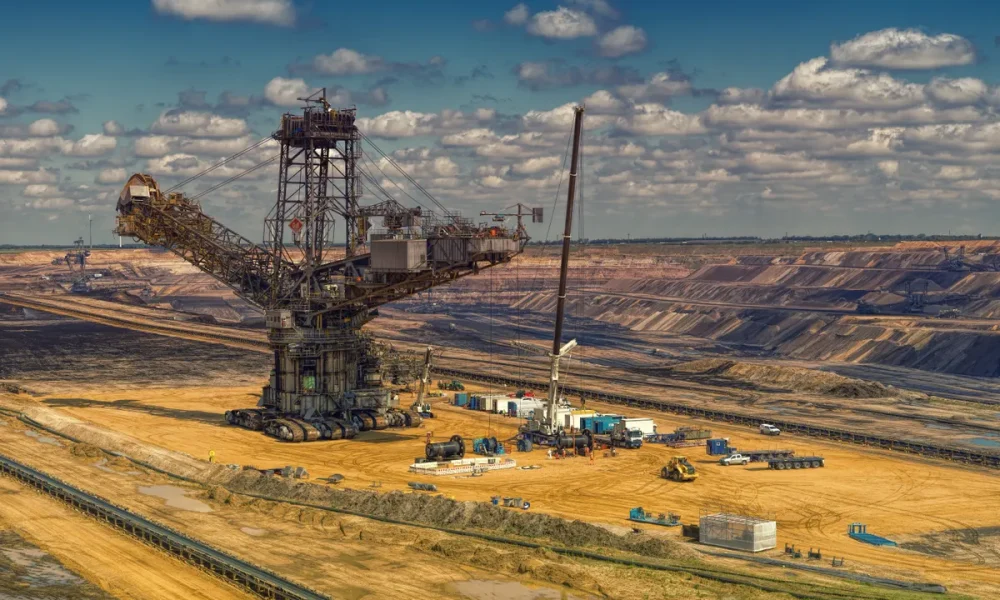
Rio Tinto dividend income and capital gains combined to deliver a total return of around 70% over the past year, turning a £42,450 stake into roughly £75,348 including payouts, and illustrating why the miner sits among the most-discussed income plays on the London Stock Exchange.
How the numbers stack up for RIO shareholders
A year ago, Rio Tinto shares traded at £42.45 on the LSE. The price has since risen almost 66% to £71.60, and the stock carried a dividend yield of around 4.2% along the way. For an investor holding 1,000 shares, the maths works out to a withdrawable gain of roughly £32,898, dividends included, against the original outlay.
That dividend component is well-supported at the corporate level. Full-year 2025 results published on 18 February 2026 showed an ordinary dividend of $6.5 billion, representing a 60% payout ratio, which Rio Tinto described as maintaining a ten-year track record at the top end of its payout range. The final dividend for the year ended 31 December 2025 was set at 254.00 US cents per share. Underlying EBITDA for the period came in at $25.4 billion.
Rio Tinto is ranked as a top-five dividend payer on the LSE and operates across 35 countries with more than 60,000 employees, giving it a scale that few peers can match.
Rio Tinto dividend income backed by a shifting earnings mix
The earnings profile has been changing in ways that matter for the income thesis. Copper now accounts for roughly 30% of Rio Tinto’s earnings, while iron ore has declined to around 60% of the group total. Copper’s exposure to electrification, power grids and data-centre build-out gives it structural demand tailwinds that iron ore, which remains tied closely to Chinese construction activity, cannot claim.
Rio Tinto’s 2024 full-year results script noted copper-equivalent production grew 1% in 2024, with mid-range guidance pointing to around 4% growth for 2025, led by the ramp-up of Oyu Tolgoi. Bauxite and aluminium production guidance for 2025 was also upgraded, according to the company’s own operational update.
Lithium is the longer-horizon bet. Jérôme Pécresse, head of Rio Tinto’s aluminium and lithium businesses, said: ‘Lithium demand in the next two years is going to be much more balanced between EVs and energy storage.’ If that forecast holds, it broadens the addressable market beyond electric-vehicle cycles alone.
The risks the RBC downgrade puts on the table
On 2 June 2026, RBC Capital Markets downgraded RIO to Underperform from Sector Perform and set a sterling price target of £64, implying meaningful downside from current levels. For the ASX-listed Rio Tinto Ltd. shares, RBC simultaneously raised its Australian dollar target to AUD143.00 from AUD141.00, reflecting two separately priced listings rather than a contradiction.
The core of RBC’s bear case is iron ore. The firm forecasts iron ore declining to $85 per tonne by end-2027, a level that would compress margins on Rio’s largest earnings segment. With iron ore still at around 60% of group earnings, even a moderate pricing retreat can move the dividend maths materially.
Valuation is the second concern. After a run of almost 66%, expectations are priced at a level that leaves little room for operational disappointment. Mining stocks rarely give back gains gradually; when the cycle turns, they tend to move quickly.
What the setup looks like from here
The Rio Tinto dividend income story has been straightforward over the past twelve months: a cyclical rally in mining paired with a well-funded payout. The next chapter is more conditional. If copper and lithium volumes continue to grow and iron ore holds above RBC’s $85-per-tonne forecast, the cash generation supporting that 60% payout ratio stays intact. If China demand softens and iron ore slides, the arithmetic changes faster than most income investors would prefer.
RIO remains a cyclical business, not a utility. As a second-income vehicle it has performed well; as a forward proposition, the iron ore price at end-2027 is the number to watch.



 Bitcoin
  Ethereum
  Tether
  BNB
BNB  USDC
USDC  XRP
XRP  Solana
  TRON
TRON  Lido Staked Ether
  Cardano
  Gram (prev. Toncoin)
  Avalanche