
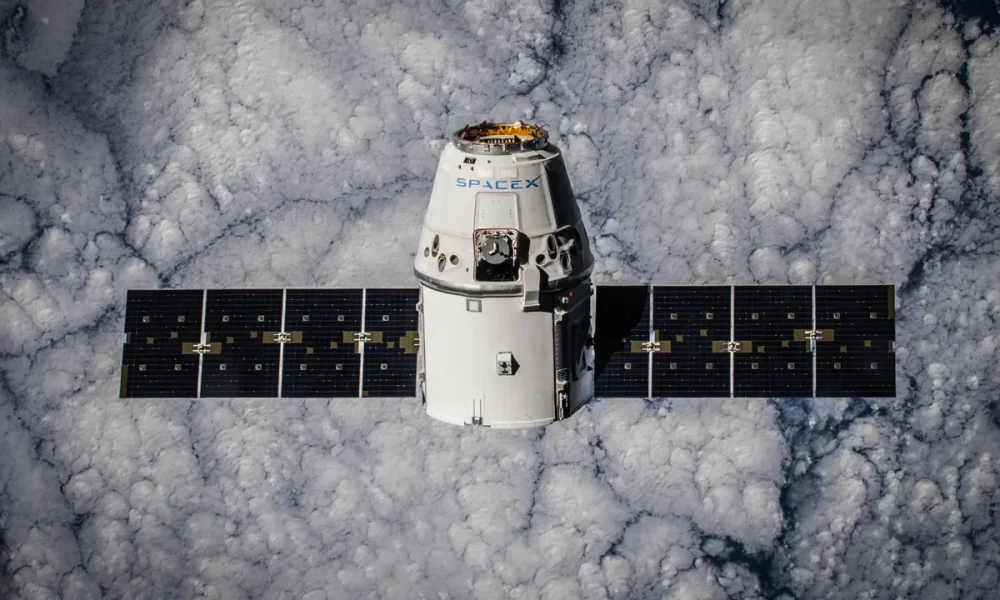
SpaceX IPO shares have surrendered most of their early gains, with the stock trading at $135.27 — barely above its $135.00 offer price — after briefly touching a record $225.64 on 16 June 2026. For UK investors who participated in the global float, the ride has been brutal and swift.
From Record High to Near-Flotation Price in Weeks
Space Exploration Technologies Corp (SPCX) began conditional dealings on Nasdaq on 12 June 2026, with the IPO closing on 15 June per the SEC 8-K filing. The offering comprised 638,888,888 shares of Class A Common Stock at $135.00 per share, a figure that includes the underwriters exercising their over-allotment option in full, adding 83,333,333 shares above the base offering of 555,555,555.
Shares surged to $176.52 on the first day before closing at $160.95. The peak of $225.64, reached four days later, left the stock 67.1% above flotation. Since then, the decline has been steep: a market capitalisation that briefly exceeded $2.6 trillion has contracted to approximately $1.75 trillion, erasing roughly $860 billion in value in under a month, according to market data.
UK retail investors had a specific access route. The UK Retail Offer was facilitated by Marex Financial acting as POP Operator via the Winterflood Retail Access Platform, with a deadline for applications of 10 June 2026. Across the full global IPO, approximately 20% of proceeds came from retail investors.
After the Peak: Bond Markets Flash a Warning
The sharper signal may be coming from debt markets. Shortly after the IPO, SpaceX priced a $25 billion inaugural bond issuance in five tranches. The original snippet cited $75 billion in corporate bonds; multiple primary sources, including the Los Angeles Times and Axios, consistently report $25 billion as the correct bond issuance figure; the $75 billion figure separately refers to AI computing contracts with Google and Anthropic.
| Tranche | Size | Coupon | Maturity |
|---|---|---|---|
| Senior unsecured notes | $7.0bn | 5.350% | 2031 |
| Senior unsecured notes | $6.0bn | 5.650% | 2033 |
| Senior unsecured notes | $6.0bn | 5.875% | 2036 |
| Senior unsecured notes | $2.5bn | 6.600% | 2046 |
| Senior unsecured notes | $3.5bn | 6.650% | 2056 |
The bonds began trading on 24 June 2026. Yields have since climbed to approximately 7.5%, prompting Dec Mullarkey, Managing Director at SLC Management, to describe them as ‘comparable to junk bonds.’ SpaceX carries investment-grade ratings of Baa1/BBB, but the market is pricing the paper well above that band.
The bulk of those proceeds are earmarked to refinance a $20 billion bridge loan SpaceX took on in March 2026 ahead of the listing, which forms the largest portion of its $29.1 billion in long-term debt. Bondholders are notoriously unsentimental: they want coupons paid and principal returned. A yield trading at junk-equivalent levels while the ratings agencies still say investment-grade is a contradiction that tends to resolve one way.
What the SpaceX IPO Shares Are Actually Worth
The fundamental picture has not changed. For 2025, revenues across SpaceX, Starlink, X and xAI totalled $18.7 billion, yet those four entities collectively lost $4.9 billion. Only Starlink turned a profit. Cash flows are expected to remain deeply negative for the foreseeable future.
SpaceX has secured contracts worth roughly $75 billion to provide computing power to Google and Anthropic, which analysts identify as a key potential earnings driver. That is a genuine long-term thesis. But contract value is not revenue, and revenue is not profit. The distance between those three points, at this scale and pace of capital consumption, is where the risk lives.
Musk holds 42% of the equity but controls 85% of total voting rights. That structure, combined with a company registered at 1 Rocket Road, Starbase, TX and a disclosure policy that routes financial results primarily through its investor relations page and its X account rather than newswires, sits outside the norms of major listed companies. The first public quarterly results are expected in early August.
One further wrinkle: SpaceX is planning to acquire Cursor, structured so that each Cursor share converts into SpaceX Class A stock at a $60.0 billion implied equity value, using the volume-weighted average closing price of SPCX over the seven trading days before closing. The merger is expected to close in the third quarter of 2026. For a company already absorbing a $29.1 billion debt load, adding an all-stock acquisition at a $60 billion valuation extends the balance sheet in a direction bondholders will be watching closely.
The next hard test is those early-August results. If revenues and cash flow trajectory disappoint against the $2 trillion-plus valuation still implied, the lock-up expiry period that follows will matter considerably more than any near-term headline from orbit.



 Bitcoin
  Ethereum
  Tether
  BNB
BNB  USDC
USDC  XRP
XRP  Solana
  TRON
TRON  Lido Staked Ether
  Cardano
  Gram (prev. Toncoin)
  Avalanche