Bitcoin
  Ethereum
  Tether
  BNB
BNB  USDC
USDC  XRP
XRP  Solana
  TRON
TRON  Lido Staked Ether
  Cardano
  Gram (prev. Toncoin)
  Avalanche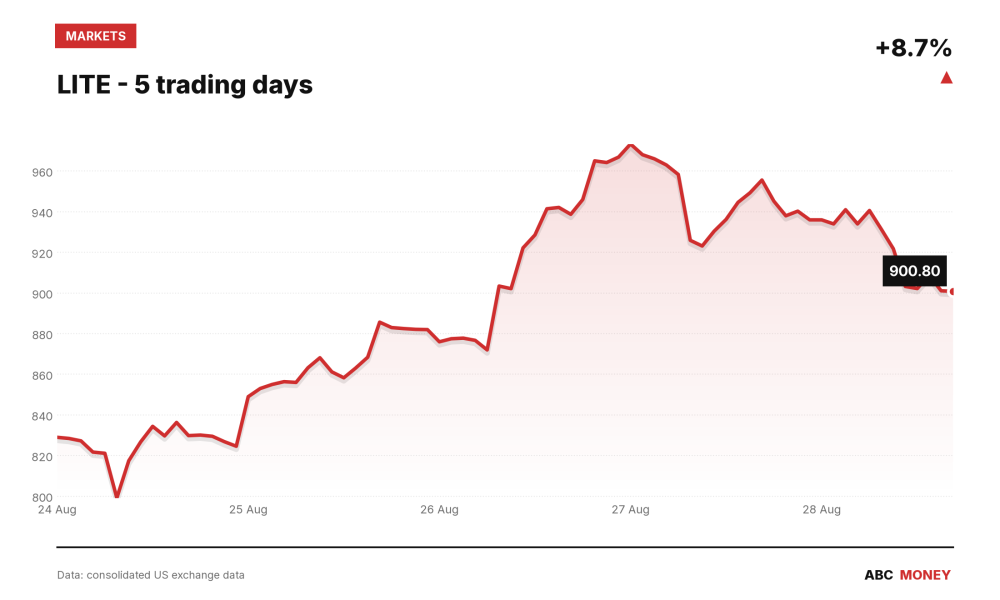
A Lumentum insider sale has drawn attention this week after a Form 4 filing showed Vincent Retort, the company’s EVP of Global Reliability & Quality, selling 38,663 shares of Lumentum Holdings (NASDAQ: LITE) stock for close to $33m. The transaction, disclosed to the Securities and Exchange Commission on 28 August 2026, was executed on 25 August at a weighted average price of $852.59 a share, for a total of $32,963,687.17, according to a filing summary from MarketBeat.
Framed on its own, a near-$33m sale by a company executive sounds like the kind of thing that should make shareholders nervous. But the fuller picture, drawn from Retort’s own filing history and the company’s disclosures, points to something far more routine: a long-serving executive who has already announced his retirement, selling down part of a large, mostly vested equity stake under a pre-arranged plan rather than making an opportunistic bet against his own company.
A retirement, not a retreat
Lumentum disclosed on 27 July 2026 that Retort had informed the company of his plan to retire, effective October 2026, according to a company announcement reported by TipRanks. That timing matters: an executive heading for the door has an obvious, non-suspicious reason to convert vested stock compensation into cash, separate from any view on where the shares are headed next.
Crucially, Retort did not liquidate his position. After the sale, he retained direct ownership of 78,440 shares, worth an estimated $69.46m at the transaction-date closing price – roughly twice what he sold, a detail reported by The Motley Fool. That is not the balance sheet of someone dumping a stock they have lost faith in; it is closer to an orderly, partial harvest of a position that has grown enormously in value.
The sale also sits inside a longer pattern of disclosed, planned transactions rather than a one-off. Retort had already sold 3,183 shares for $3,036,422 under a Rule 10b5-1 trading plan – a pre-arranged schedule that lets executives sell stock on set dates or at set prices, agreed in advance precisely so that later sales cannot be accused of trading on inside information – on 18 May 2026, according to Investing.com. He sold a further 2,483 shares for $2,055,477 under the same kind of plan on 20 August 2026, per a separate Investing.com report. A wider cluster of executive sales in mid-August, involving Retort and colleagues named Yuen and Kim, totalling 49,847 shares, was mostly tied to tax withholding on vesting restricted stock rather than discretionary selling, according to BigGo Finance. Lumentum’s chief executive, Michael Hurlston, also disposed of 5,438 shares on 15 August in a similarly non-discretionary, vesting-related transaction, leaving him with around 119,000 shares, Yahoo Finance reported.
The rally is real, but the framing runs ahead of it
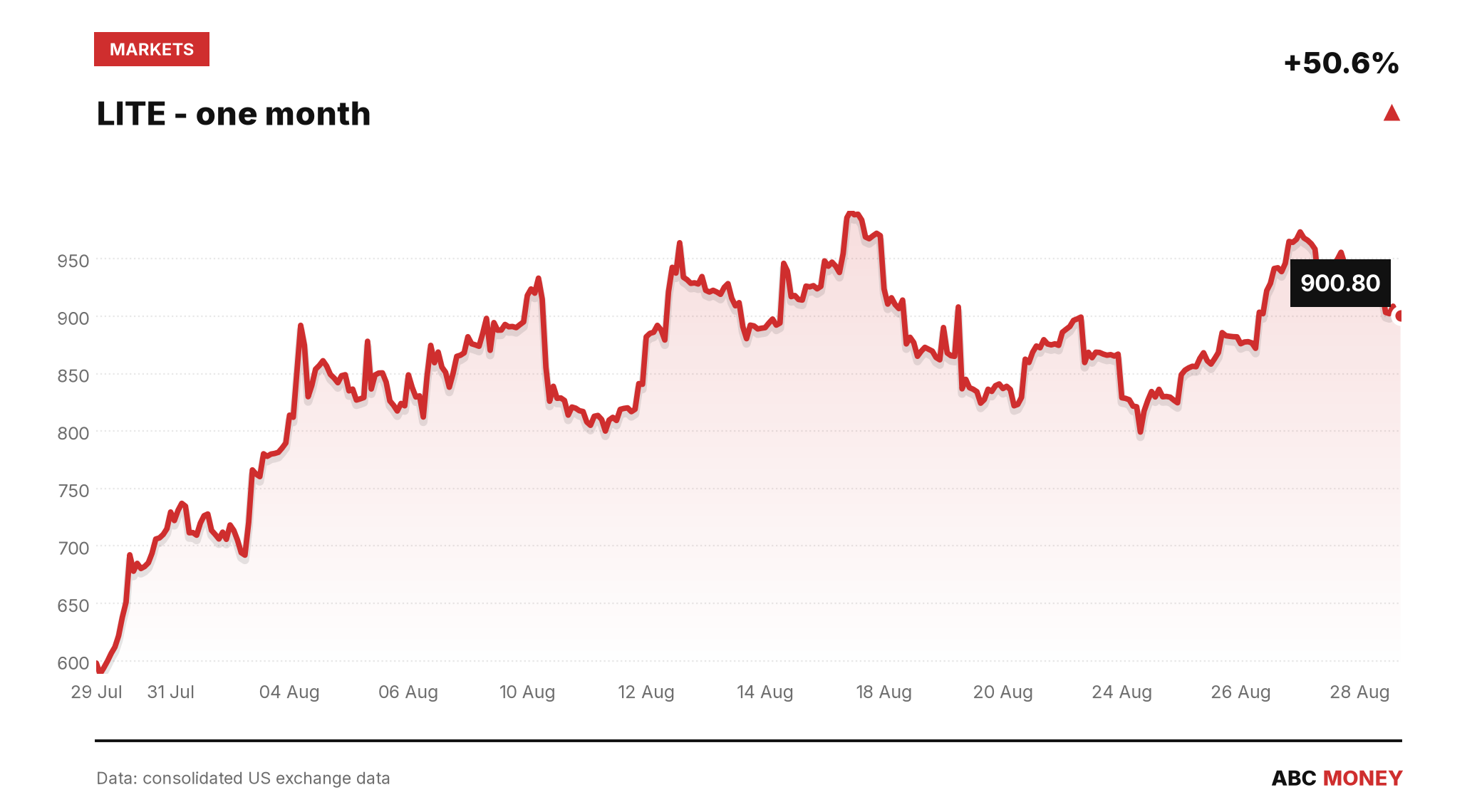
The idea that this sale came “as Lumentum stock soars” is true over the medium term but overstates the immediate backdrop. Lumentum’s stock has delivered a 638% one-year total return, pushing its market capitalisation to $68.4bn, according to BigGo Finance – a genuinely extraordinary run, powered by surging demand for the optical components used in AI data centres. The shares jumped 13.63% on 12 August 2026, closing at $932.47, after fourth-quarter results and stronger-than-expected first-quarter guidance beat Wall Street’s estimates on that AI-driven demand, according to a TIKR analysis.
But in the fortnight immediately around Retort’s sale, the picture was choppier. Lumentum shares closed at $898.895 on 28 August, down 4.43% on the day, and up just 0.89% over the preceding 20 trading days, having swung between a low of $799.13 and a high of $991.415 in that window. Retort’s sale priced at $852.59 a share – below the subsequent 20-day high – which undercuts any suggestion that he timed the disposal to catch a peak.
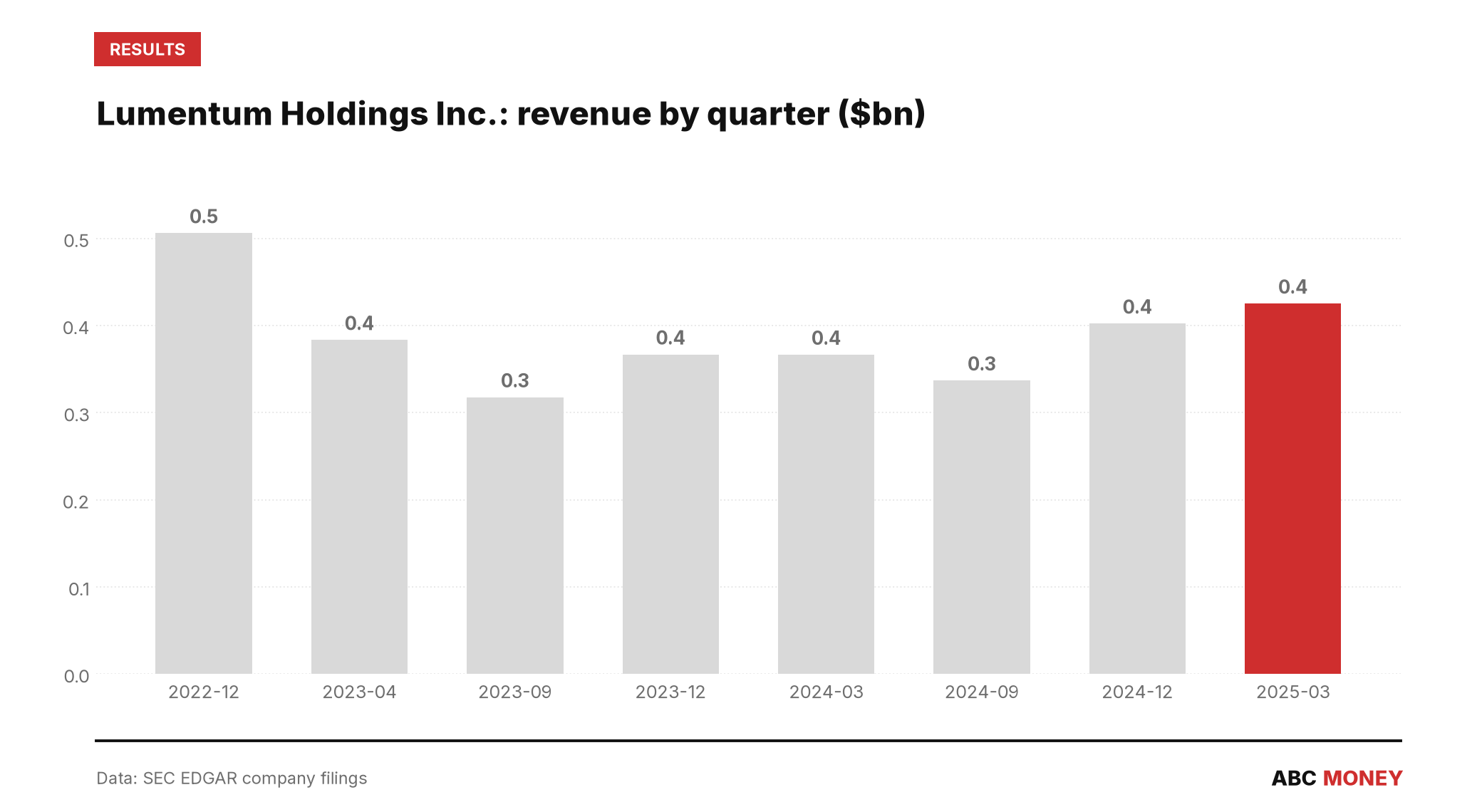
The turnaround underpinning the rally is itself striking. Lumentum posted a net loss of $99.1m in the quarter ended December 2023, and further losses through much of 2024 and early 2025, before swinging to net income of $4.2m in the quarter ended September 2025, then $78.2m in the December 2025 quarter, and $144.2m in the quarter ended March 2026, according to the company’s 10-Q filings. Diluted earnings per share moved from a loss of $1.88 in the March 2024 quarter to a profit of $1.50 by March 2026. That shift from persistent losses to expanding profit is precisely what has made vested stock compensation so much more valuable for long-tenured executives like Retort – and gives them every reason to sell some of it down, retirement or not.
No sign of unusual positioning around the sale
Short-sale activity data offers no evidence that traders were positioning ahead of the disclosure. FINRA’s daily short-sale ratios for Lumentum – the share of daily trading volume attributable to short sales, where a higher ratio can sometimes signal traders betting on a price fall – ranged roughly between 0.32 and 0.59 in the two weeks before the sale, showing nothing resembling a spike in bearish positioning timed to the transaction. Trading volume around the disclosure was also unremarkable, running about 5% above its 20-day average.
Retort’s retirement takes effect in October 2026, and further Form 4 filings between now and then would show whether his remaining stake continues to shrink on the same pre-set schedule that has governed his sales so far, or whether the pace changes as his exit approaches.
This article is for information only and is not investment advice or a recommendation to buy or sell any asset. Markets move quickly; figures are correct as sourced at the time of writing. Always do your own research before making financial decisions.