
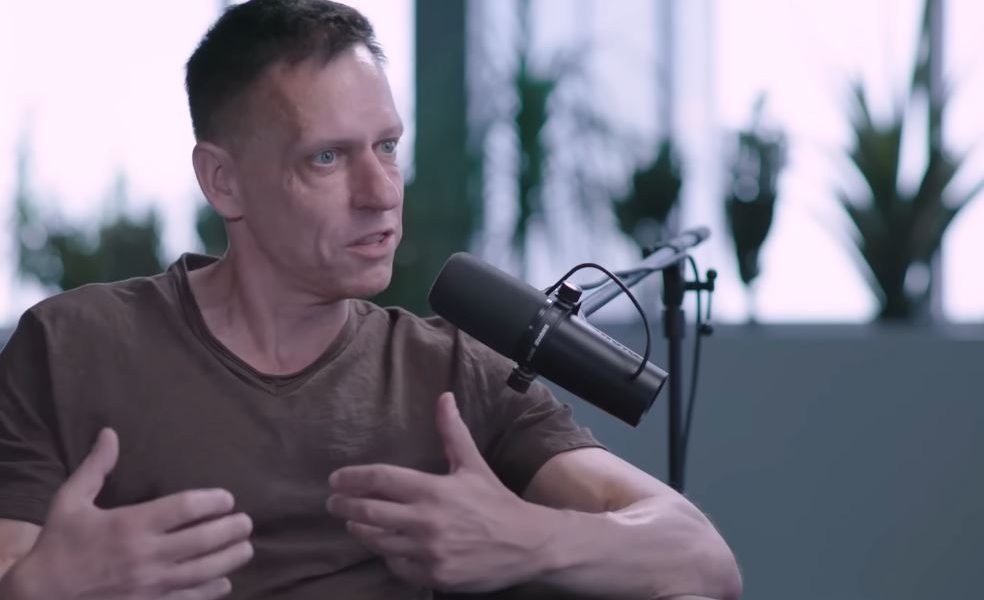
Peter Thiel Investment in Palmer Luckey, How a $1 Million Bet Turned Into a $61 Billion Empire

Palmer Luckey shares a self-tale that sounds almost too dramatic to be true. He was 19 years old, living in a 19-foot camper trailer in California, without a college degree, and making minimum wage. He was then given a million dollars by Peter Thiel. Not a loan. Not a pledge. a check made out through the Founders Fund for a virtual reality headset that was still in its infancy.
That choice proved to be one of the most significant investments in recent Silicon Valley history, and it was one of Thiel’s many unconventional wagers throughout a career based on betting against the grain. Calling it luck would be tempting. Most likely it wasn’t.
At the age of 17, Luckey began constructing the Oculus Rift in his family’s garage. Unlike most teenagers, he was homeschooled and technically fixated. After two years, he left California State University, assembled a small team, and raised $2.4 million on Kickstarter to make the project a reality. His prototype attracted Thiel’s attention even though he missed the application period for the Thiel Fellowship, the well-known program that pays young people to forego college. You remember details like that. It worked out even though he didn’t enter through the front door.
Facebook paid $2 billion to acquire Oculus within a year of Thiel’s investment. Luckey was twenty-one. At that age, the majority of people are still figuring out where to have lunch.
What transpired next reveals a significant aspect of this specific partnership’s functioning. Thiel chose not to cash out and move on. Luckey, Joe Chen, Trae Stephens, Matt Grimm, and Brian Schimpf founded Anduril Industries, a defense technology company, in 2017.
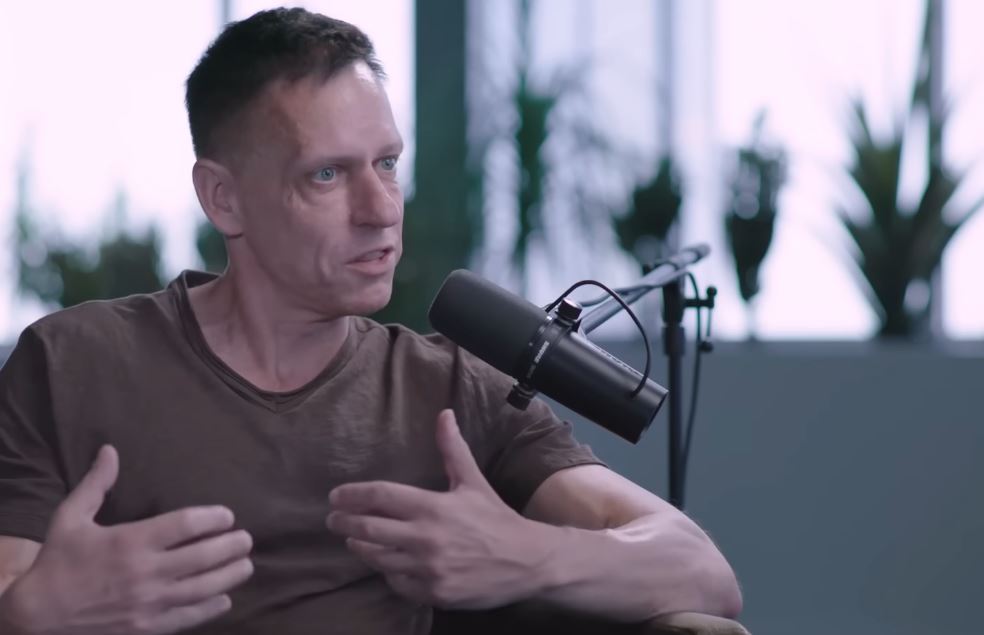
Founders Fund led the company’s initial funding rounds. Legacy defense contractors are not challenged by Anduril. It creates surveillance platforms and autonomous weapons systems that make the previous procurement models appear costly and time-consuming. Founders Fund continued to be involved in Anduril’s June 2025 Series G, contributing to a $2.5 billion round that at the time valued the company at $30.5 billion. Since then, the company’s reported valuation has increased to $61 billion.
Sitting with that number for a while is worthwhile. A child in a trailer. A check for a million dollars. $61 billion.
Erebor Bank, Luckey’s most recent endeavor, exhibits the same pattern in a surprising way. The bank is intended to support startups in AI, cryptocurrency, defense, and advanced manufacturing. It is named after the Lonely Mountain from Tolkien’s mythology, a purposeful echo of the Lord of the Rings references that run through both men’s businesses. It intends to keep stablecoins on its balance sheet and provide loans secured by cryptocurrency. Once again, a significant backer is Thiel’s Founders Fund. According to reports, the bank has been in talks to raise at least $8 billion as of mid-2026, which is almost twice as much as it raised only a few months prior. According to some reports, the current amount is more like $9.5 billion.
There’s a feeling that people observing this from the outside occasionally misinterpret what they’re witnessing. This isn’t just a billionaire showing loyalty by giving money to a protégé. Thiel’s investment framework, which is evident in the Founders Fund portfolio and outlined in his book Zero to One, focuses on finding assets that the market has consistently undervalued because most people aren’t yet ready to take the underlying idea seriously. Autonomous weapons, cryptocurrency banking for startups, and defense technology were all out of style when Thiel and Luckey entered these fields. That’s probably the point.
Luckey has begun discussing his trajectory, or what he believes it means, more openly. In a recent speech at the Hoover Institution, he responded to “a million complaints” about diminishing opportunity by framing his own experience as proof that the American Dream is still viable. It’s an argument that should not be completely accepted or rejected. There are actual circumstances that made it possible for a teenager living in a trailer to receive a million-dollar investment. The question of whether they are accessible to everyone is a different and genuinely complex one.
Nevertheless, the Thiel-Luckey tale defies simple summarization. It all began when one investor noticed something in a prototype that the others were ignoring. After three large corporations and billions of dollars, that first reading appears to be more of a strategy than an instinct, one that both men seem determined to pursue to the end.

 Bitcoin
  Ethereum
  Tether
  BNB
BNB  USDC
USDC  XRP
XRP  Solana
  TRON
TRON  Lido Staked Ether
  Cardano
  Gram (prev. Toncoin)
  Avalanche