
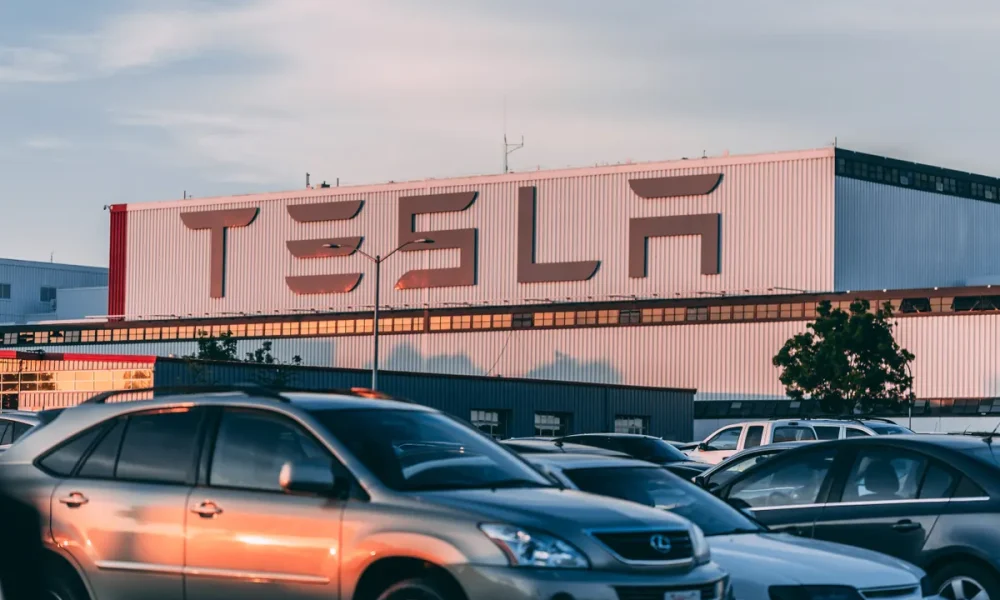
The Tesla stock vs SpaceX comparison has sharpened considerably in recent months, as both companies have fallen from their early-2026 highs and now face investors asking the same question: which, if either, is worth buying at current prices?
Tesla Stock vs SpaceX: The Earnings Reality
Tesla (TSLA) enters the debate with a functioning income statement, which is not something to dismiss lightly. Its Q2 2026 results told a mixed story, however. CNBC’s Tesla Q2 2026 earnings report shows the company posted earnings per share of $0.33, missing the analyst consensus of $0.44 by 25%. Operating margin compressed to 1.4%, down from 4.1% in Q2 2025.
The revenue picture was less bleak. Automotive revenue rose 23% year-on-year to $20.52 billion, and the energy storage segment, often overshadowed by the car business, grew 13% to $3.14 billion. Services revenue jumped 50% to $4.58 billion. Full self-driving active subscriptions reached 1.48 million, up 56% from a year earlier.
The problem is the cost side. Morningstar’s analysis of Tesla’s capex guidance notes that CFO Vaibhav Taneja confirmed full-year capital expenditure would be more than $25 billion for 2026, roughly triple 2025 levels. In Q2 alone, capital expenditure surged 142% to $5.79 billion. Management guided to negative free cash flow for the remainder of the year. That is not the profile of a company generating cash to return to shareholders anytime soon.
SpaceX: Structural Revenue, But a Long Road Ahead
SpaceX (SPCX) is a different type of proposition. Its preliminary S-1 prospectus, filed in May 2026, laid out the structural case: an aggregator summary of the prospectus reports FY25 revenue of $18.7 billion, adjusted EBITDA of $6.6 billion (a 35% margin), and 10.3 million Starlink subscribers across 164 countries and territories. Those are not speculative projections; they are trailing figures from the issuer’s own filing.
Two post-IPO disclosures add material weight to the bull case. In June 2026, SpaceX entered into a Cloud Service Agreement with Google LLC, committing Google to pay $920 million per month from October 2026 through June 2029 in exchange for access to approximately 110,000 NVIDIA GPUs and associated compute capacity. The full terms are set out in the SpaceX Free Writing Prospectus on SEC EDGAR. That agreement alone provides a substantial, contracted revenue stream that most newly-listed companies would not have.
Then, in August 2026, SpaceX completed its acquisition of Anysphere, Inc., the company behind the Cursor AI coding assistant, in an all-stock deal with an implied equity value of $60.0 billion. The transaction, disclosed in a Form 8-K filed with the SEC, sees Cursor survive as a wholly owned SpaceX subsidiary. It signals that SpaceX is building out an AI software capability alongside its hardware and connectivity businesses.
The orbital data centre ambition is the longer-dated element. SpaceX’s first-generation orbital data centre satellite, designated AI1, draws on Starlink V3 hardware and is slated to begin production at the new Gigasat facility in Bastrop, Texas, by the end of 2027. USA Today reports that the IPO filing foresees commercial deployments beginning as early as 2028. That is a meaningful wait for investors who bought in at post-IPO prices.
The Musk Factor and What It Means for Both
The Tesla stock vs SpaceX debate cannot ignore the shared CEO. Elon Musk controls both companies, and the dual-class share structure at SpaceX, where Class B shares carry ten votes each and elect a majority of the board, ensures that control is not diluted by the listing. As a result, SpaceX qualifies as a controlled company under Nasdaq rules and has indicated it will rely on exemptions from certain corporate governance requirements.
The practical consequence is that sentiment toward Musk himself functions as a correlated risk across both positions. A single controversy, regulatory intervention, or shift in government contracts could move both stocks simultaneously. Diversified investors who want exposure to either business without that concentration of headline risk may find that broad technology or space-economy exchange-traded funds offer a more manageable entry point.
For those determined to choose between the two directly: Tesla offers current, if deteriorating, profitability and an expanding services revenue base; SpaceX offers contracted cash flows, a growing subscriber base, and an AI pivot that is moving faster than many expected. The next test for both is whether Tesla’s margin can stabilise as capex peaks, and whether SpaceX can deliver its GPU commitment to Google on schedule before October’s contractual deadline.


 Bitcoin
  Ethereum
  Tether
  BNB
BNB  USDC
USDC  XRP
XRP  Solana
  TRON
TRON  Lido Staked Ether
  Cardano
  Gram (prev. Toncoin)
  Avalanche