Bitcoin
  Ethereum
  Tether
  BNB
BNB  USDC
USDC  XRP
XRP  Solana
  TRON
TRON  Lido Staked Ether
  Cardano
  Gram (prev. Toncoin)
  Avalanche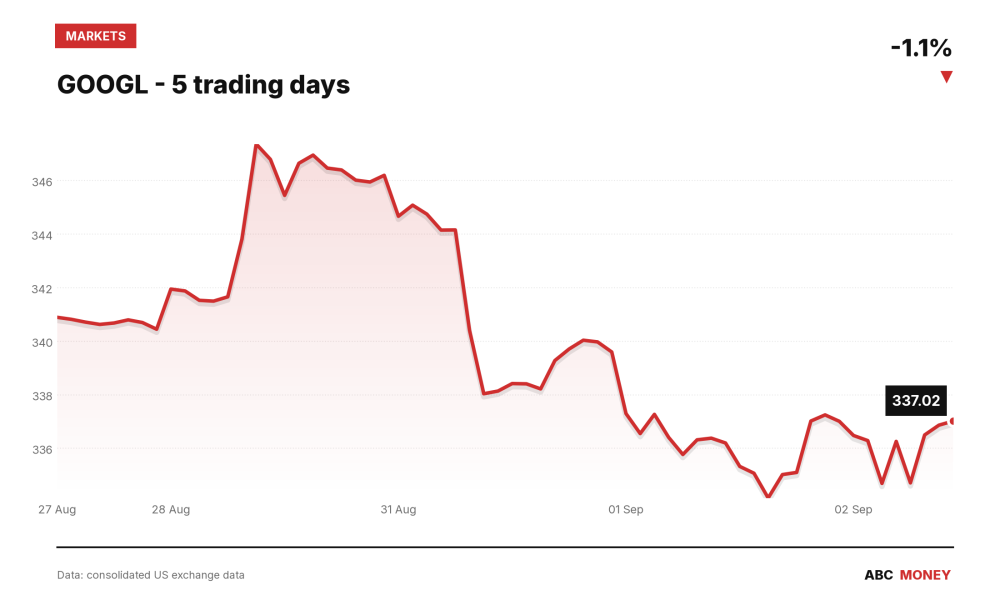
A federal judge has rejected the Justice Department’s bid to force an ad tech sale at Google, ruling that behavioural changes rather than a break-up will remedy the company’s illegal dominance of the online advertising exchange market. The decision, issued by Judge Leonie Brinkema in the Eastern District of Virginia and reported by CNBC, spares Alphabet (NASDAQ: GOOGL, NASDAQ: GOOG) from having to divest its AdX exchange – the outcome the government had spent nearly three years pursuing.
The ruling itself remains partly hidden from public view. Brinkema issued only a brief order denying the divestiture demand, with the fuller reasoning and the specific behavioural requirements sealed pending redaction, according to the Reuters wire. What has emerged is the broad shape of the remedy: Google will need to make its advertising tools interoperate with rival platforms rather than sell off any part of the business, Bloomberg reported.
Why the ad tech sale demand failed
This isn’t a reversal of Google’s underlying liability. In April 2025, Brinkema had already found that Google held illegal monopolies in the publisher ad server and ad exchange markets, built on unlawful tying between its DFP ad server and AdX exchange – a finding Alphabet’s own 10-Q filing acknowledges. What Wednesday’s order rejects is specifically the structural fix the government wanted. A remedies trial ran through September 2025 with closing arguments that November, and one practical problem dogged the DOJ’s case throughout: nobody ever identified a credible buyer for AdX, a gap that AdExchanger flagged as a real obstacle to any forced sale even before Brinkema ruled.
The case traces back to a January 2023 lawsuit brought by the Justice Department alongside a coalition of state attorneys general, seeking to unwind what they characterised as Google’s chokehold on the plumbing of digital advertising – the tools that connect publishers, advertisers and exchanges. Wednesday’s decision closes that chapter without the structural outcome prosecutors wanted.
A pattern now three deep
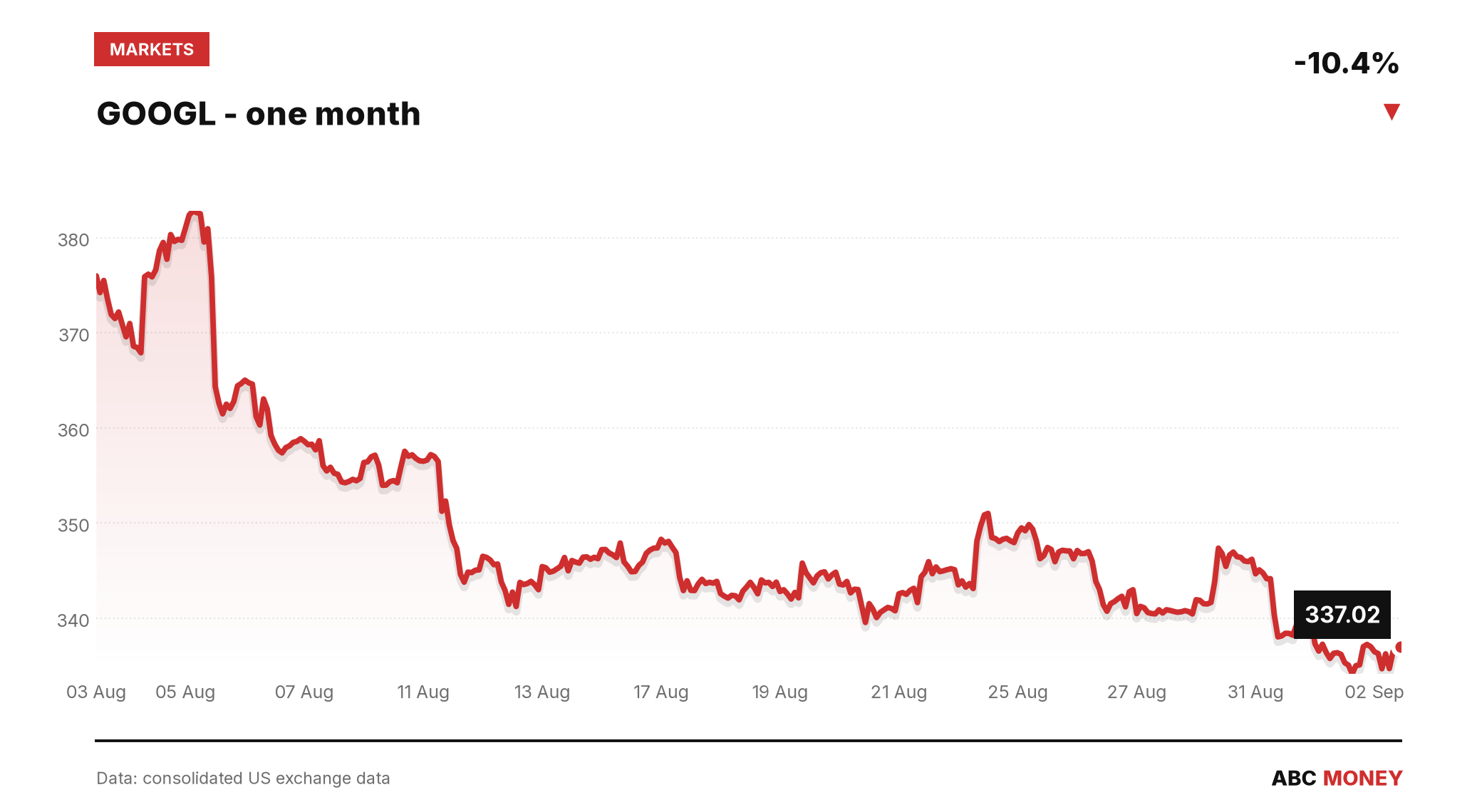
Reuters, via Yahoo Finance, frames this as the third consecutive rejection of a Big Tech break-up bid, and the second such defeat for the government specifically against Google. The first came a year ago, when a different judge, Amit Mehta, declined to order a Chrome browser divestiture in the separate search-monopoly case. That ruling triggered a far louder market response: Alphabet shares jumped 9.14% in a single session, adding roughly $234bn in market value, as CNBC reported at the time.
Nothing like that happened this week. Alphabet shares closed at $337.26, up just 0.23% on the day, having drifted 1.6% lower over the prior 20 trading sessions on volume running at about 81% of its recent average. The muted reaction says something about how the market had already positioned itself: AdX is a smaller slice of Alphabet’s advertising machine than the search business Chrome sits inside, and traders appear to have priced out the divestiture risk well before Brinkema’s order landed. Bearish positioning tells a similar story – FINRA’s daily short-sale data showed the share of GOOGL volume tied to short sales running between roughly 25% and 54% across the fortnight into the ruling, in line with recent norms rather than a build-up of bets against the stock ahead of the decision.
What’s still unresolved
The redacted version of Brinkema’s ruling has yet to be published, so the precise scope of the interoperability requirements Google must meet is still not public. That detail matters for rivals in the ad tech chain – publishers and smaller exchanges who had hoped a forced AdX sale would open the market more decisively than a set of behavioural conditions is likely to.
Zoom out and the broader antitrust campaign against Silicon Valley’s largest platforms is running behind the government’s own timetable. The Justice Department’s separate cases against Amazon.com and Apple over dominance in online retail and smartphones are not expected to reach trial before 2027 at the earliest, per Reuters’ reporting via Yahoo Finance. Until then, this week’s order stands as the clearest signal yet of where courts are willing to draw the line: monopoly findings can stick, but judges are proving reluctant to order the kind of corporate surgery regulators have been chasing.
This article is for information only and is not investment advice or a recommendation to buy or sell any asset. Markets move quickly; figures are correct as sourced at the time of writing. Always do your own research before making financial decisions.