
iPhone 17 revenue has, according to market-research firm Counterpoint Research, just set a record: more than $170 billion in global wholesale sales in its first year on shelves, an 11% increase on the iPhone 16 series and the highest launch-year haul of any iPhone generation, as first reported by Benzinga. It is an impressive number. It is also one Apple Inc. (NASDAQ: AAPL) does not itself publish, and the market’s actual response to the week’s news suggests investors were thinking about something else entirely.
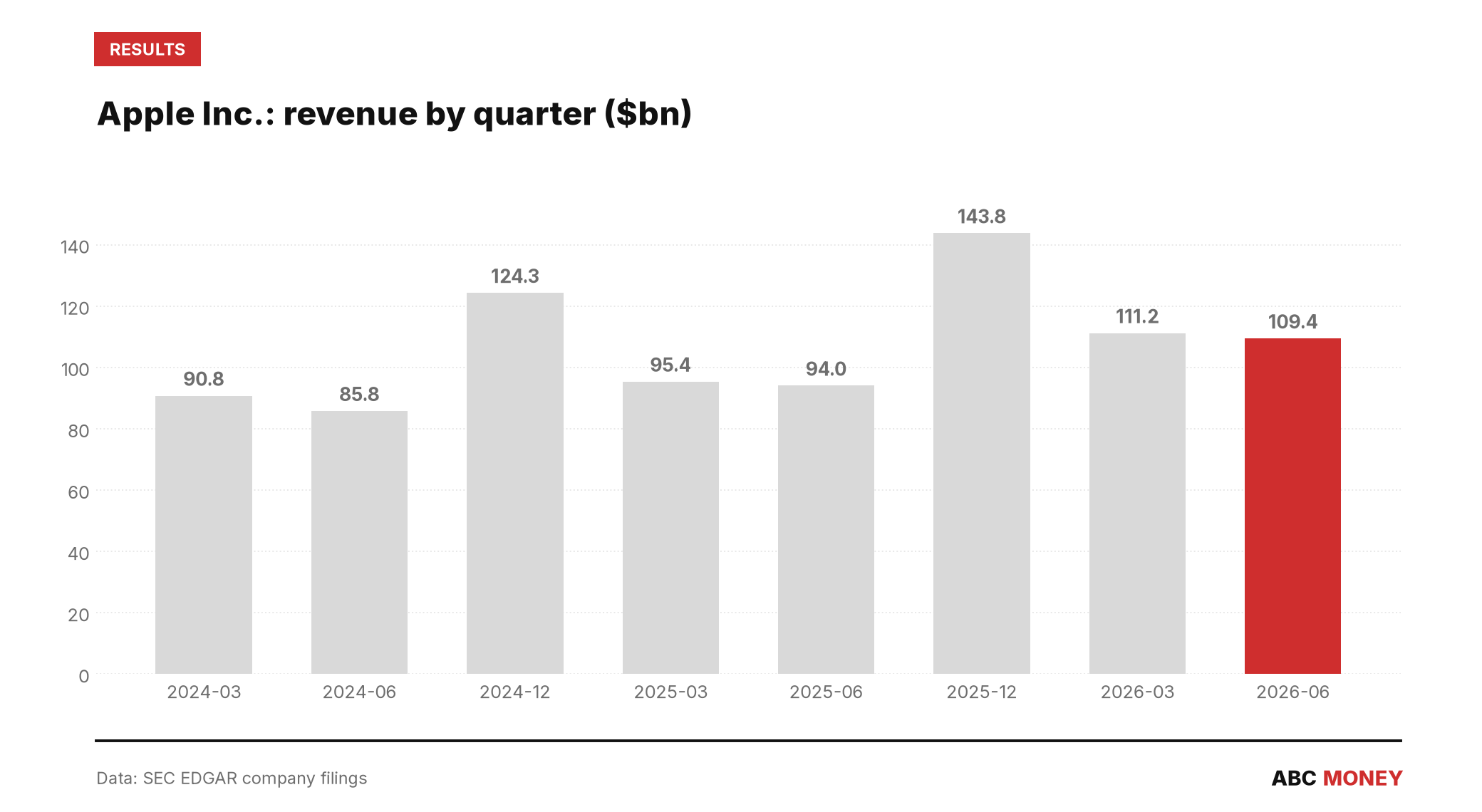
Start with what the $170bn figure actually measures. Counterpoint’s tracker estimates wholesale revenue – the value handset makers book before retailers and carriers take their cut, not Apple’s own reported sales – built from shipment and pricing models rather than company disclosures. Apple’s SEC filings never break iPhone revenue down by model, so there is no way to check the estimate against the company’s books. The closest comparable figure is Apple’s consolidated revenue of $143,756 million for the fiscal quarter covering the iPhone 17’s holiday launch window, from 28 September to 27 December 2025, reported in its 10-Q filing with the SEC – a figure that spans every product and service Apple sells, not just one iPhone generation, and so cannot confirm or contradict Counterpoint’s estimate either way.
What the iPhone 17 revenue record is actually built on
Counterpoint’s research director, Tarun Pathak, called the lineup Apple’s “strongest lineup in years,” pointing to a strategy that borrowed Pro-tier features for the base model while keeping premium buyers upgrading for the camera and chip improvements. Data cited by CNBC helps explain why the mix mattered: in the first half of 2026, the iPhone 17 Pro and Pro Max accounted for 54% of iPhone sales, against just 26% for the standard iPhone 17, according to CNBC’s reporting on IDC estimates. A heavier skew toward pricier models lifts average selling prices even without shipping more units – useful context for an 11% revenue jump that may owe as much to mix as to volume.
That record, real or estimated, arrived in the same week Apple unveiled its first foldable handset, the iPhone Duo, alongside the iPhone 18 Pro. The Duo starts at $1,999 and rises to $3,199 for the top storage tier, making it the most expensive iPhone Apple has ever sold, per reporting from IBTimes Australia. Sky News described it as the firm’s most expensive device to date, unveiled in John Ternus’s first keynote as chief executive.
The market’s reaction didn’t match the record
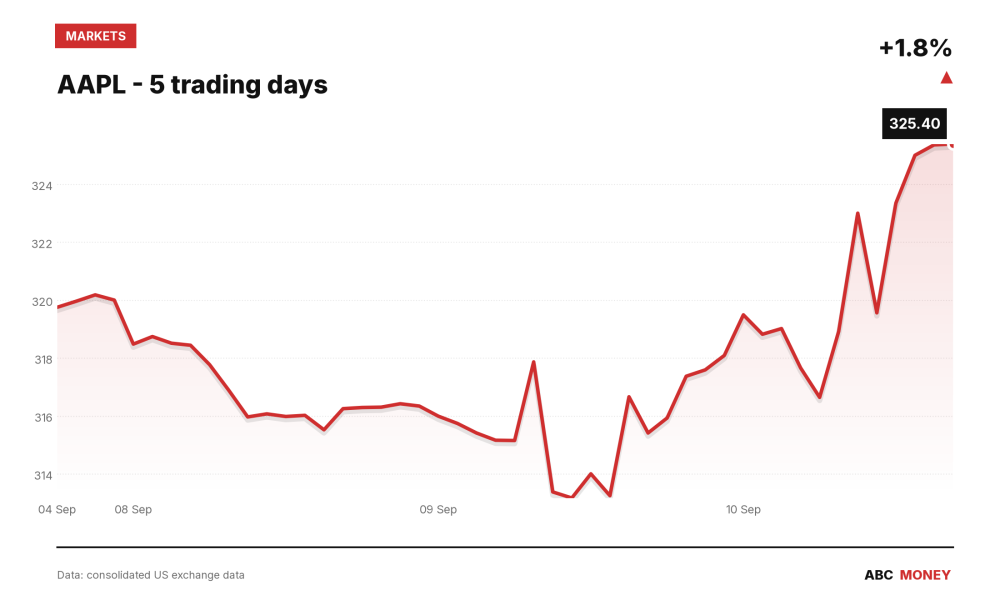
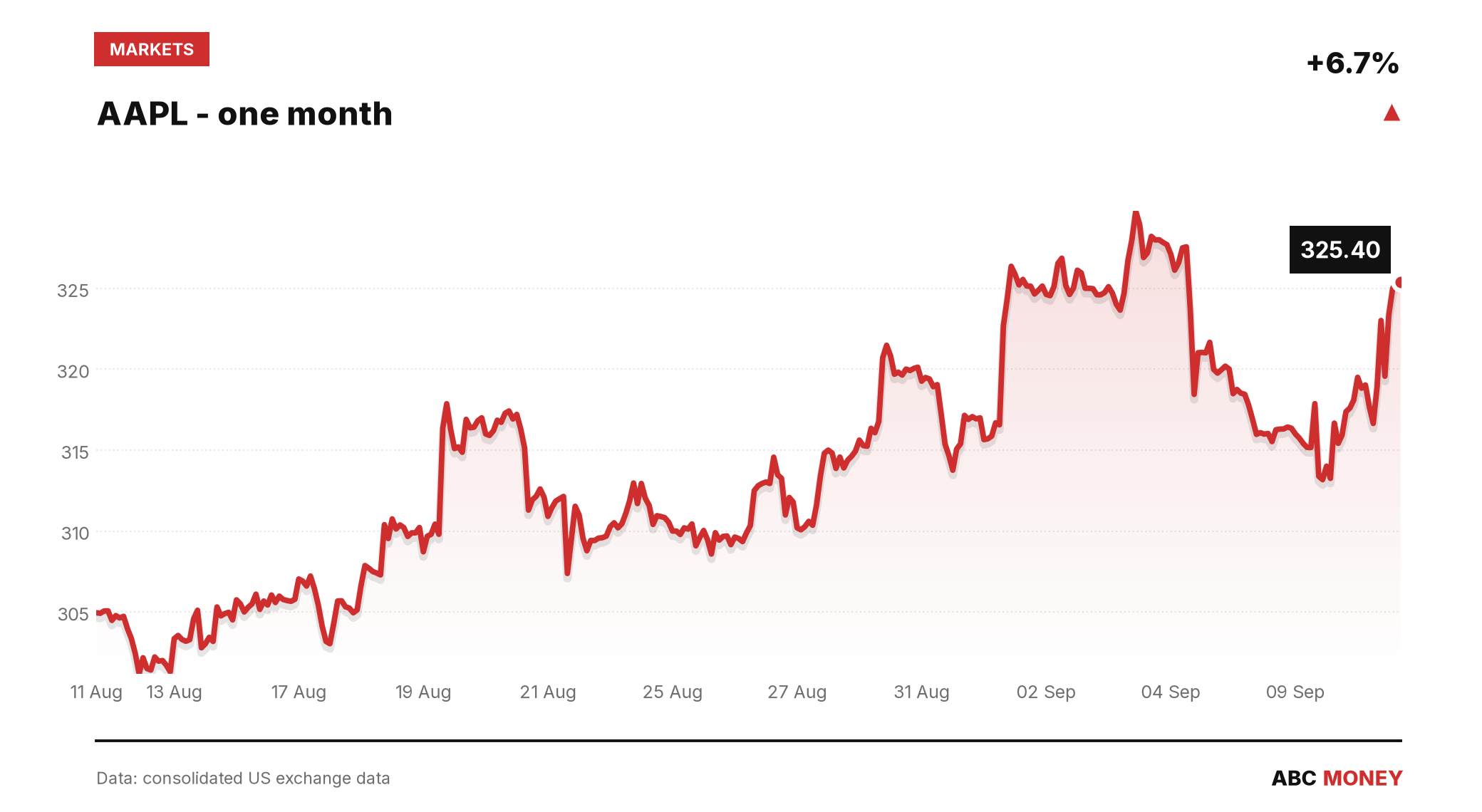
If the revenue milestone was meant to reassure investors, the share price did not immediately agree. Apple stock closed 0.28% lower at $315.34 on 9 September, the day of the launch event, before recovering 1.63% to $320.49 the following morning. By 10 September at 19:00 UTC, shares had climbed further to $325.735, up 2.87% on the day and 4.43% over the preceding 20 trading days, with volume running at 2.62 times the 20-day average – a pattern that reads less like conviction and more like a market working out what it actually thought, well after the keynote had ended.
Trading activity on the short side – bets that a stock will fall – had already been building into the event. FINRA data show Apple’s daily short-sale ratio, the proportion of trading volume attributable to short sales, climbed from 0.455 on 2 September to 0.633 by 9 September, the launch day itself, via FINRA’s daily short-sale volume data. That is not an extreme reading, but the steady rise suggests some traders were positioning for disappointment even as the headline revenue narrative circulated.
Cadence, not revenue, may be the story investors are pricing
The detail CNBC flagged as most consequential for investors wasn’t the record at all – it was what Apple didn’t launch. The company dropped the standard non-Pro iPhone 18 from this cycle entirely, its biggest change to release timing in seven years, a shift CNBC’s reporting frames as a move toward spreading launches across the calendar rather than concentrating them each autumn. Barron’s separately flagged the foldable bet itself as a meaningful risk to the stock, given the premium pricing and unproven demand for a first-generation category.
None of this erases the underlying commercial performance Counterpoint is describing. A near-11% increase in first-year wholesale revenue, if the methodology holds up, would mark a genuinely strong upgrade cycle by any historical Apple standard. But the gap between that backward-looking record and the market’s forward-looking hesitation is the more useful signal for anyone watching the stock: investors appear to be pricing the cadence shift and the foldable’s commercial reception, not applauding a number Apple itself has never confirmed. The next test comes when Apple reports its holiday-quarter results, the first period to capture actual iPhone Duo and iPhone 18 Pro sales rather than launch-week enthusiasm.
This article is for information only and is not investment advice or a recommendation to buy or sell any asset. Markets move quickly; figures are correct as sourced at the time of writing. Always do your own research before making financial decisions.

 Bitcoin
  Ethereum
  Tether
  BNB
BNB  USDC
USDC  XRP
XRP  Solana
  TRON
TRON  Lido Staked Ether
  Cardano
  Gram (prev. Toncoin)
  Avalanche