
Nasdaq’s Kraken investment is confirmed at $100m – what isn’t confirmed is the number everyone is repeating alongside it. Nasdaq’s own statement says Nasdaq Ventures, the exchange operator’s venture arm, is putting $100m into Payward, the parent company of crypto exchange Kraken, and deepening a partnership on tokenised stocks. The $21bn valuation attached to that cheque, which has anchored every headline since Tuesday, traces back to unnamed sources cited by Bloomberg – not to anything Nasdaq (NASDAQ: NDAQ) or Payward has put its name to.
What Nasdaq actually confirmed
The concrete facts are straightforward. Nasdaq Ventures is committing $100m to Payward. The two firms are extending a tie-up first unveiled in March 2026 to build Nasdaq Equity Tokens, a tokenised version of listed shares designed to preserve shareholder voting rights, with a target launch in the second quarter of 2027, according to the same press release. That is a real, dated commitment with a real product timeline – the sort of detail that outlasts a valuation debate.
What isn’t in that release is a valuation figure. The $21bn number comes from Bloomberg’s reporting, and outlets including CoinDesk and The Block have explicitly flagged that it comes from Bloomberg’s sourcing rather than either company’s disclosure. That distinction matters more than usual here because Payward’s implied worth has been anything but stable this year: private investors marked it at $20bn in a $800m round last November, Deutsche Börse’s $200m investment in April valued it at just $13.3bn, and now this unconfirmed figure has it back up near $21bn. A number that has moved by more than a third in ten months, without a public listing to anchor it, is a data point to treat with some care rather than repeat as settled fact.
A small cheque, a bigger bet
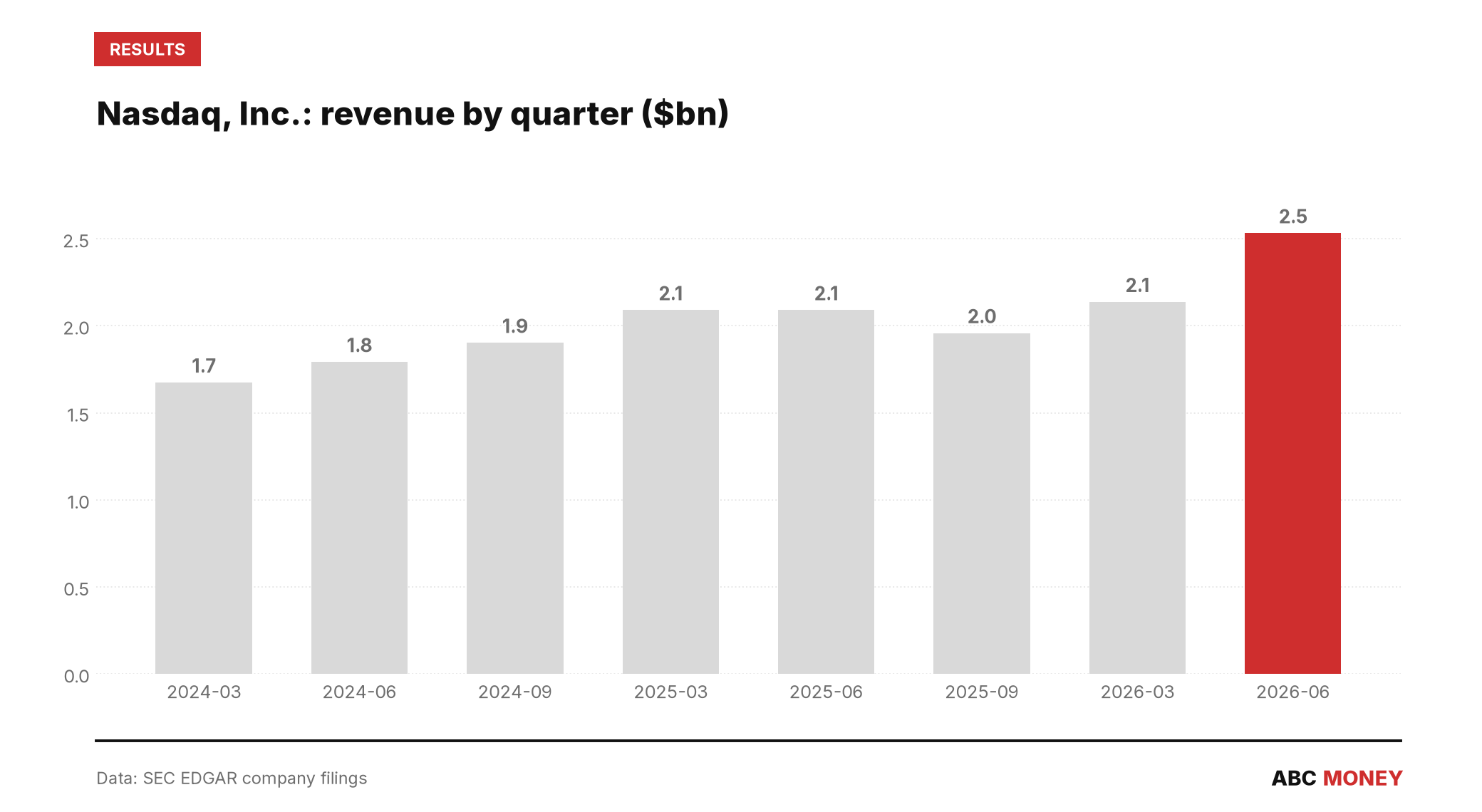
Set against Nasdaq’s own books, $100m is not a stretch. The exchange operator’s quarterly net income has climbed steadily from $234m in the first quarter of 2024 to $507m in the quarter ended June 2026, according to its most recent 10-Q filing with the US Securities and Exchange Commission – revenue over the same run climbed from $1.67bn to $2.53bn a quarter. A $100m stake is equivalent to roughly a fifth of one quarter’s profit, a meaningful but hardly balance-sheet-defining commitment. Notably, there is no standalone 8-K filing disclosing the Payward investment as a material event on Nasdaq’s EDGAR record, consistent with a strategic minority stake rather than an acquisition requiring separate disclosure.
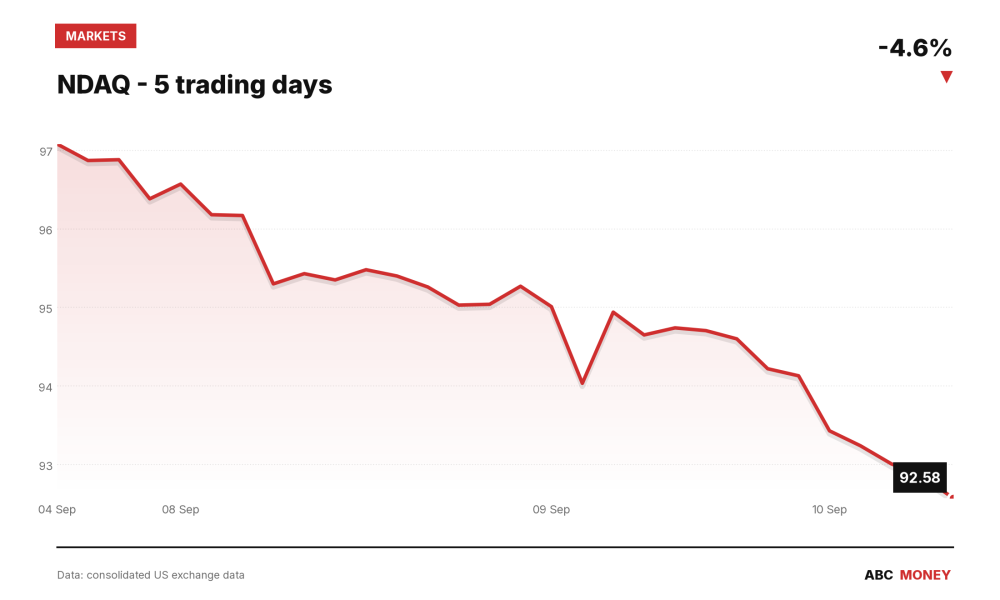
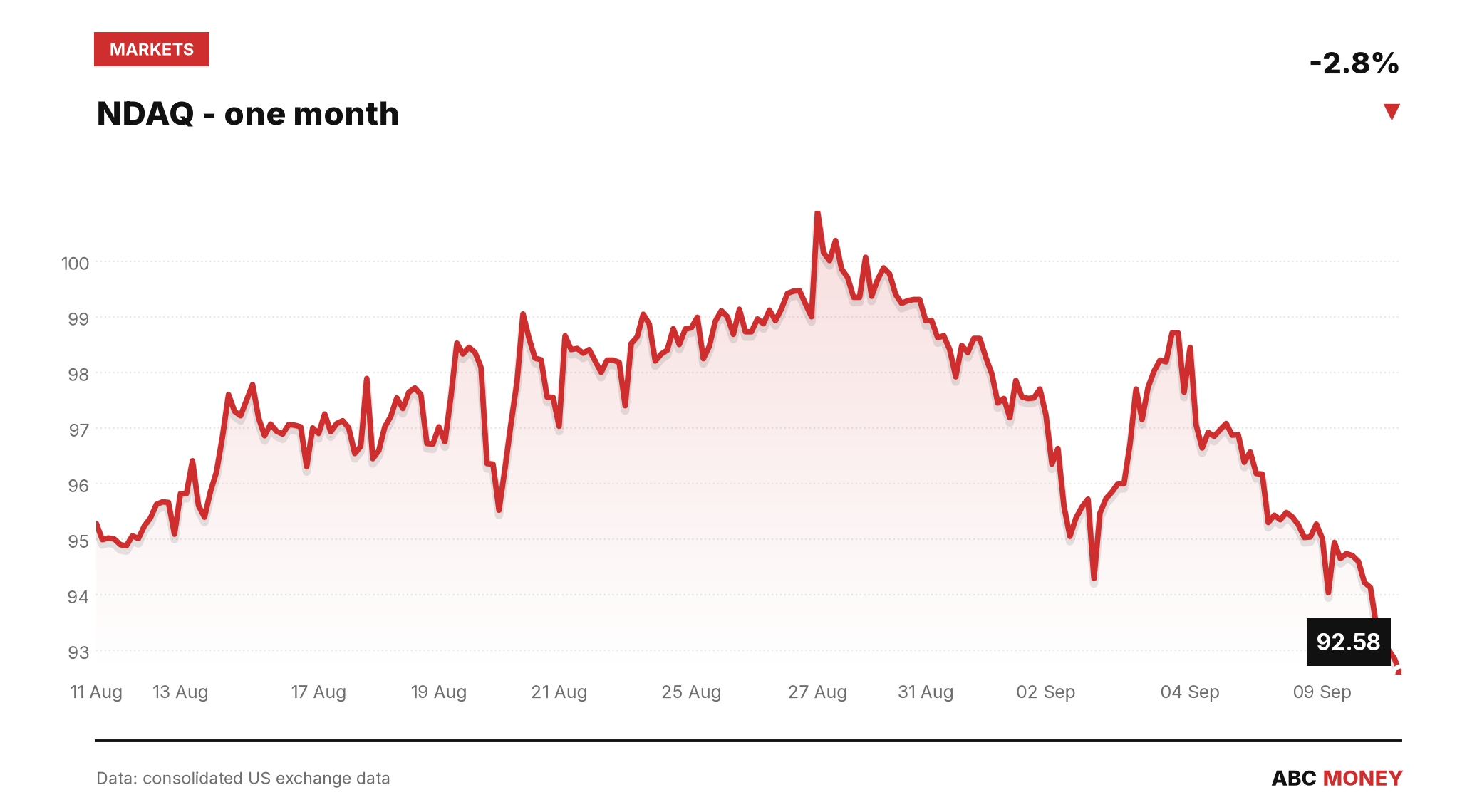
Trading in Nasdaq shares gave no sign the market was digesting a surprise. The stock closed at $92.72 on 10 September, down 1.99% on the day and roughly 5.6% over the prior 20 sessions, with volume running about 31% above its recent average – a move that sits comfortably within the stock’s own trading range for the month rather than pointing to any dramatic repricing around the deal. Short-sale activity told a similarly quiet story: Nasdaq’s short-sale ratio, a rough gauge of how much daily volume comes from bets that the shares will fall, stood at 0.20 on 9 September, in line with readings between 0.17 and 0.46 over the prior fortnight, according to FINRA’s daily short-sale data. Nothing in the positioning suggests traders saw this as either a red flag or a catalyst.
The part likely to matter more than the price tag
The more durable story here isn’t what Payward is worth on paper – it’s what Nasdaq is trying to build with it. Tokenising listed equities while preserving voting rights is a genuinely different proposition from the wrapped-stock tokens that crypto platforms have offered for years, and Nasdaq choosing Kraken’s parent as its infrastructure partner, rather than building in-house, says something about how exchange operators are choosing to compete for that market rather than simply issue press releases about “blockchain strategy”. This is also the third time in 2026 that an established exchange group has taken a stake in a crypto exchange, following Deutsche Börse’s April move on Payward, according to Decrypt – a pattern that looks less like opportunism and more like incumbents hedging their bets on where trading infrastructure ends up.
Payward, for its part, has been broadening well beyond spot crypto trading: it completed its acquisition of derivatives firm Bitnomial in May 2026, picking up CFTC-regulated registrations for futures, brokerage and clearing. Its xStocks tokenised-equity product had processed more than $25bn in cumulative trading volume across over 85,000 unique holders by the time of this announcement, per reporting from Bitcoin.com News – numbers that give some substance to the idea that tokenised equities are moving from pilot to product, whatever Payward turns out to be worth on Nasdaq’s books.
The next marker worth watching isn’t a valuation update – it’s whether Nasdaq Equity Tokens actually ship on the Q2 2027 timeline the two firms have now put in writing. Everything else attached to this week’s announcement, including the number in the headline, is still someone else’s estimate.
This article is for information only and is not investment advice or a recommendation to buy or sell any asset. Markets move quickly; figures are correct as sourced at the time of writing. Always do your own research before making financial decisions.


 Bitcoin
  Ethereum
  Tether
  BNB
BNB  USDC
USDC  XRP
XRP  Solana
  TRON
TRON  Lido Staked Ether
  Cardano
  Gram (prev. Toncoin)
  Avalanche