Bitcoin
  Ethereum
  Tether
  BNB
BNB  USDC
USDC  XRP
XRP  Solana
  TRON
TRON  Lido Staked Ether
  Cardano
  Gram (prev. Toncoin)
  Avalanche
New research reveals one in 10 Brits with medical conditions delay treatment abroad until they’re back home

Holidaymakers with medical conditions are risking their health by putting off treatment until they get home, new research reveals.
Research by PayingTooMuch found one in 10 travellers with a declared health condition waited until they got home before seeking treatment overseas.
Travellers with pre-existing medical conditions are twice as likely to delay treatment abroad compared to those without, the research found.
The findings suggest worries about getting medical help in another country may be stopping some people from seeking treatment when they need it.
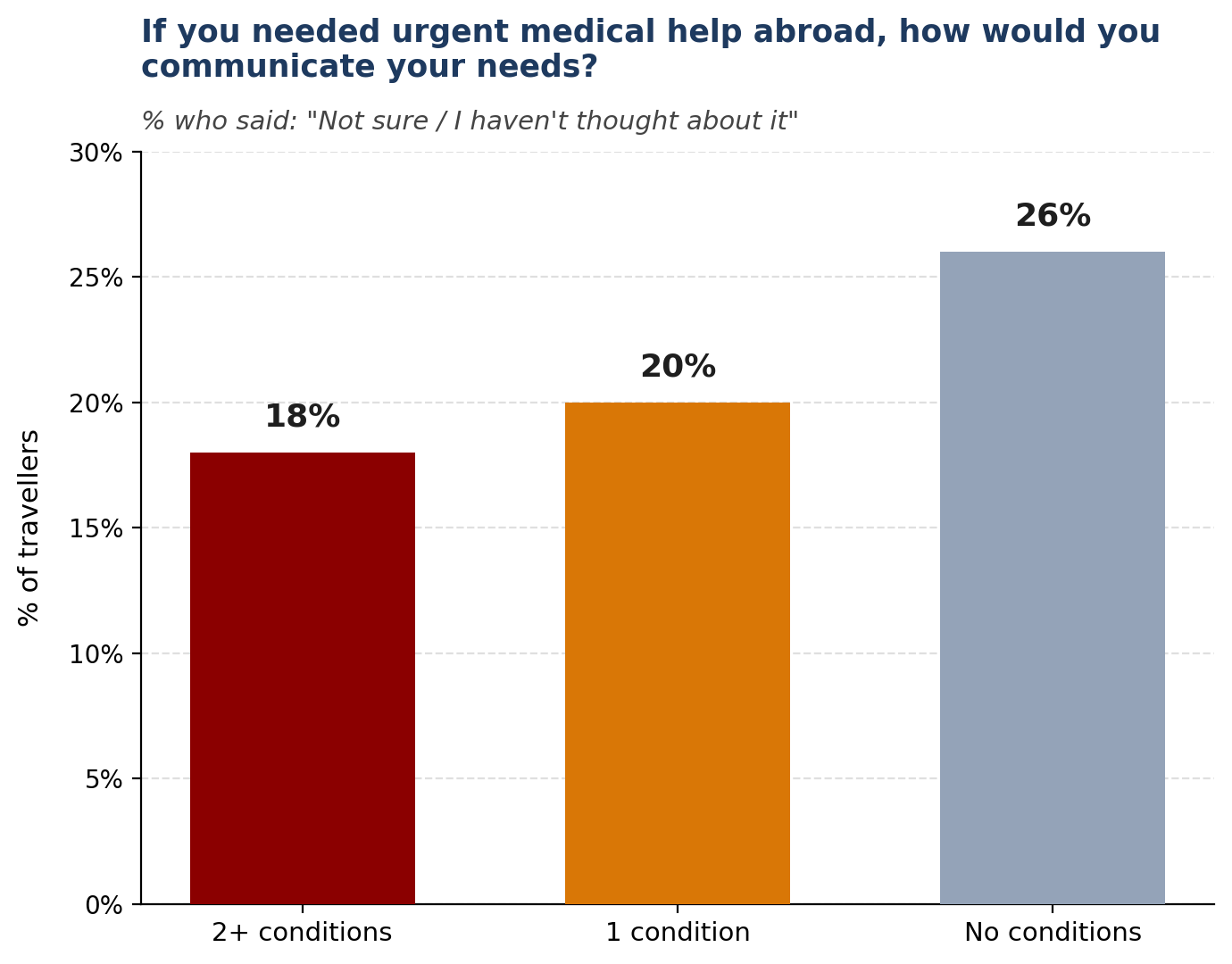
Nearly one in four (23%) travellers with a pre-existing condition admitted they hadn’t thought about how they would explain their medical needs if they needed emergency care abroad.
Data source: PayingTooMuch
Meanwhile, almost one in five (17%) people with one declared medical condition said they travelled without knowing how to contact emergency services in their destination country.
Commenting on the findings, registered NHS GP Dr John Akinjolire said:
“Delaying medical treatment while abroad can increase the risk of a condition becoming more serious, particularly for people managing pre-existing health conditions.
Feeling uncertain about where to seek help or whether treatment will be covered can understandably make people hesitate, but seeking medical advice as soon as possible is often the safest course of action. Many common travel-related illnesses and injuries, from infections and dehydration to falls and allergic reactions, are much easier to treat when addressed early.
Waiting to see if symptoms become severe can lead to complex treatments and, in some cases, emergency medical care that could be avoided.”
What to do if you need medical help abroad
- Get help early: Don’t wait until you return home if you feel unwell or have been injured. Seeking advice quickly can stop a condition from becoming more serious.
- Know who to contact: Save your travel insurer’s emergency assistance number before you go and contact them as soon as possible if you need medical care.
- Call emergency services if needed: If it’s a serious or life-threatening situation, contact the local emergency services straight away.
- Keep your documents handy: Carry your travel insurance details, passport, medication list and details of any pre-existing conditions so you can access them quickly.
- Keep records of treatment: Hold on to medical reports, prescriptions, receipts and any paperwork you receive, as you may need them for an insurance claim.
- Check your cover before travelling: Make sure any pre-existing medical conditions are declared on your travel insurance and understand what support your policy provides.
- Consider carrying a GHIC: If travelling in Europe, a UK Global Health Insurance Card can help you access state healthcare where eligible.
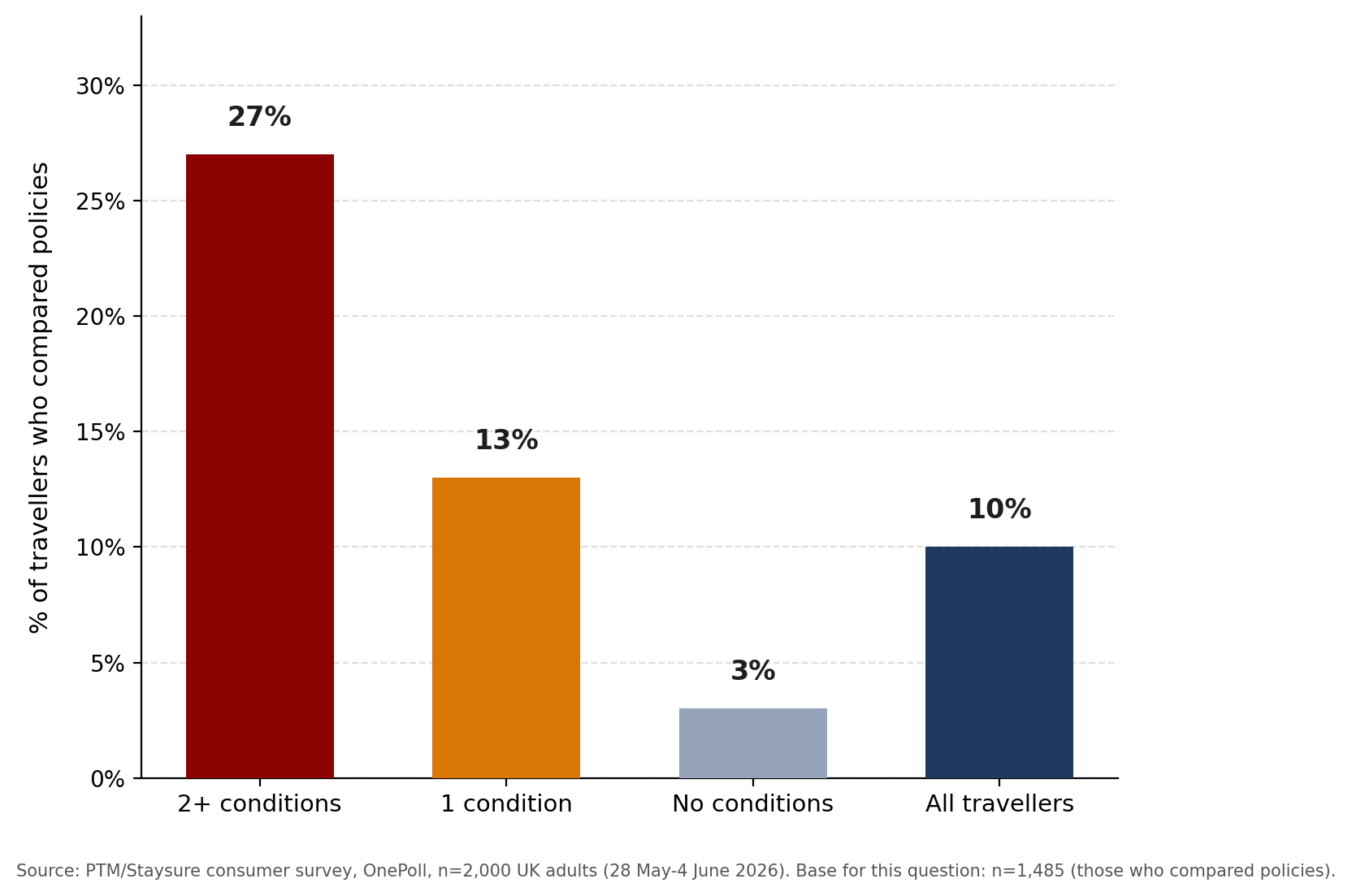
The research also suggests worries about travel insurance may be adding to hesitations. More than a quarter (27%) of travellers with more than one medical condition who compared travel insurance policies found that some providers would not cover them at all, a number that was almost three times higher than the overall average of 10%.
Data source: PayingTooMuch
Many also found the process itself more difficult to navigate. More than one in five (22%) travellers with pre-existing medical conditions said comparing policies was harder than expected, compared with 15% of all travellers.
Jo Wynyard, Commercial Director at PayingTooMuch, said:
“The conversation around pre-existing medical conditions and travel insurance often focuses on the cost and availability of cover, but these findings highlight a broader issue around confidence and preparedness. Understanding how your policy works before you travel is just as important as having cover in place.
Many travellers are unsure what assistance their insurer can provide if they need medical treatment abroad, particularly when dealing with an existing health condition. That uncertainty can lead to delays in seeking help or concerns about unexpected costs, even when support may be available under their policy.
Taking the time to check what your policy covers, whether you need to contact your insurer before receiving treatment, and what documentation you may need if you make a claim can help avoid unnecessary stress. Using a comparison site such as PayingTooMuch can also make it easier for travellers of all ages to compare policies, costs and cover limits, whether they have pre-existing medical conditions or not.”
Dr John finally adds:
“Before travelling, it’s important to familiarise yourself with how healthcare works at your destination, including whether you may need to pay for treatment upfront and what documentation you may need to make an insurance claim.
No one plans to become unwell while on holiday but knowing how to access medical care and acting promptly if something doesn’t feel right can make a significant difference to both your health and your recovery.”
About the data
The data was sourced through an independent survey of 2,000 UK adults commissioned by PayingTooMuch and conducted by OnePoll between 28 May and 4 June 2026. Respondents were UK adults who have travelled abroad with travel insurance in the last two years, randomly selected from a UK consumer panel. The dataset is available upon request.
About PayingTooMuch
PayingTooMuch is a specialist travel insurance comparison site working with trusted providers to compare quality travel insurance at an affordable price. It specialises in cover for pre-existing medical conditions, as well as families and older age groups.