
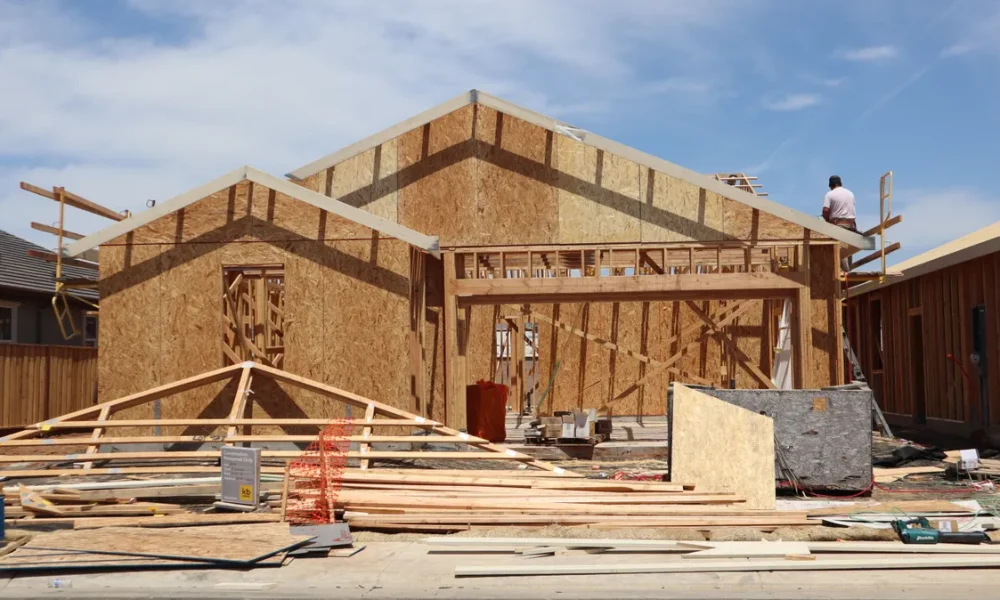
FTSE Russell confirmed on 2 September 2026 that Persimmon’s FTSE 100 relegation is finalised, with the housebuilder set to leave the index at the close of business on 18 September and begin trading as a FTSE 250 constituent from 21 September. The decision ends a chapter that began with a 58.9% five-year share price decline and a market capitalisation of £3.87bn, the second-smallest on the index behind Entain, which faces the same exit. EasyJet and Ithaca Energy take the two vacated slots.
A subsequent FTSE Russell notice dated 18 September 2026 indicated that certain quarterly review changes were reversed for suspended stocks; it is not clear from available information whether that affected Persimmon specifically. Investors should verify the position directly with their broker ahead of the 21 September effective date.
This Is Not Persimmon’s First Relegation
The move has a precedent. FTSE Russell’s constituent history records show Persimmon was relegated from the FTSE 100 to the FTSE 250 at the September 2023 quarterly review, taking effect 18 September 2023, before being promoted back. The cycle has now repeated. For long-only funds and ETFs benchmarked to FTSE indices — a universe that covers approximately $20 trillion in assets globally — mandatory rebalancing flows will follow regardless of the fundamental picture.
The underlying fundamentals are, in fact, more constructive than the index demotion implies. Persimmon’s full-year results for 2025 showed total group revenue of £3.75bn, up 17% from £3.20bn, with profit before tax rising 11% to £397.3m from £359.1m. Completions grew 12% and the company’s land bank reached 84,879 plots owned or under control, up 3% year on year, according to Directors Talk Interviews’ coverage of the results. Private forward sales stood at £1.25bn at year-end, 9% ahead of the prior year.
Where the Persimmon FTSE 100 Relegation Leaves the Investment Thesis
The 2025 numbers tell a recovery story. The H1 2026 data introduce a more cautious note. New home completions in the first half reached 5,189 units, up 13%, but gross margin slipped to 18.0% from 18.6% as incentives, product mix and build cost inflation took effect, according to an Investing.com summary of the H1 2026 results. Full-year guidance remains approximately 12,500 completions, but management flagged £40m to £50m in cost headwinds over 18 months linked to Middle East conflict impacts on materials supply.
That cost pressure compounds an already difficult margin environment. Operating profits are around 50% below their 2022 peak, and the exceptional charges line remains elevated: the 2025 income statement carried a net exceptional charge of £44.9m, up from £34.4m in 2024, of which £55.0m was non-cash. The Competition and Markets Authority closed its housebuilder investigation on 30 October 2025 after accepting binding commitments from seven builders; Persimmon’s £15.2m ex-gratia contribution was paid on 30 January 2026, drawing a line under that particular liability.
The balance sheet provides some cushion. Hargreaves Lansdown’s data for the 2025 year-end shows net debt of zero, total assets of £5.32bn and total liabilities of £1.70bn. That capital strength supports the income commitment: Persimmon has pledged a minimum 60p per share annual capital return. The 20p interim dividend for 2026 is payable on 6 November 2026 to shareholders on the register on 16 October, with an ex-dividend date of 15 October, per the company’s dividend information page. A prior final dividend of 40p was paid on 10 July 2026. At the current share price, the minimum 60p commitment equates to a yield of around 6%.
The valuation reflects the uncertainty rather than the recovery. A forward price-to-earnings ratio of approximately 11 and a price-to-book ratio of roughly 1 look undemanding, but only if volume and margin assumptions hold. With 3% to 4% build-cost inflation expected through 2027 and mortgage affordability still stretched, those assumptions carry real downside risk. The housing market’s rate-sensitivity is the single variable that determines whether the recovery thesis works or stalls.
FTSE 250 membership will bring a different shareholder register, likely higher short interest in the near term, and reduced passive demand. For existing holders, the index exit is a mechanical event, not a fundamental one. The real test arrives with the next set of results: whether completions are tracking toward the 12,500 target and whether gross margin has stabilised above 18%. That data will do more to set the direction of PSN than any index reshuffle.


 Bitcoin
  Ethereum
  Tether
  BNB
BNB  USDC
USDC  XRP
XRP  Solana
  TRON
TRON  Lido Staked Ether
  Cardano
  Gram (prev. Toncoin)
  Avalanche