
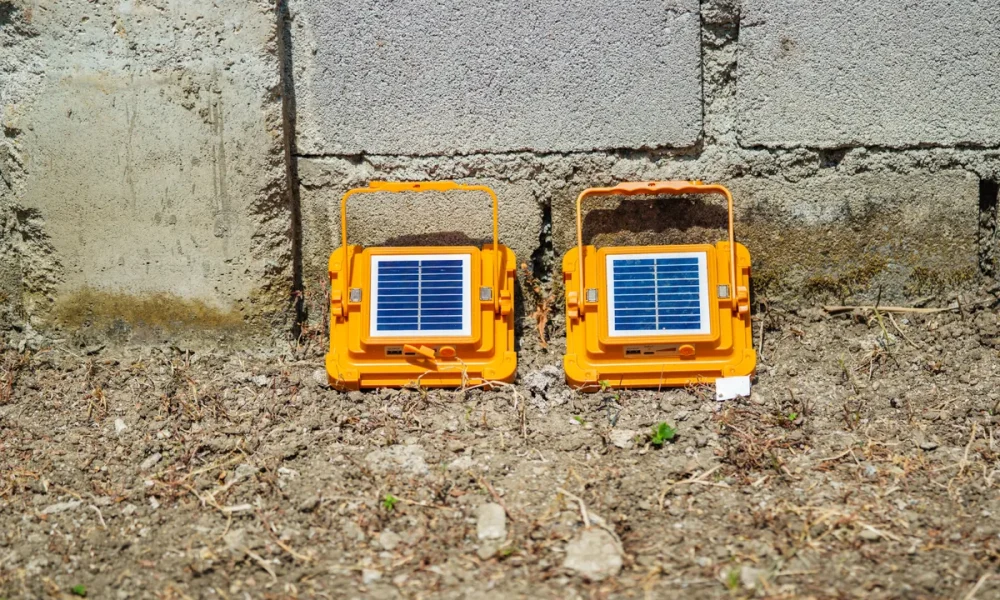
Plug-in solar panels became legally available across England, Wales and Scotland on 27 August 2026, opening a new route into solar generation for renters, leaseholders and anyone who cannot mount panels on a roof. The change arrives as Ofgem has already imposed a 13% increase in the energy price cap for the period covering 1 July to 30 September 2026.
How the Regulations Changed
The legal framework rests on amendments to the Plugs and Sockets etc. (Safety) Regulations 1994 and the Electricity Safety, Quality and Continuity Regulations 2002. The statutory instrument, SI 2026 No. 848, was laid in Parliament on 17 July 2026 following the government’s stated intention, announced on 24 March 2026, to make the devices available within months. Retailers including Lidl and B&Q can now stock the products.
The Property Institute notes that the UK’s safety specification is more stringent than Germany’s, where around half a million new devices were plugged in last year. England has also introduced a Permitted Development Right to simplify installation on houses, though renters and leaseholders should check their agreements before proceeding.
One geographic caveat: the regulations cover England, Wales and Scotland only. The Energy Saving Trust confirms that plug-in solar panels are currently not permitted in Northern Ireland, where separate regulations will need to be updated before the technology becomes available there.
What Plug-in Solar Panels Can — and Cannot — Do
The devices are not a like-for-like substitute for rooftop solar. Each unit connects to a standard household socket and generates electricity from a balcony or garden-facing position. The maximum inverter output permitted under the new rules is 800VA, with a maximum AC current of 3.5A, and only complete products meeting the official Interim Product Specification qualify for sale.
According to the UK Government’s own figures, up to 800W of output is enough to cover up to 20% of an average home’s electricity use, broadly equivalent to running a fridge, television, Wi-Fi router, laptop, phone charger and an Xbox simultaneously when the sun is shining. Money Saving Expert puts the daily yield at around 2kWh, against the average UK household consumption of 7.4kWh.
A critical limitation: the devices cannot store energy. Whatever is generated must be used in real time. Anything plugged in draws from the panel first before pulling from the National Grid, but if no one is home, the benefit is lost.
Martyn Fowler, founder of green energy supplier Elite Renewables, put it plainly: ‘The value is highest when you use the electricity as it is being generated. If the system produces a unit of electricity and you consume that unit in the house, you have avoided buying one from your supplier. Homes with a steady daytime load will benefit most. Someone working from home is likely to use more of the generation than a property that sits empty all day.’
Orientation compounds the effect. Fowler added: ‘A panel mounted vertically on a balcony will generate less over the year than the same panel at a good angle facing south. Plug-in solar is a useful entry point into solar. It will not transform your energy bill, but it can be a low-cost way to reduce grid use and start generating some of your own power.’
The Savings Case and the Safety Caveats
The government estimates annual savings of £70 to £110, against an upfront kit cost estimated at £400 to £600 plus professional installation. A rooftop system starts from £6,000 according to the Energy Saving Trust, so the entry point is considerably lower, but so is the ceiling on savings. At the mid-point of both ranges, a household might expect a payback period of five to seven years before professional installation fees are factored in.
The safety picture also warrants attention. Industry bodies including the IET, Electrical Safety First, NICEIC and SELECT all issued statements on 27 August 2026 warning that not every home is suitable. Solar Energy Concepts summarises the key technical constraint: a Type AC residual current device is unsuitable. Homeowners need a Type A, F or B RCD confirmed to work with power flowing both ways. Only one device per household is permitted under the current rules.
The PluginSolarHub guidance on compliant specifications is worth reading before purchase. Whether a householder’s RCD type is compatible is the first question to resolve, and the answer will determine whether a supermarket shelf purchase translates into actual savings or an avoidable safety risk.


 Bitcoin
  Ethereum
  Tether
  BNB
BNB  USDC
USDC  XRP
XRP  Solana
  TRON
TRON  Lido Staked Ether
  Cardano
  Gram (prev. Toncoin)
  Avalanche