
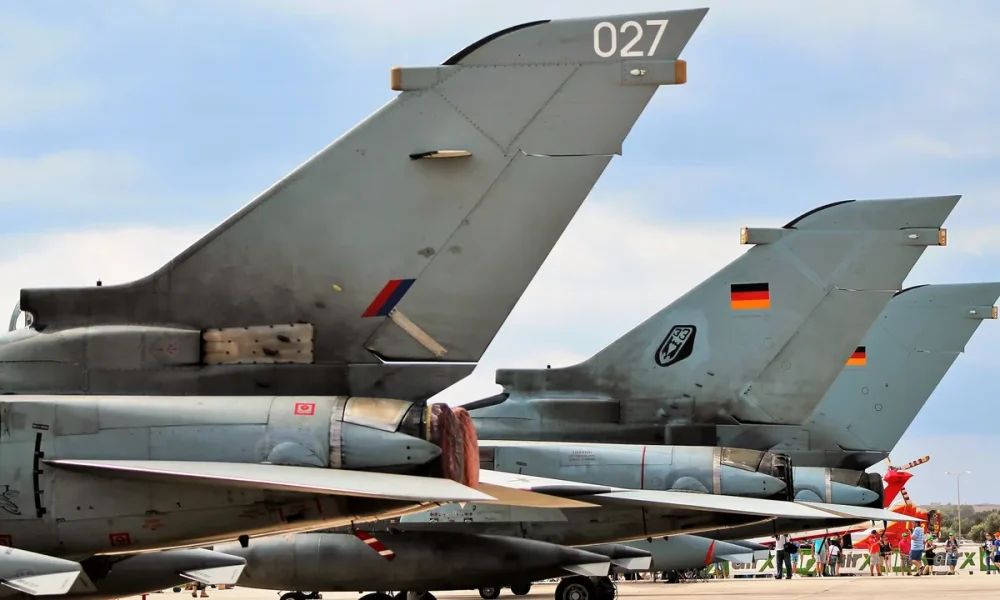
The Rolls-Royce share price has attracted increasingly ambitious price targets, with some commentators asking whether £100 per share is achievable. The underlying financials from the company’s 2025 full-year results give that question genuine substance, even if the arithmetic demands a degree of optimism that investors should weigh carefully.
A Financial Turnaround That Has Already Arrived
Rolls-Royce Holdings plc reported 2025 underlying revenue of £20,059 million and underlying operating profit of £3,462 million, producing an underlying operating margin of 17.3%. Free cash flow came in at £3,270 million, and the company closed the year with a statutory net cash position of £1,895 million. Underlying basic earnings per share reached 29.55 pence.
These are not speculative projections. They represent a business that has already undergone a profound restructuring under chief executive Tufan Erginbilgic, with the 2024 Annual Report documenting the pace of that transformation. The adjusted return on capital rose to 18.9% in 2025 from 13.8% in 2024, a trajectory that few FTSE 100 industrials have matched in the same period.
One nuance worth holding: the 2025 results include a £277 million credit to underlying profit after tax, relating to deferred tax assets on UK tax losses. That figure was adjusted out in the earnings per share calculation, the dividend payout ratio, and return on capital metrics, so the underlying operating performance is not flattered by it on those measures.
The Rolls-Royce Share Price Case for £100: Buybacks and Mid-Term Targets
The company announced a £7 billion to £9 billion multi-year share buyback programme covering 2026 to 2028, with £2.5 billion to be completed in 2026 alone. Combined with upgraded mid-term targets, this is where the bull case for the Rolls-Royce share price becomes structurally coherent rather than merely hopeful.
Those mid-term targets, published alongside the full-year results on the Investegate RNS, call for underlying operating profit of £4.9 billion to £5.2 billion and free cash flow of £5.0 billion to £5.3 billion. The company also stated it expects to deliver underlying operating profit within its prior mid-term guidance range two years earlier than planned, based on its 2026 guidance. That acceleration matters: it compresses the timeline over which the cash generation thesis plays out.
A buyback at this scale, run over three years against a share count that the capital reduction in May 2025 has already trimmed, mechanically supports earnings per share growth even before any operational improvement. If free cash flow reaches the top end of the mid-term range and is substantially directed at buybacks and dividends, the earnings per share progression from the current 29.55 pence base becomes a credible bridge toward valuations that justify a much higher share price.
The Civil Aerospace division, the engine of cash generation, carries its own moving parts. The 2026 guidance points to large engine flying hours growing to 115% to 120% of 2019 levels, alongside 550 to 600 total original-equipment deliveries and 1,480 to 1,550 total shop visits. There is also a £150 million to £200 million cash headwind in 2026 from supply chain constraints, a number that should not be dismissed as trivial against a free cash flow base still scaling toward that mid-term range.
What the SMR Deconsolidation Changes
One structural shift from 2025 deserves attention. An investment from ČEZ Group into London Stock Exchange-listed Rolls-Royce Holdings plc’s small modular reactor subsidiary, Rolls-Royce SMR Limited, completed on 4 March 2025 and diluted the group’s indirect shareholding from 70.5% at 31 December 2024 to 61.7%. Rolls-Royce subsequently relinquished control under the criteria within IFRS 10, and Rolls-Royce SMR Limited was deconsolidated.
For investors building a sum-of-the-parts valuation that assigns meaningful value to the SMR business, the deconsolidation changes the accounting picture without necessarily altering the economic exposure. The group retains a 61.7% indirect stake; it simply no longer consolidates the subsidiary’s balance sheet line by line.
Where the £100 Thesis Can Break
Reaching £100 per share requires the market to assign a multiple to those mid-term cash flows that holds up through a full cycle. Civil Aerospace flying hours are a function of global passenger demand, and the supply chain constraints already baked into the 2026 guidance are a reminder that execution risk has not disappeared. Any slippage in shop visit volumes, or a softening in the long-haul flying-hours recovery, would pressure the free cash flow corridor that underpins the buyback programme.
The setup is not implausible. But the Rolls-Royce bull case is now priced with very little tolerance for disappointment. The next test is the 2026 interim results: whether flying hours are tracking to that 115% to 120% of 2019 levels range, and whether the supply chain cash drag lands within or below the £150 million to £200 million guided range.

 Bitcoin
  Ethereum
  Tether
  BNB
BNB  USDC
USDC  XRP
XRP  Solana
  TRON
TRON  Lido Staked Ether
  Cardano
  Gram (prev. Toncoin)
  Avalanche