
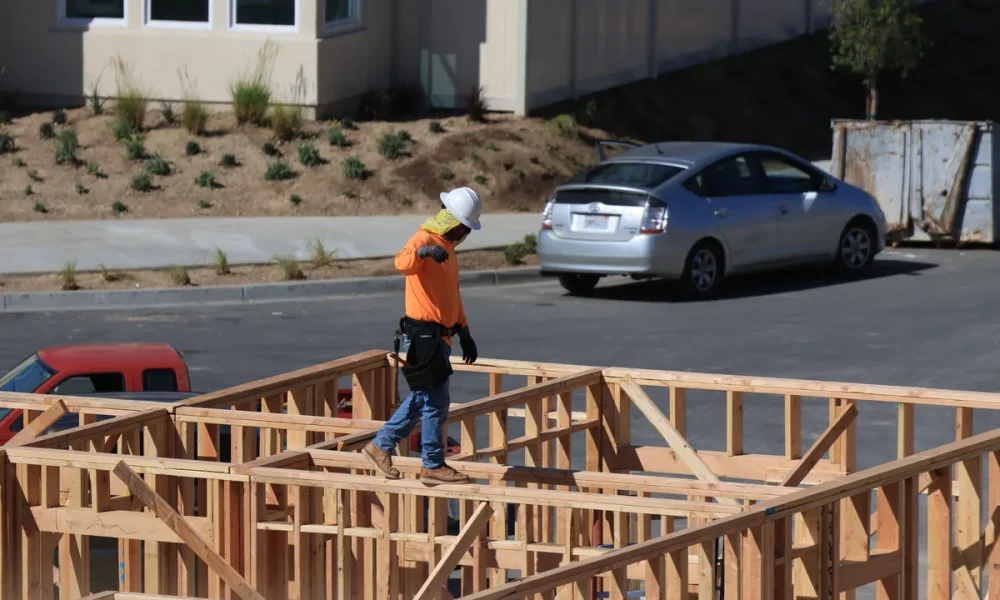
The UK housebuilders planning reform agenda under Andy Burnham has given long-suffering sector stocks a jolt of momentum, but the structural picture beneath the rally is more complicated than a simple policy pivot would suggest.
Britain completed just 200,000 homes last year, against a population that continues to grow, and only 4,000 of those were council houses. At the peak in 1970, nearly 400,000 homes were completed, with almost half being public housing. The gap between then and now explains why Jeremy Matallah, co-founder of rent-to-own company Keyzy, argues the country needs to build around 300,000 homes a year to meet immediate market demand, roughly 50% more than current output. Edward Clarke of planning consultancy Lichfields puts unmet demand at two million homes when concealed households are counted, rising to 2.4 million if the aim is to match continental European norms.
Planning System Remains the Central Blockage
The Competition and Markets Authority (CMA), in its final housebuilding market study published 26 February 2024, concluded that the planning system is the primary reason new homes are not being delivered at the required rate. The CMA identified a lack of predictability in application outcomes, excessive length and cost, and weak, inconsistent targets as the principal defects.
Separately, a Competition Act investigation covering January 2022 to February 2024 resulted, in October 2025, in eight housebuilders accepting binding commitments, including restrictions on sharing sensitive commercial information and a £100 million contribution towards affordable housing. That settlement has since been followed by a £4.5 billion legal claim launched on behalf of affected homeowners against Barratt Redrow, Bellway, Redrow, The Berkeley Group, Bloor Homes, Persimmon, Taylor Wimpey, Vistry Group and Countryside Partnerships. That litigation is live and represents an unresolved overhang for several of the stocks discussed below.
Beyond the CMA’s findings, Paul Smith of The Strategic Land Group notes that only a third of councils in England maintain up-to-date local plans. Planning applications for new homes now take a median of 349 days to be approved, more than three times the pace of a decade ago, and even an unsuccessful submission can cost a developer £150,000 to £200,000. The Future Homes Standard adds around £7,000 to £8,000 per home in building costs.
What the Revised NPPF and Burnham’s Agenda Mean for UK Housebuilders
The revised National Planning Policy Framework (NPPF), published 12 December 2024, introduced mandatory housing targets for principal authorities, with higher requirements in the least affordable areas, and new Golden Rules for greenbelt development requiring affordable housing alongside infrastructure such as nurseries, GP surgeries and transport provision. A further phase of planning reform was announced on 16 December 2025 by the National Housing Federation, which welcomed measures to support smaller builders, increase densities and streamline biodiversity requirements.
Burnham’s record as mayor of Greater Manchester between 2017 and 2026 was imperfect: he missed his own housebuilding targets and made concessions on greenbelt development. But he has pledged to go beyond the existing £39 billion over ten years committed to affordable housing and to address what he has called the structural undersupply of social housing over the past 40 years. His devolution-first approach, using public land and allowing councils to retain more revenue from right-to-buy sales, aligns reasonably well with what the NPPF reforms have already put in motion. The next test is whether the centre monitors councils’ use of these powers with enough rigour to hold the gains.
The Investment Case: Six Stocks Across the Supply Chain
If housebuilding volumes do recover, the large listed builders are best positioned to benefit, given their balance-sheet depth and established land banks. The litigation risk from the £4.5 billion claim sits across the sector, however, and warrants a valuation discount that some of the multiples below may not yet fully reflect. Below are six stocks that span the housebuilding supply chain, with key metrics as reported.
| Company | Ticker | 2027 P/E | Dividend Yield | Valuation Note |
|---|---|---|---|---|
| Persimmon | PSN | 11x | 5.8% | Vertically integrated; strong north-England exposure |
| Barratt Redrow | BTRW | 12x | 3.97% | Trading at roughly half book value |
| Vistry | VTY | 6.4x | N/A | More than 70% discount to book; partnerships model with councils |
| Genuit | GEN | <10x | 4.9% | Revenue up a third 2020-2025; profits doubled |
| Volution | FAN | 15.8x | 2.1% | Revenues nearly doubled, profits tripled over five years to 2025 |
| Ibstock | IBST | 16.4x | 2.8% | Two new brick factories completed; long-term revenue trend up |
Among the pure housebuilders, Persimmon’s northern England weighting, once seen as a drag, has become an advantage as house-price growth in the region has outpaced the south. Its vertically integrated model, with in-house brick, tile and timber-frame manufacturing, provides cost control that more asset-light peers cannot match. Barratt Redrow is cheaper still relative to its fundamentals, though Jack Fletcher-Price of Morningstar regards Persimmon as the higher-quality business. Vistry’s discount reflects the cost-understatement scandals that hit the group, but its partnerships model with local authorities could prove a direct beneficiary of Burnham’s affordable-housing push.
Further down the supply chain, Genuit and Volution both provide ventilation and climate systems for buildings. New-builds now account for around half of Volution’s revenue, and chief executive Ronnie George believes post-pandemic awareness of indoor air quality will sustain demand regardless of the housebuilding cycle. Ibstock, which makes bricks and concrete, has invested in two new factories and is expected to see both sales and profits increase over the coming years.
Shares across the sector have moved as much as 5% in a single session on rumours of a revived Help to Buy scheme. If Burnham converts that speculation into policy, the re-rating could be rapid. The outstanding litigation, though, means the thesis carries a tail risk that the multiples do not yet price in fully.


 Bitcoin
  Ethereum
  Tether
  BNB
BNB  USDC
USDC  XRP
XRP  Solana
  TRON
TRON  Lido Staked Ether
  Cardano
  Gram (prev. Toncoin)
  Avalanche