

Seeing a stock that was trading close to $2,000 a year ago sit below $700 today can cause a certain type of vertigo. The majority of 2026 has seen FICO, the Bozeman, Montana-based company responsible for the credit score that the majority of Americans will encounter at some point in their adult lives, absorb a number of regulatory blows that have significantly altered the investment case surrounding it.
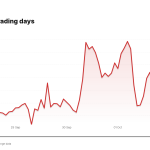
The most recent occurred on Thursday after the market closed. After a terrible September in which the stock fell nearly 49% in a single month, Fair Isaac shares had just concluded the regular session up nearly 12%. Then, approximately four minutes after 4 p.m. The Federal Housing Finance Agency was allegedly planning to order Fannie Mae and Freddie Mac to require lenders to use credit data from two bureaus rather than three, according to a Bloomberg report that surfaced close to New York. In after-hours trading, shares dropped 7%. TransUnion saw a 6% decline. What had appeared to be a day of recuperation turned into something much messier.
For background, the conventional mortgage process has long relied on what the industry refers to as a “tri-merge”—a combined credit report that gathers information from Equifax, Experian, and TransUnion, the three main credit bureaus. Each bureau would sell fewer reports to the mortgage market if it switched to a “bi-merge” system with just two. The issue is slightly different but equally pressing for FICO. FICO’s pricing strategy is based on volume, and lower bureau activity translates into lower scoring activity. One of its most dependable sources of income is the mortgage market.
Bill Pulte, the director of FHFA, has been outspoken about this. For months, he has pushed the bureaus and FICO to reduce their fees, arguing that the current credit-reporting system adds needless expenses for homebuyers. He declared at the beginning of September that the agency was “seriously considering bi-merge.” The stock was shaken by that statement alone.
Even worse, on September 29, the FHFA declared that VantageScore, the primary rival of FICO and jointly owned by all three credit bureaus, would be positioned on the same mortgage-pricing grid as the conventional FICO Classic score. In a single session, the stock fell 27%. For those who had FICO shares prior to it, at least, that day might have its own place in financial history.
It’s difficult to ignore how rapidly the competitive landscape changed. FICO’s position in the mortgage market was virtually unassailable for many years. Lenders were required to use FICO scores by Fannie Mae and Freddie Mac, which purchase most home loans in the United States. It was a structural requirement rather than a preference. Although VantageScore existed and was utilized in a few consumer-facing applications, it was unable to significantly impact the mortgage market. That was altered by one regulatory ruling. VantageScore can now be used more widely by lenders on loans going to the agencies, and once this door is opened, it usually stays open.
For investors, the more important question is whether FICO’s earnings power has been permanently diminished or if this is just a difficult period in an otherwise resilient company. The company beat earnings projections in Q3 2026 and reported quarterly revenue of $674 million, up about 26% year over year. The non-mortgage industry, which includes fraud detection, decision management software, and analytics tools utilized by banks, insurers, and retailers worldwide, has not disappeared. Some analysts believe that the market may be pricing in a worst-case scenario that hasn’t yet materialized.
However, the difference between the current price in the low-to-mid $600s and the 52-week high of $1,998 speaks for itself. How far Pulte pushes the regulatory changes, how quickly lenders actually switch to VantageScore in practice, and whether FICO can offset mortgage scoring pressure with growth elsewhere are some of the unanswered questions that will determine whether FICO stock rebuilds from here. At least some of those questions may be addressed when Pulte speaks at a mortgage industry conference in Chicago on October 12.
The stock will likely continue to move on every headline until then. At least that part appears to be resolved.


 Bitcoin
  Ethereum
  Tether
  BNB
BNB  USDC
USDC  XRP
XRP  Solana
  TRON
TRON  Lido Staked Ether
  Cardano
  Gram (prev. Toncoin)
  Avalanche