Bitcoin
 Ethereum
 Tether
 BNB
 USDC
 XRP
 Solana
 TRON
 Lido Staked Ether
 Cardano
 Gram (prev. Toncoin)
 Avalanche
Lockheed Martin (LMT) has raised its full-year guidance after a third quarter that beat Wall Street’s numbers on every important line, and its order book swelled to a record it has never come close to before. The defence contractor now expects full-year earnings per share of $30.35 to $30.75, up from a prior range of $29.95 to $30.65, and full-year sales of $80bn to $82bn, up from $79.75bn to $81.75bn, according to the company’s own 8-K filing with the US Securities and Exchange Commission.
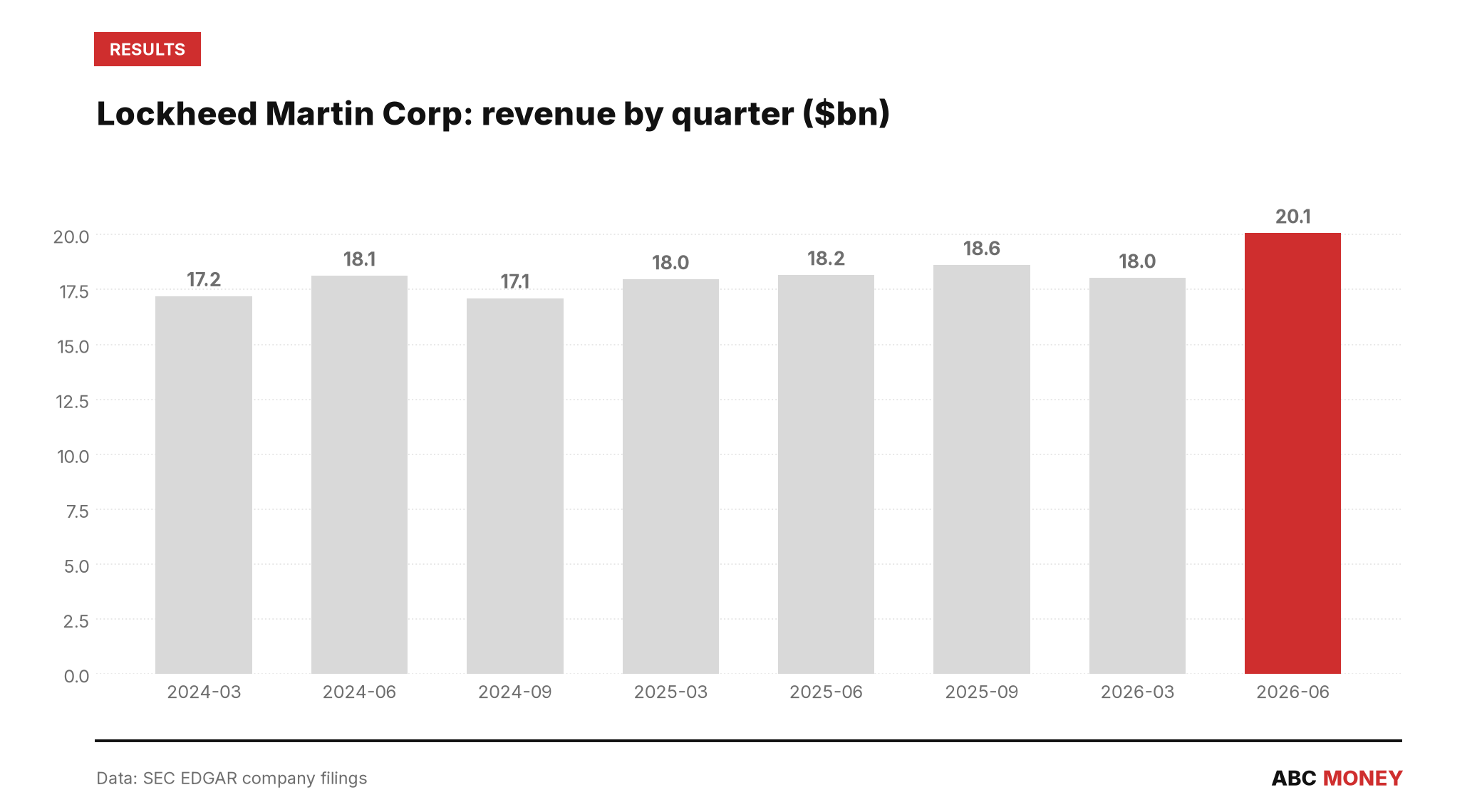
The Lockheed Martin record backlog figure is the headline number here: $292bn at quarter-end, up 27% since the second quarter of 2026, when the backlog itself was already a record at $230bn. That is an extraordinary jump in nine months for a company whose quarterly revenue runs at roughly $18bn to $20bn – the order book now represents something close to three and a half years of sales at the current run rate.
A beat-and-raise quarter, line by line
Third-quarter sales rose 11% year-on-year to $20.7bn, and net earnings climbed 14% to $1.8bn, or $7.97 per diluted share, the company’s filing shows. That compares with net income of $1.62bn in the same quarter last year. The improvement follows a choppier stretch in 2025, when a single quarter’s profit fell to $342m, or $1.46 a share, weighed down by reach-forward losses on fixed-price programmes – the kind of charge defence investors have learned to watch for closely. This quarter’s numbers show none of that drag.
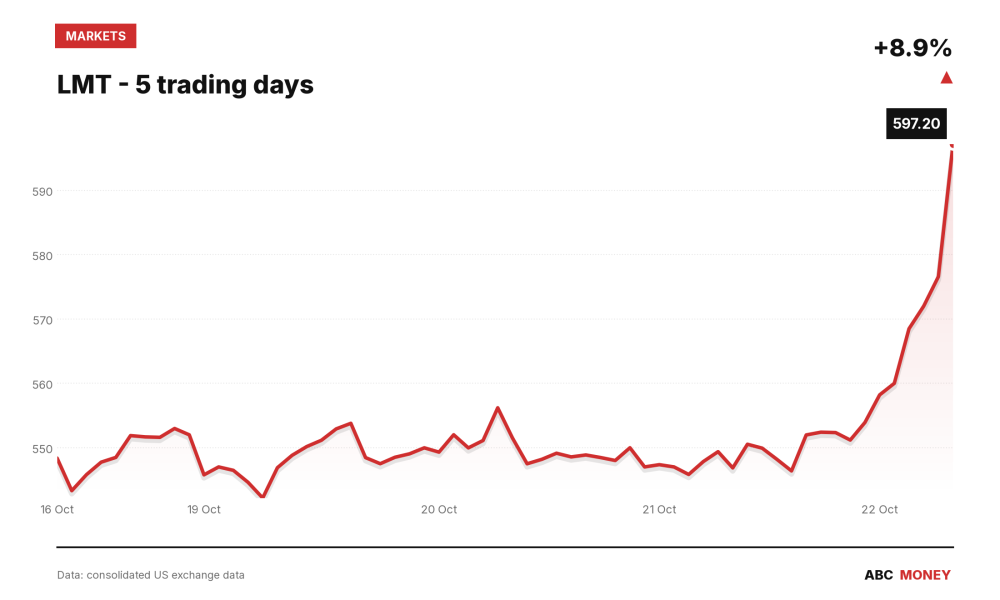
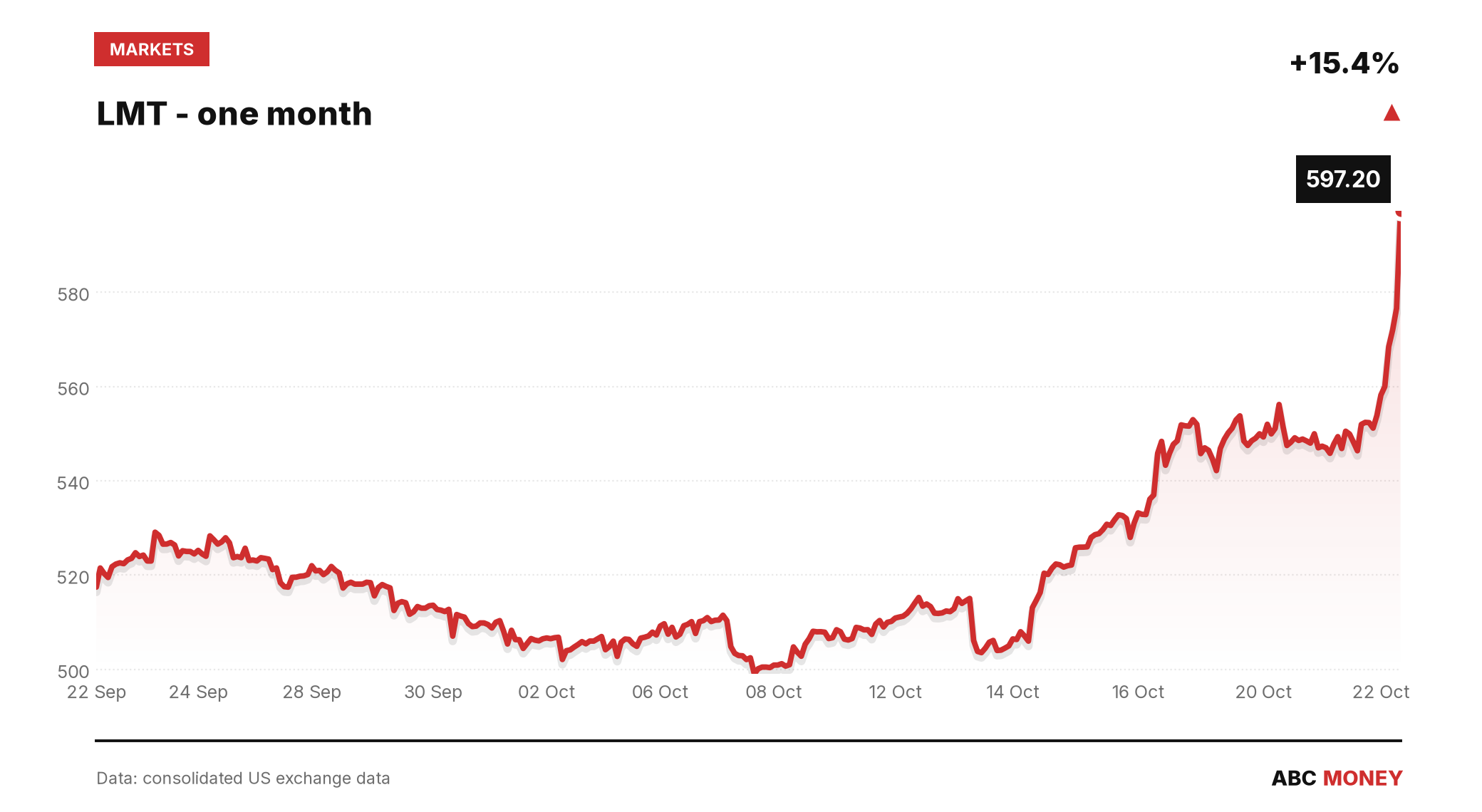
Markets reacted accordingly. Shares traded around $580 as of the early afternoon on 22 October, up 5.24% on the day and roughly 14.8% over the preceding 20 trading sessions, putting the stock at the top of its recent range. GuruFocus reported the stock rose 2.4% in premarket trading alone after the release landed. The Wall Street Journal and Barron’s both framed the quarter as confirmation that the company’s order pipeline, not just its production schedule, is now the story investors are pricing.
Where the backlog is actually sitting
The scale of the jump invites a question the headline number doesn’t answer on its own: what, exactly, is in it. A large share of the growth is concentrated in munitions rather than spread evenly across Lockheed’s four segments. The PAC-3 MSE interceptor programme alone accounts for $52.5bn of the record backlog, and the Missiles and Fire Control unit’s order book has roughly tripled over nine months – equivalent to about 8.8 years of that segment’s trailing sales, according to StockTitan’s analysis of the release.
That concentration matters because backlog is a promise to deliver, not cash in hand. Converting a tripled missile order book into revenue depends on production-line capacity, supply-chain throughput for components such as solid rocket motors, and government funding profiles that can shift with budget cycles. None of that is a knock on the quarter Lockheed just reported – the beat was real and broad-based – but it does mean the record backlog is a different animal from the diversified order books the company has carried in past cycles, weighted more heavily toward a category of hardware where output is historically harder to scale quickly than assembly of, say, aircraft fuselages.
Management’s framing, and what the tape says about positioning
Chief executive Jim Taiclet tied the results to combining legacy hardware with newer software capability, saying the company aims “to improve mission performance on a continuous basis by combining proven systems like Aegis, F-35, and Hellfire with the latest digital technologies including AI and Autonomy,” as reported by TradingView’s republish of the company’s release.
There is little sign the rally was a short-covering event – where traders who had bet against the stock are forced to buy it back, amplifying a move. FINRA’s daily short-sale data show the share of Lockheed’s trading volume tied to short sales sat in a narrow 0.47-to-0.62 range through the fortnight before earnings, with no sign of the kind of elevated positioning against the stock that would typically precede a sharp squeeze higher. The move looks more like a straightforward repricing on genuinely stronger numbers than a mechanical unwind.
Investors will get the next real test of the conversion question with the fourth-quarter report, when analysts are likely to press management on production rates for the PAC-3 MSE line and how much of the swollen backlog can realistically convert to billed revenue within the newly raised fiscal 2026 sales range of $80bn to $82bn.
This article is for information only and is not investment advice or a recommendation to buy or sell any asset. Markets move quickly; figures are correct as sourced at the time of writing. Always do your own research before making financial decisions.