Meta Platforms (NASDAQ: META) has put its money where Mark Zuckerberg’s mouth is. On 12 October 2026 the company released Muse Wonder and a more powerful sibling, Muse Wonder Full, describing them as its first “frontier-class” models – industry shorthand for systems judged capable of matching the best general-purpose AI on the market, rather than trailing a generation behind. Zuckerberg announced the launch himself on X, and Meta’s own newsroom confirmed the models were live via the Meta Model API and Muse Code the same day.
The pitch is direct: Meta says Muse Wonder closes the gap with OpenAI and Anthropic on coding, finance and legal tasks, two labs that have spent the past two years treated as the industry’s pace-setters. Reuters and TechCrunch both confirmed the release independently, framing it as the clearest evidence yet that Meta’s expensive AI rebuild has produced something shippable rather than merely promised.
A second roll of the dice on the AI frontier
Muse Wonder is not Meta’s first attempt this year. It follows Muse Spark, released in April under the company’s Superintelligence Labs division, itself the product of an aggressive reorganisation led by chief AI officer Alexandr Wang, who joined Meta via its roughly $14bn deal for Scale AI, according to Fortune. That 14-month push has been expensive and closely watched by investors who want proof the spending is buying genuine capability rather than headlines.
Commercially, Meta is pricing Muse Wonder to compete rather than undercut: roughly $4 per million input tokens (the units of text a model processes) and $20 per million output tokens via the Meta Model API, broadly in line with rival models such as GPT-6 Sol or Opus 5.5, per a TechCrunch report. Muse Wonder Full, the more capable variant, is reserved for subscribers to Meta’s Muse Code developer tool – a gating decision that suggests Meta wants paying commitment before handing over its best model.
The claims nobody outside Meta has tested yet
Here is the part that deserves scrutiny rather than applause. Meta’s benchmark-parity claims against Anthropic and OpenAI’s flagship models are self-reported. No independent evaluator has reproduced them, a caveat several outlets flagged explicitly. That does not make the release fictional – the models are real, live, and priced for paying customers – but it does mean the gap-closing narrative rests, for now, entirely on Meta’s own scorecard. Zuckerberg told the Financial Times, in comments summarised by Axios, that Meta has “reached the AI frontier,” while also rejecting calls for an industry-wide coordinated slowdown on AI safety, arguing that responsibility should sit with individual labs rather than a collective pact.
What the market actually did
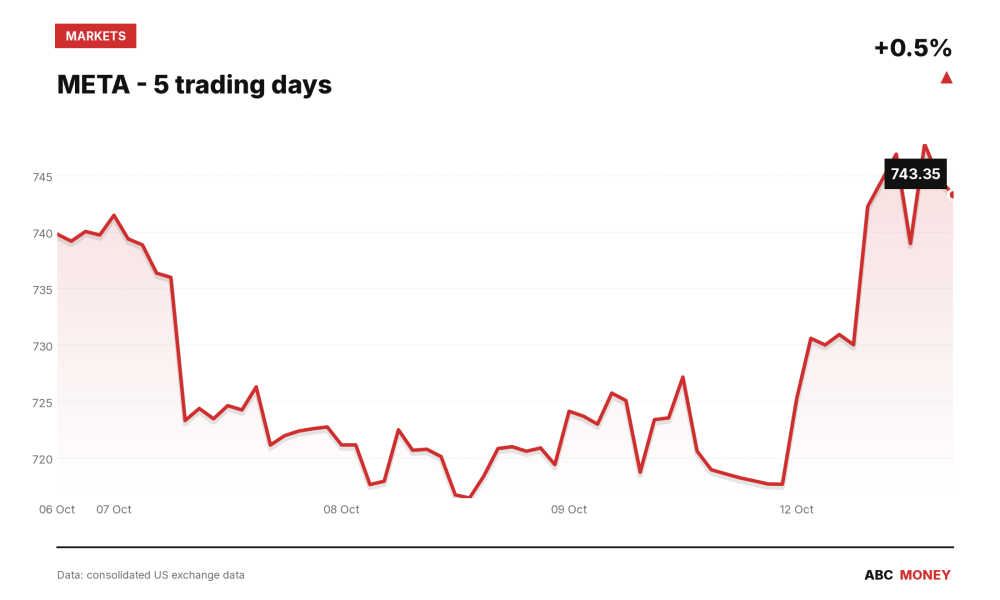
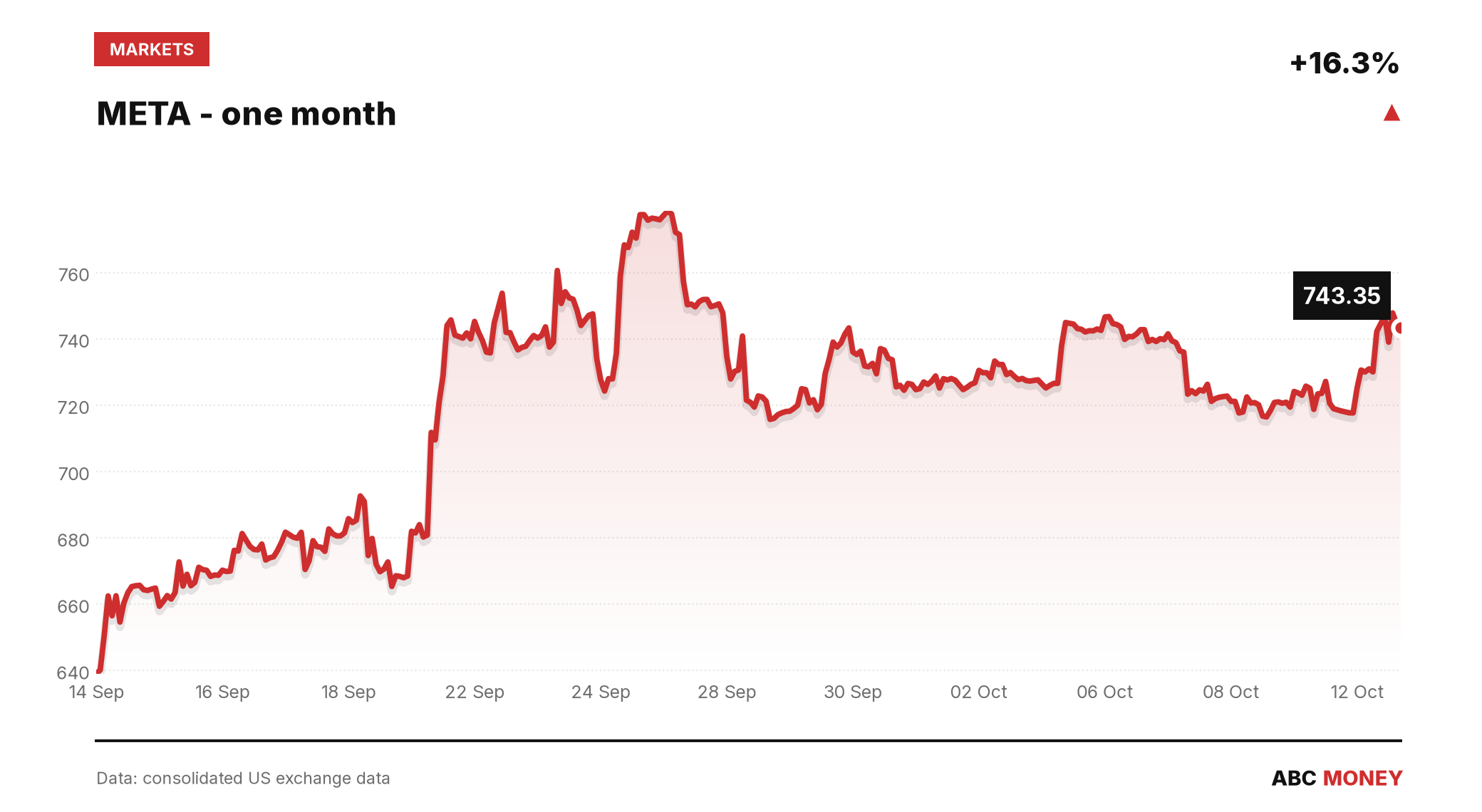
Investors leaned favourable rather than euphoric. META shares traded at $742.64 as of 19:00 UTC on 12 October, up 1.73% on the day, having moved as much as 3.39% higher intraday according to an earlier Yahoo Finance snapshot – the kind of drift typical of a story that strengthens through the trading session as more desks digest it, rather than a single news-driven spike. Trading volume ran at roughly 1.9 times the 20-day average, suggesting real repositioning rather than a quiet afternoon. Shares remained within their 20-day range of $715.72 to $778.50, which tempers any reading of the move as a breakout.
Short-selling activity gives little reason to suspect sceptics were caught out. FINRA’s daily short-sale data shows the ratio of short volume to total volume hovering between roughly 0.38 and 0.57 across the ten trading sessions before the launch – unremarkable by Meta’s own recent standards, with no build-up suggesting traders were bracing for a reversal.
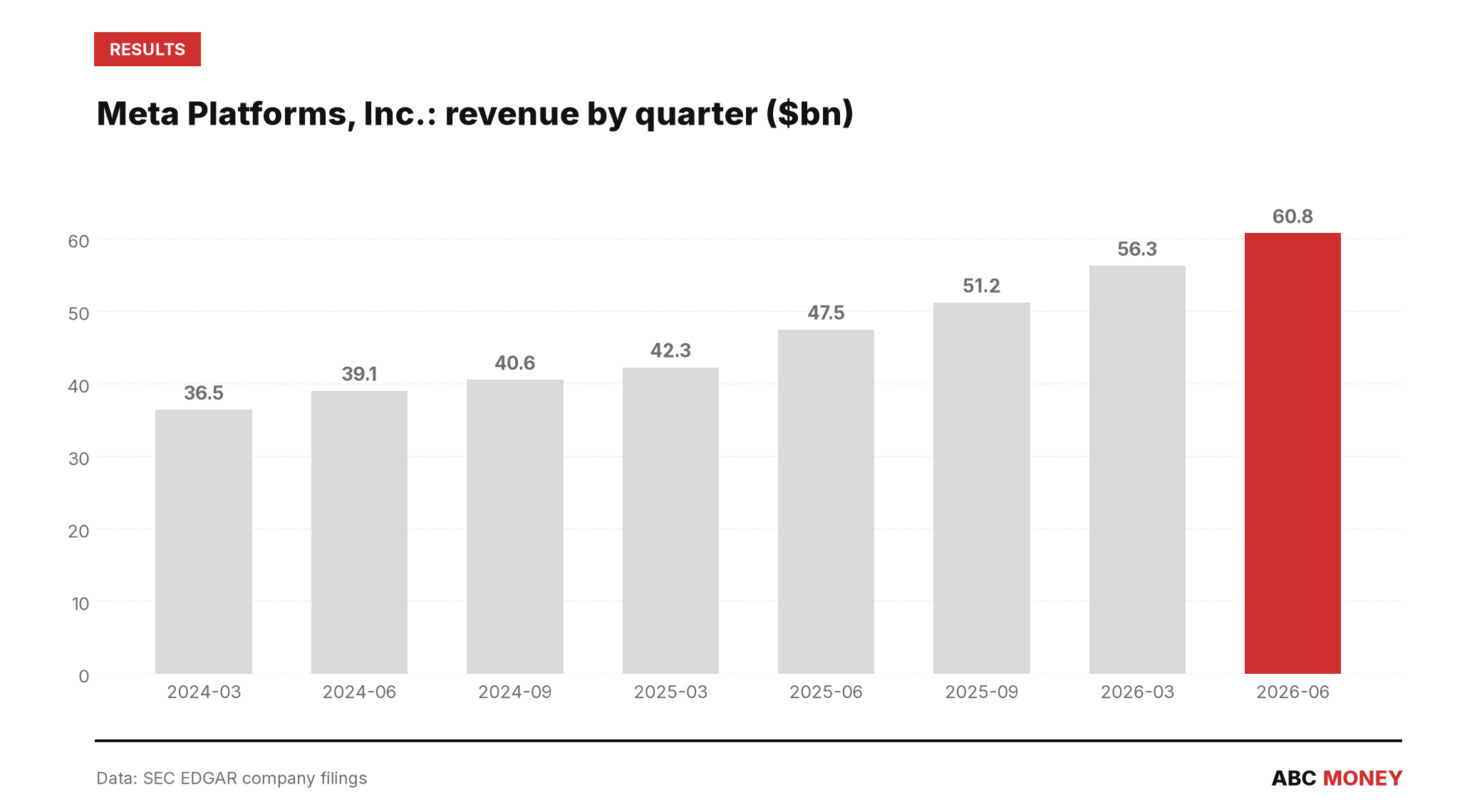
The backdrop matters too. Meta’s Q2 2026 revenue came in at $60.8bn with net income of $15.8bn, according to its 10-Q filing – continuing a run of quarterly revenue that has roughly doubled since early 2024, when it stood at $36.5bn. The one blemish in that run, a Q3 2025 net income figure of $2.7bn against surrounding quarters in the mid-teens of billions, reflected a one-off charge unrelated to AI spending and has since been overtaken by stronger results. Set against a 10-year US Treasury yield of 5.22% as of 8 October, per Federal Reserve data, growth stocks are being asked to clear a higher bar than in the ultra-low-rate years, which makes Meta’s willingness to keep spending on compute and talent a deliberate bet rather than an easy one.
The real test for Muse Wonder will not be Monday’s share-price reaction but what independent benchmarking firms, enterprise customers and rival labs say once they have had time to put the models through their own paces rather than Meta’s.
This article is for information only and is not investment advice or a recommendation to buy or sell any asset. Markets move quickly; figures are correct as sourced at the time of writing. Always do your own research before making financial decisions.


 Bitcoin
  Ethereum
  Tether
  BNB
BNB  USDC
USDC  XRP
XRP  Solana
  TRON
TRON  Lido Staked Ether
  Cardano
  Gram (prev. Toncoin)
  Avalanche