
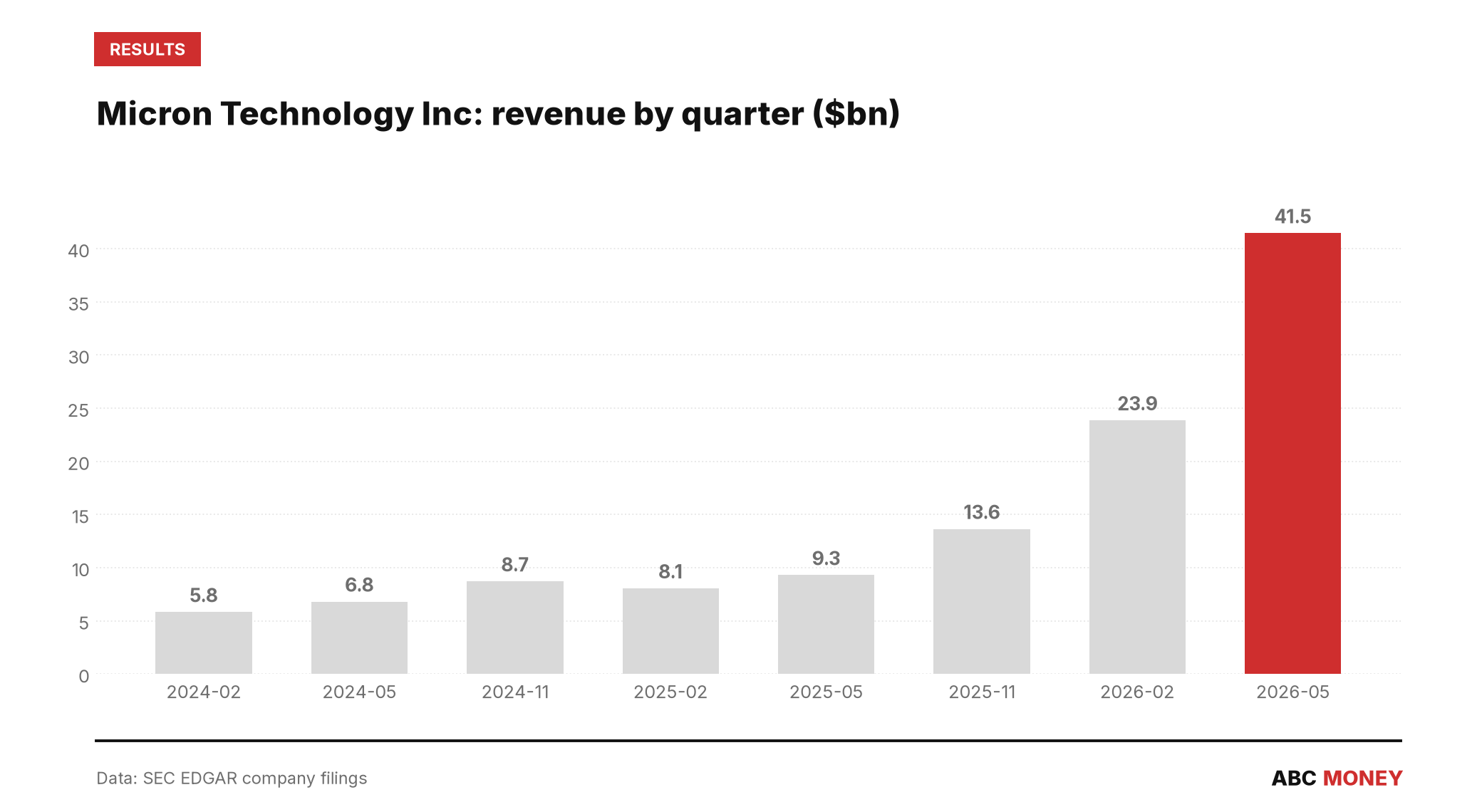
Micron Technology (NASDAQ: MU) closed its fiscal 2026 with the kind of numbers chip analysts used to reserve for best-case scenarios: record quarterly revenue, record annual revenue, and a fourth straight quarter of results that beat the company’s own guidance. The Micron record revenue haul for the year reached $133.2bn, up 256% on fiscal 2025’s $37.38bn, according to Micron’s own 8-K filing with the US Securities and Exchange Commission. The stock still fell.
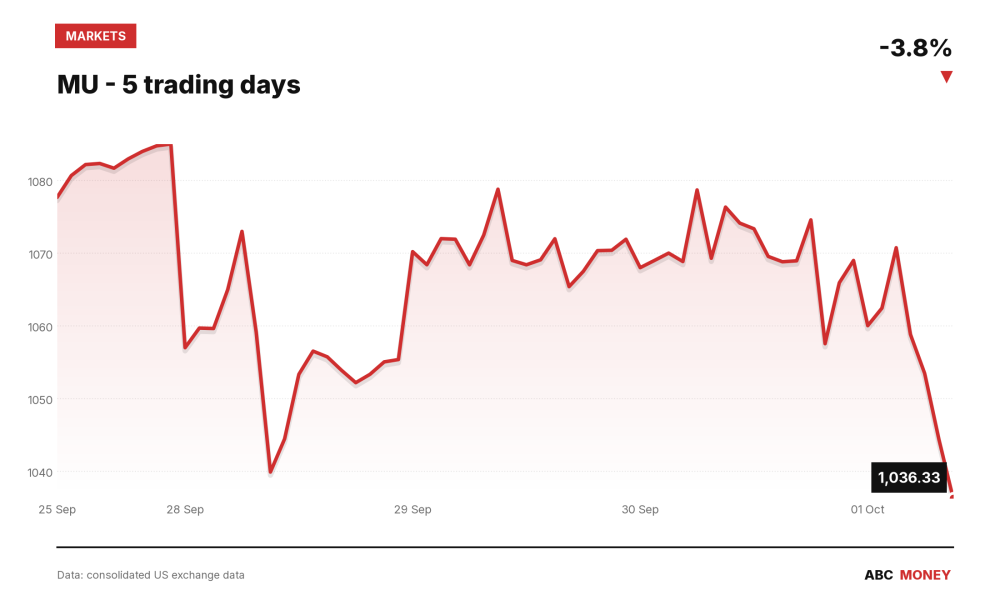
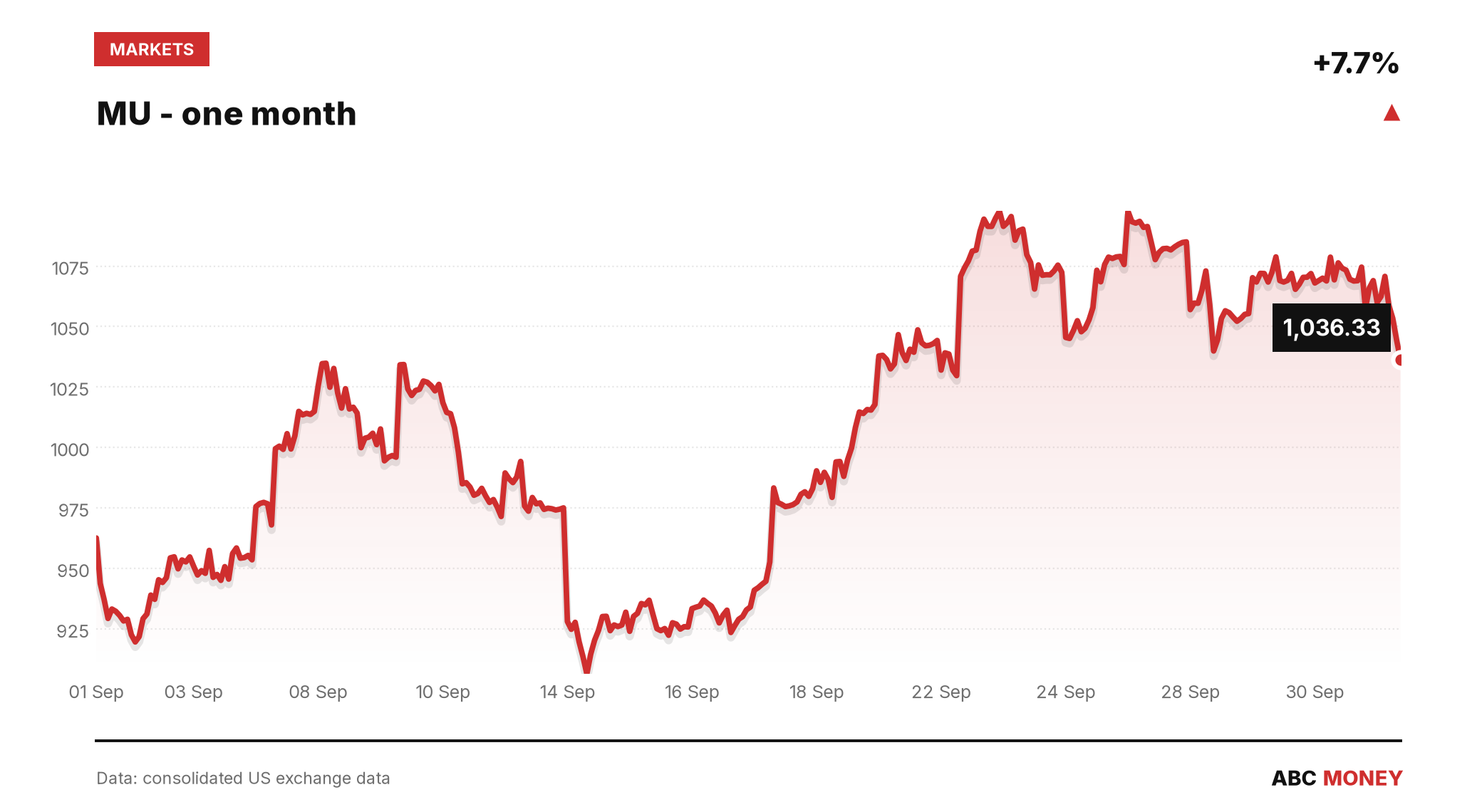
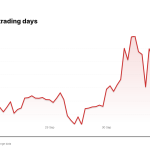
Shares traded at $1,034.85 as of 1 October, down 3.19% on the day even as they remain 5.21% higher over the preceding 20 trading days, within a range of $906.40 to $1,097.72 over that stretch, per consolidated US exchange data. Trading volume ran at 88% of the 20-day average — not a stampede for the exits, but hardly a victory lap either, for a company that crossed a $1 trillion market capitalisation as recently as 26 May 2026.
A fourth straight quarter of records
The fiscal fourth quarter alone generated $54.23bn in revenue, up 31% sequentially and 379% year over year, with GAAP net income of $37.70bn and diluted earnings per share of $32.87, according to data drawn from the company’s SEC filing. On a non-GAAP basis, Micron reported $38.40bn of net income for the quarter, or $33.42 per diluted share, while the full-year non-GAAP figure came to $86.76bn, or $75.52 per share, Micron said in its earnings release.
The trajectory across the year tells its own story. Net income climbed from $5.24bn in the first fiscal quarter to $13.79bn in the second, then $28.24bn in the third — a figure that matches the company’s third-quarter 8-K exhibit exactly — before topping out at $37.70bn in the fourth. DRAM, the memory chips used in everything from smartphones to AI accelerators, crossed $100bn in annual revenue for the first time, at $100.679bn, or roughly three-quarters of total sales, according to a summary of Micron’s earnings presentation. That is the clearest single marker of how thoroughly the AI build-out has reshaped the company’s revenue mix.
Supply locked in through 2030
Micron’s management used the call to stress that this is not a one-off spike. The company has now signed 26 Strategic Customer Agreements, deals that commit buyers to long-term volumes and pricing, estimated to cover more than 35% of revenue through 2030, according to the company’s prepared remarks for the quarter. More than 75% of fiscal 2027 shipments are already spoken for through customer allocations and contracts, management told analysts on the call, as first reported by The Motley Fool.
That visibility underpins guidance for the current quarter that again tops what Micron just delivered: revenue of $61.5bn, plus or minus $1.5bn, and non-GAAP earnings per share of $38.15, plus or minus $1.00, as TheStreet reported from the call. Management’s broader message was that fiscal 2027 should surpass fiscal 2026, with memory and storage supply remaining tight as AI applications spread across more types of hardware.
Why the record revenue didn’t move the stock
If the numbers were so strong, why the muted reaction? The answer, by most accounts, sits on the spending side of the ledger rather than the sales side. Micron’s capital expenditure plans for fiscal 2027 came in heavier than some investors had pencilled in, and that overshadowed both the quarterly beat and the upbeat guidance. One trade publication summed up the mood bluntly: “Record Quarter, Flat Stock”, framing the capex ramp as the near-term overhang on an otherwise historic set of results.
That tension — a company printing the best numbers in its history while asking shareholders to fund an even bigger building programme — is the crux of where Micron sits now. It is also happening against a backdrop of higher borrowing costs than markets grew used to in the post-financial-crisis decade: the 10-year US Treasury yield stood at 5.26% on 29 September, up slightly from 5.24% the prior session, according to Federal Reserve data. Financing a multi-year fab expansion is a different proposition at that yield than it was when rates sat near zero, and investors weighing a trillion-dollar valuation against a steepening capex bill are, reasonably, doing that arithmetic in real time.
For now, the next formal checkpoint is Micron’s fiscal first-quarter report, due against the $61.5bn revenue guide management has already put on the table. Whether the market greets that print with the same shrug — or finally gives the company credit for a demand backdrop its customers are contractually committing to through the end of the decade — will say as much about sentiment around the AI-memory cycle as it does about Micron itself.
This article is for information only and is not investment advice or a recommendation to buy or sell any asset. Markets move quickly; figures are correct as sourced at the time of writing. Always do your own research before making financial decisions.

 Bitcoin
  Ethereum
  Tether
  BNB
BNB  USDC
USDC  XRP
XRP  Solana
  TRON
TRON  Lido Staked Ether
  Cardano
  Gram (prev. Toncoin)
  Avalanche