Bitcoin
 Ethereum
 Tether
 BNB
 USDC
 XRP
 Solana
 TRON
 Lido Staked Ether
 Cardano
 Gram (prev. Toncoin)
 Avalanche
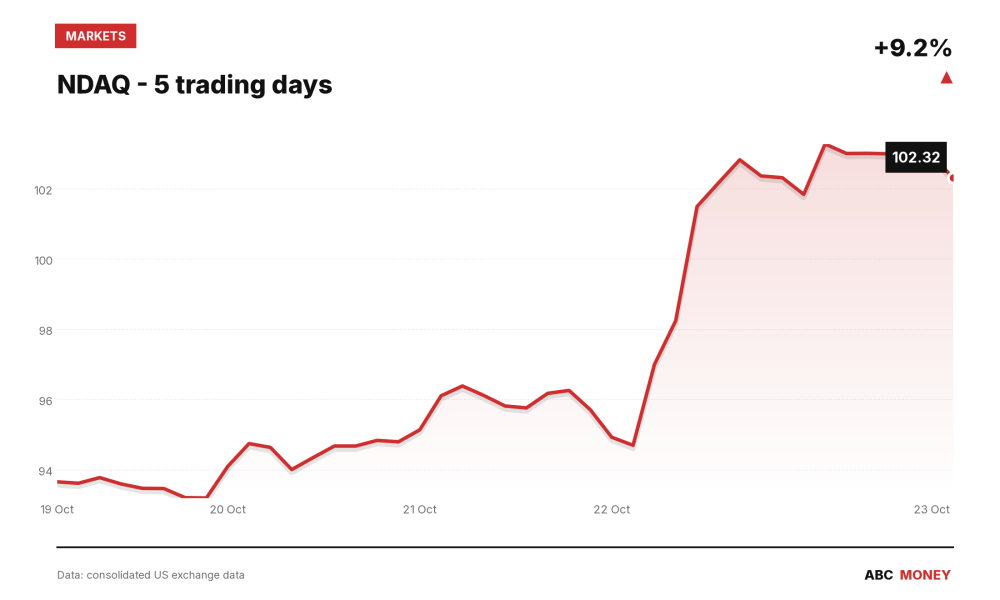
The Nasdaq Composite had its worst session since June on Thursday, falling 2.6% to close at 26,008.86, as renewed fears over artificial-intelligence spending collided with a fresh jolt of geopolitical risk, according to Reuters via Yahoo Finance. It was the steepest one-day drop for the index since 5 June, a point independently confirmed by Business Today.
The S&P 500 slipped a more modest 1.21% to 7,663.43, underlining how concentrated the damage was in technology and semiconductor names, per CNBC. Meta Platforms bore the brunt, with shares dropping around 7% to close at $648.52 after a third-quarter earnings report that paired strong top-line growth with an unwelcome surprise on costs, according to GuruFocus.
AI spending fears return with a vengeance
Meta’s quarter was not, on its face, a disaster. Revenue rose 26% year on year to $64.60bn. What spooked investors was the company’s full-year capital-expenditure guidance, narrowed to a range of $135bn-$145bn, alongside a litigation charge that dented the bottom line, as GuruFocus reported. For a market already nervous about whether the AI build-out is generating returns to match the outlay, that was enough to trigger a broad repricing of the names most exposed to it.
The contagion spread quickly through the semiconductor complex. AMD fell more than 8%, Micron dropped 6% and Nvidia lost 4%, according to CNBC’s live markets coverage. A Wells Fargo trading note cited by the same outlet linked the move to comments from Nvidia chief executive Jensen Huang about a “scarcity of capital” – shorthand for growing unease about whether credit markets can keep funding AI infrastructure at the pace Silicon Valley has been promising.
A geopolitical tremor adds fuel
Layered on top of the AI anxiety was a jump in oil prices tied to rising tension in the Middle East. Traders cited “renewed Iran kinetic-risk post US mid-term election” as a catalyst, according to a JPMorgan note reported by CNBC – a reminder that equity selloffs rarely have a single cause, even when one dominates the headlines. Notably, the bond market did not seem to read this as a broader shock: the 10-year US Treasury yield edged up only marginally, from 5.12% to 5.13%, according to FRED data from the Federal Reserve Bank of St. Louis. That steadiness suggests the selloff was concentrated in earnings and capex worries rather than a repricing of interest-rate risk across the whole market.
Two Nasdaqs, one headline
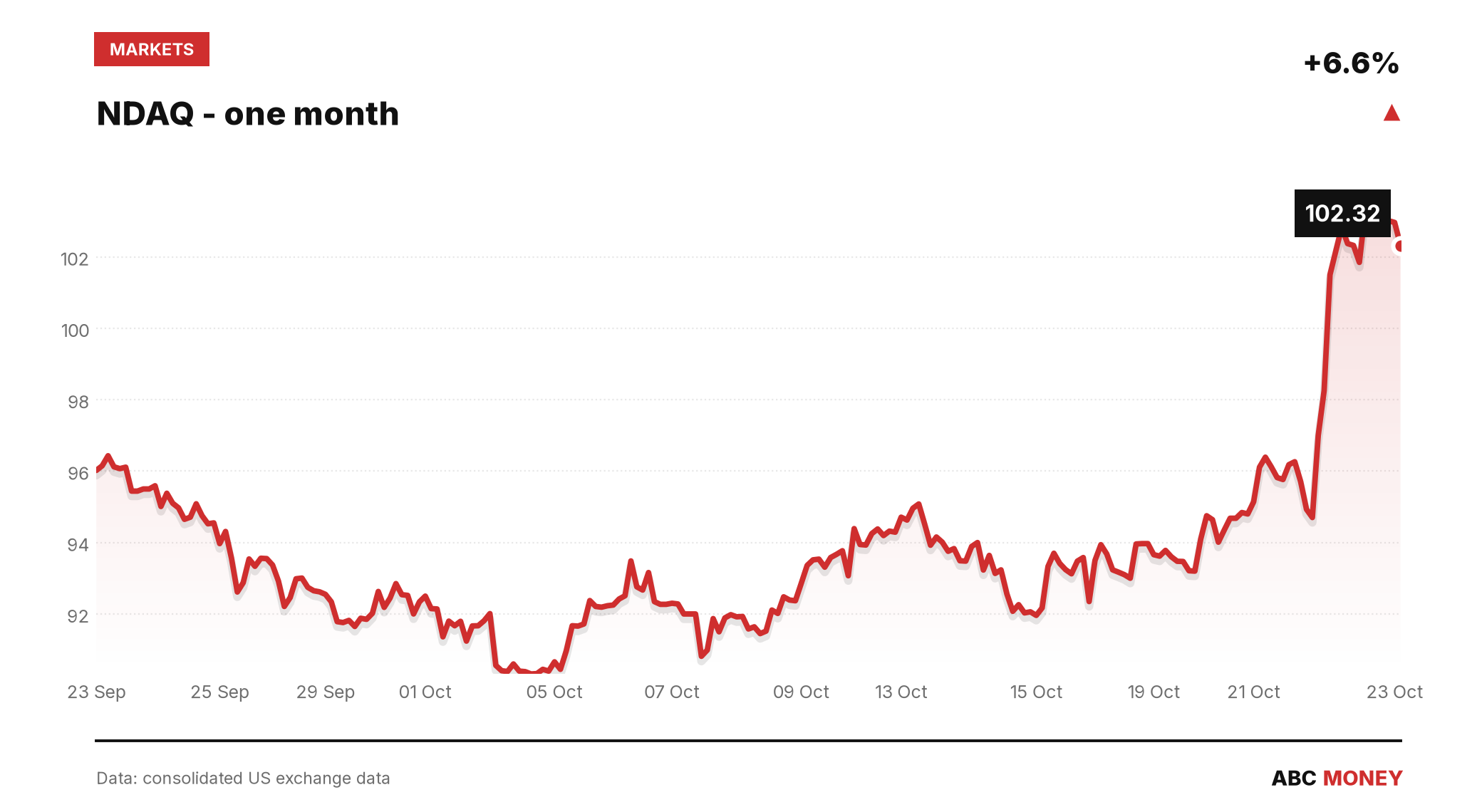
Here is a wrinkle worth flagging for anyone tempted to read this as bad news for “Nasdaq” in every sense of the word. The Nasdaq Composite is an index tracking thousands of stocks listed on the exchange. Nasdaq, Inc. (NDAQ) is the separate, publicly traded company that operates that exchange and sells market data and technology to the financial industry – and its shares were untouched by the selloff, trading roughly flat on the day and up 11.21% over the preceding 20 sessions.
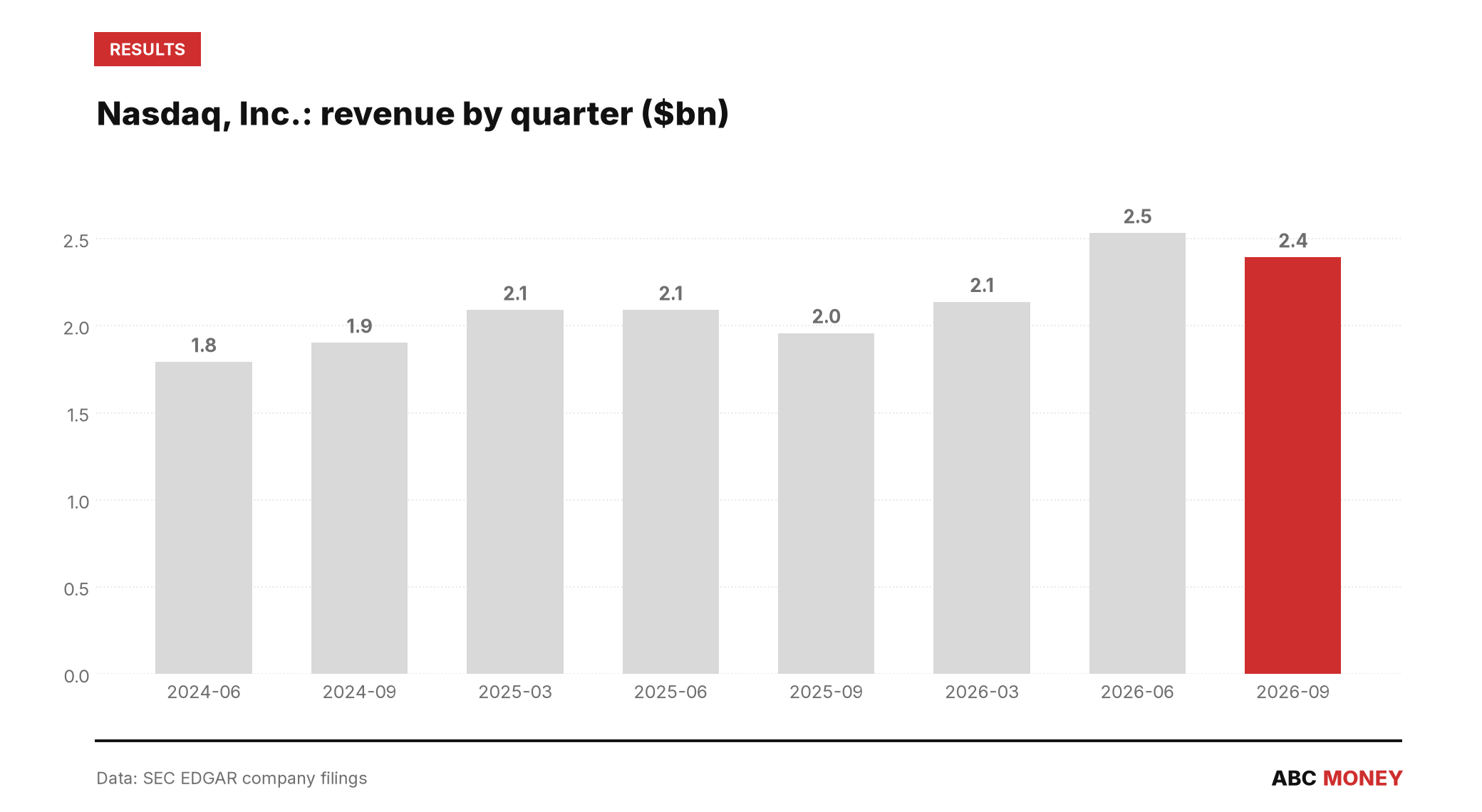
The timing makes the contrast sharper still. Nasdaq, Inc. filed its third-quarter results with the Securities and Exchange Commission on the very day the index it operates had its worst session in months, reporting revenue of $2.393bn and net income of $540m, with diluted earnings per share of $0.96 – both up on the prior quarter. The exchange operator’s business model, built on listing fees, market-data subscriptions and trading technology rather than the fortunes of any single sector, left it largely insulated from the AI jitters hitting its own marketplace.
That distinction matters beyond pedantry. It is a useful corrective for investors who conflate “the market fell” with “the company behind the market fell” – two entirely different securities that, on this occasion, moved in opposite directions entirely by coincidence of name.
For now, the near-term question is whether Thursday’s selloff marks a one-off wobble or the start of a more sustained re-rating of AI-capex-heavy names. Meta’s guidance cut and the semiconductor sector’s reaction suggest investors are, for the first time in a while, demanding to see a clearer path from spending to returns before they extend further credit to the AI growth story.
This article is for information only and is not investment advice or a recommendation to buy or sell any asset. Markets move quickly; figures are correct as sourced at the time of writing. Always do your own research before making financial decisions.