
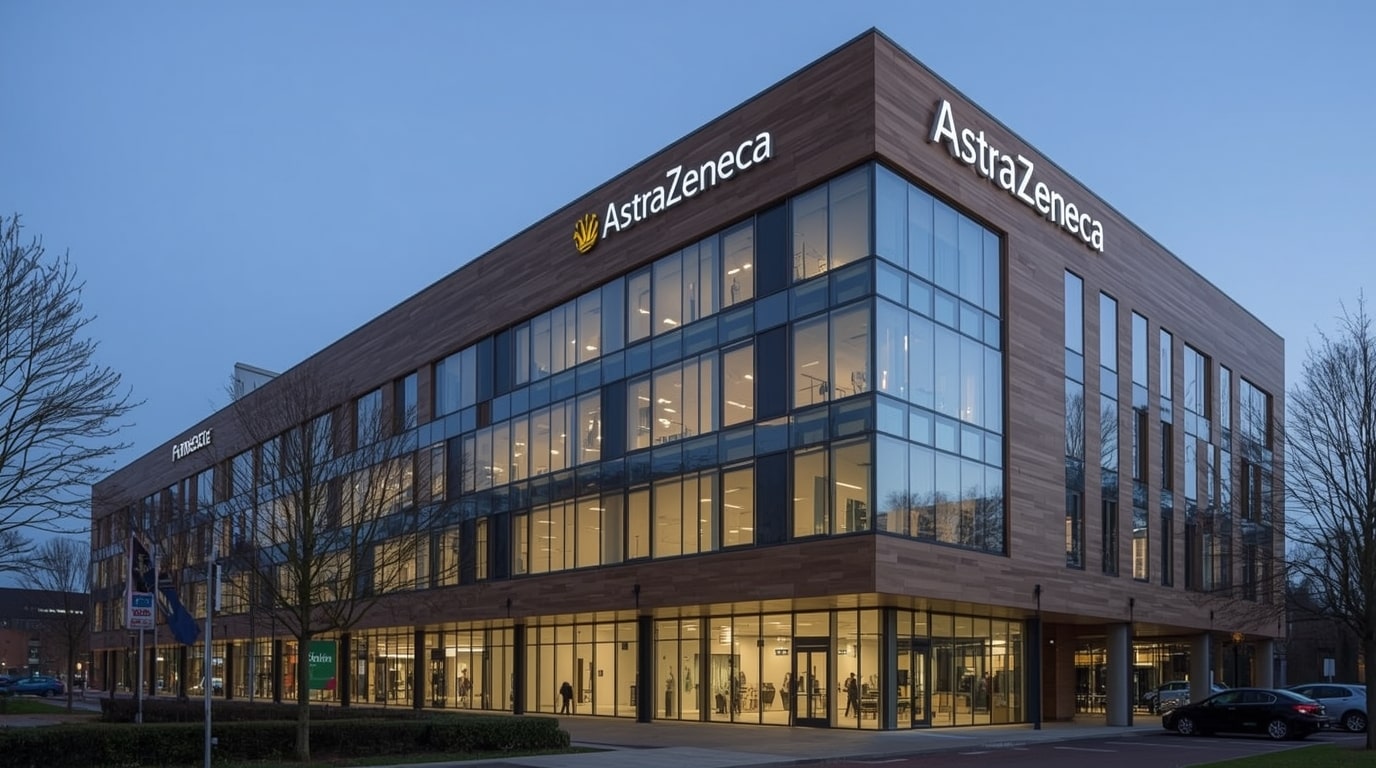
AstraZeneca Shares Dip 0.7% Amid Patent Cliff Fears, But Pipeline Strength Fuels Long-Term Optimism

Thursday saw AstraZeneca PLC shares decline 0.7% and close at 13,546p as the pharmaceutical giant came to grips with new fears over impending patent expiries, despite the continued growth in revenues as blockbuster drugs such as Enhertu and Imfinzi were on board.
The FTSE 100, which was trading slightly higher at about 9,710 points, experienced a poor outlook of the healthcare stocks in the wider market panic of anticipating U.S. Federal Reserve rate cuts and rising trade tensions.
This fall in the stock of AstraZeneca has been recorded on a backdrop of the FTSE 100 recording a 22.8% year-to-date upsurge, which reflects the susceptibility of the sector to regulatory and competitive headwinds.
The investors are laser-focused on whether it can pull through a patent cliff estimated to cut the company’s sales by as much as PS3 billion by 2028, mainly as a result of the protection of Symbicort and Seroquel XR.
However, at an 18.2 forward price-to-earnings ratio, which is lower than the industry average of 20, analysts view the pullback as a buying opportunity for a company that has a market cap of PS200 billion and a diversified oncology portfolio.
Patent Expirations Cast Shadow Over Stellar Q3 Results
Third-quarter results announced last month by AstraZeneca reflected stability as overall revenue increased 19% to PS13.3 billion and the oncology sales rose 45% to PS6.8 billion. Such flagship products as Tagrisso and Lynparza were paying off handsomely, compensating for softer respiratory performance. The company also increased its full-year projections and now anticipates growth of its revenue in the mid-teens and core operating margin to increase to 34.
Thursday, however, was dampened by a recent review of the U.S. Food and Drug Advisory Panel that took place on the subject, only to examine generic challenges to the blockbuster asthma drug Symbicort of AstraZeneca.
Although the panel unanimously voted to permit the generic version of Teva Pharmaceutical to be approved, AstraZeneca argues that the ruling does not take into consideration important differences in the mechanisms of delivery, and it will strongly defend itself. This saga highlights the impending patent cliff: generics might take eighty per cent of the PS1.5 billion U.S. market in Symbicort by 2027, according to the estimates made by Barclays.
To make matters worse, European regulators gave the green light to a generic Seroquel XR by Boehringer Ingelheim earlier this week, which would cut PS500 million off the AstraZeneca revenues in Europe in the next two years.
CEO Pascal Soriot came to dismiss the effects with the term that they could be managed, and that the company is not about the legacy drugs but rather about innovation that is going to shape its future. According to Soriot, in a recent investor call Our pipeline is our moat he pointed out more than 180 projects in development, including some promising gene therapies for rare diseases.
This duality is reflected in the stock price of AstraZeneca on average trades at a discount to its peers, including Novo Nordisk, with a 2.1% dividend yield, and a record of 10% payout increase per year. This has seen shares increase more than fourfold over the last decade, beating the FTSE 100 by 150%, with its opportunistic acquisitions such as the PS31 billion takeover of Alexion in 2021 adding to its rare disease franchise.
Acquisitions and Research and Development Are Pointers to Growth Patterns
Aggressive expansion has been one of the responses that AstraZeneca has taken because of patent pressures. In November, the firm paid PS1.2 billion to acquire Gracell Biotechnologies, which helped it accelerate its ambitions to develop cell therapies in autoimmune diseases.
This is after the PS8 billion Daiichi Sankyo alliance of Enhertu, which is currently a PS2.5 billion annual breast cancer treatment. JPMorgan target analysts predict that Enhertu will be the first to reach PS10 billion in peak sales in 2030, three times that of Symbicort.
R&D expenditure was at an all-time high of PS2.7 billion in Q3, increasing 15% versus the year before, on trials of datopotamab deruxtecan, a lung cancer candidate, with a 40% progression-free survival rate in phase 3 trials.
This success would contribute PS5 billion to the bottom line by the end of the decade. Additionally, AstraZeneca increased its cardiovascular portfolio, which is headed by Farxiga, by 25% through PS1.8 billion, following the rising indication of heart failure and chronic kidney disease.
U.S.-China trade tensions are dangerous to the supply chain, yet AstraZeneca has a 40% emerging market revenue compared to the global pharma average of 25%, making it a diversification play. This is the headquarters of the company and serves as the base of a U.K. ecosystem which has raised PS10 billion in investments in biotech, since Brexit, according to government statistics.
Implications for Investors and the Broader Healthcare Sector
The stock market crash on Thursday shook the FTSE 100 health care sub-index, which fell 0.4% as GSK and Haleon also fell on the same generic threats. However, mining shares such as Rio Tinto increased 2.7% on copper price backlash to offset the scorecard as the index rose 9,800 by the year-end, according to UBS forecasts.
The progressive dividend policy is still tempting to income seekers, as AstraZeneca has over PS4.5 billion of free cash flow to support this policy, and the payout ratio is below 50. The beta of the stock is 0.6, which implies that the stock is less volatile, which is good to incorporate in defensive portfolios during a recession. Some of the risks are failure to attain trial, as this may affect the 15% growth of the EPS in 2026, and pricing pressure caused by the U.S. Inflation Reduction Act.
With the Bank of England weighing the option of further rate easing, which is offering a 75% probability that a cut will occur by December (markets are betting on it), AstraZeneca has a debt-light balance sheet (net debt to EBITDA of 1.2) that will not affect its debt costs. In the future (2026), it is expected that the revenue will be PS52 billion, an increase of 12% with half the mix being oncology.
With a year of biotech discoveries and regulatory challenges, AstraZeneca represents the U.K. pharma success. Patent cliffs are looming, but a PS25 billion pipeline war chest and global footprint are guaranteed to keep on outperforming. To investors, this pullback can give way to the rallying in the market tomorrow, as it has always been the case: in healthcare, innovation is better than expiration.


 Bitcoin
  Ethereum
  Tether
  BNB
BNB  USDC
USDC  XRP
XRP  Solana
  TRON
TRON  Lido Staked Ether
  Cardano
  Gram (prev. Toncoin)
  Avalanche